The Big Picture
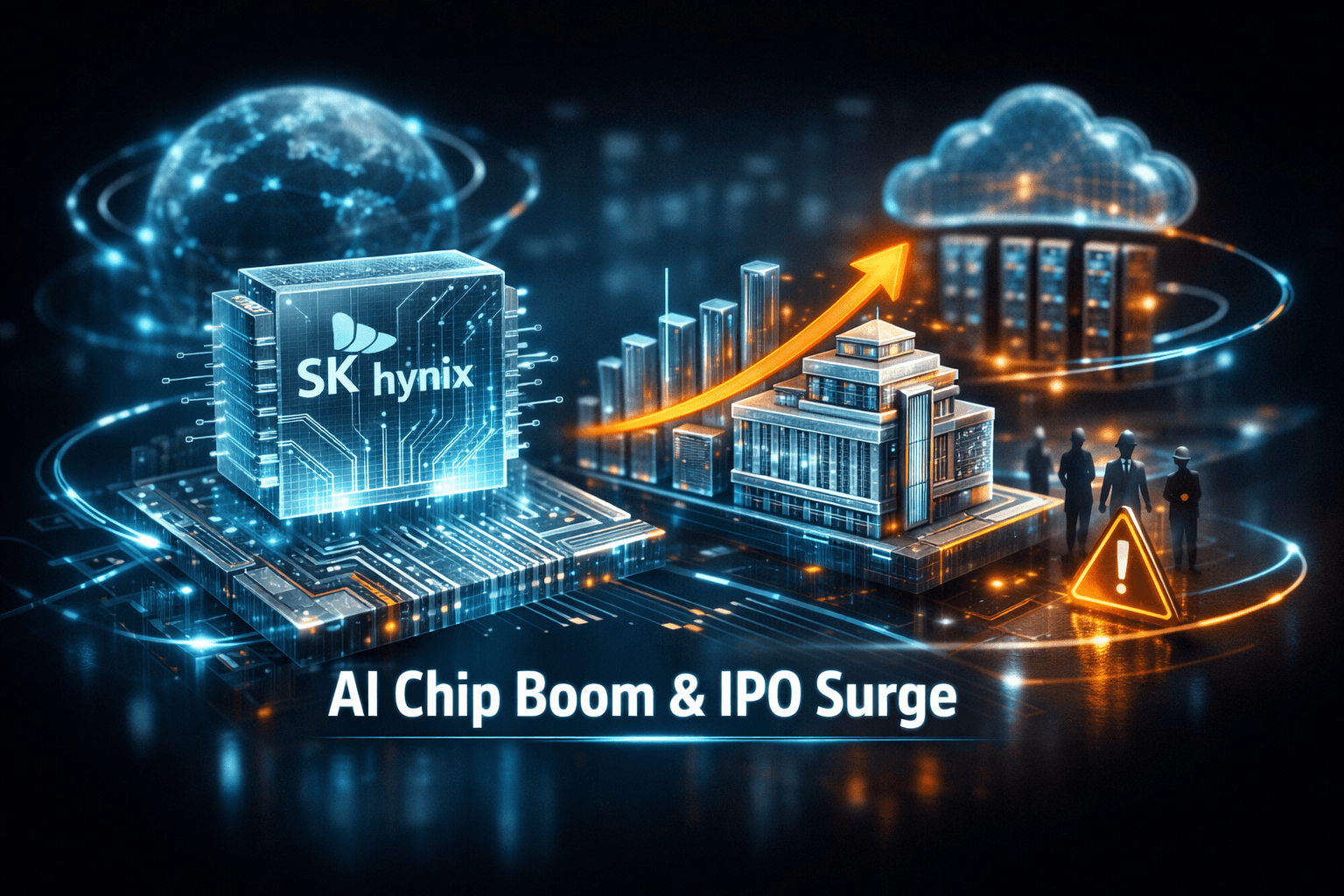
Today’s standout theme was expansion: capital, markets, and capacity are aligning around AI and connectivity. SK Hynix completed a blockbuster U.S. listing that underscored surging memory demand, while U.S. export policy opened new channels for AI chip sales to the UAE, broadening addressable markets for major tech suppliers.
That doesn’t mean every headline was sunshine. China’s removal of a jobs target and several legal and public policy stories remind you that macro and regulatory risks still matter. Still, momentum building around chips, cloud capacity, and satellite capacity looks set to shape the sector near term.
Market Highlights
Big capital flows and concrete numbers dominated trading desks today. You saw memory and infrastructure themes at the center of the action, and consumer engagement stories that matter for ad and in-app revenue models also popped up.
- SK Hynix raised about $26.5 billion in its U.S. debut, opening at $170 per share on Friday in the largest foreign IPO in U.S. history.
- The U.S. Department of Commerce eased export controls to the UAE, allowing companies including $AAPL and $META to export AI chips without a license to certain firms such as G42.
- SpaceX filed plans to launch up to 100,000 additional Starlink satellites, a proposal that targets roughly 100 times current bandwidth per user in some scenarios.
- Niantic marked Pokémon Go’s 10th anniversary with a massive in-person event that drew almost 2,000 players, underlining durable consumer engagement for mature AR titles.
Key Developments
SK Hynix IPO and the memory supply story
SK Hynix’s $26.5 billion U.S. raise and $170 opening price show deep investor appetite for memory makers tied to AI workloads. The debut highlights how GPU and accelerator demand is driving upstream memory and DRAM investment.
For you that means companies supplying chips and fabs are more likely to see capital and policy support. Analysts note attention is shifting to capacity expansion and potential U.S. fab commitments, a factor that could lengthen supply chains but also improve long-term availability.
U.S. eases AI chip exports to the UAE, opening markets
The Department of Commerce’s move to loosen export controls to the UAE lets global cloud and device makers sell AI acceleration hardware to partners like G42 without individual licenses. $AAPL and $META are named beneficiaries in Reuters reporting.
This change lowers friction for commercial deployments and could boost revenue for chip makers and cloud providers that support enterprise AI. How fast that demand turns into bookings is a key question investors will ask over the next quarters.
Infrastructure and consumer signals, plus regulatory noise
SpaceX’s plan for 100,000 more satellites points to another infrastructure front where scale could unlock new revenue for rural broadband and edge services. Meanwhile, consumer innovation continues, with HyperTexting trying to reframe the open web as a social feed and Pokémon Go proving long-term engagement still matters.
On the risk side, China dropping a numerical urban jobs target signals labor-market uncertainty amid AI-driven displacement. Legal battles like the Fizz v. Sidechat filings and public policy stories around ICE and bodycam transparency add reputational and regulatory angles that could affect hiring, partnerships, or public trust.
What to Watch
Expect focus on capital allocation and capacity moves next week. You should watch announcements from memory and foundry companies about new fabs or U.S. investment incentives. Will producers commit to more U.S. capacity and when will that translate into supply?
Also track corporate guidance from chip designers and cloud providers. Eased export controls could accelerate bookings for AI infrastructure, so quarterly commentary will be key. Where might revenue expand next, and how fast will margins respond?
Finally, keep an eye on geopolitical and regulatory updates. China’s employment policy shift and ongoing legal disputes in startup ecosystems create headline risk. Make sure you’re monitoring filings and official statements that can change market assumptions quickly.
Bottom Line
- SK Hynix’s record U.S. IPO reaffirms investor appetite for memory tied to AI demand, and it raises the stakes on fab expansion plans in the U.S.
- Eased U.S. export controls to the UAE broaden market access for AI chips, which could meaningfully affect bookings for hardware suppliers and cloud vendors.
- Infrastructure plays in satellites and memory are converging with consumer engagement stories, creating multiple growth vectors across the sector.
- Macroeconomic and regulatory risks are present, illustrated by China’s policy shift and legal disputes in the startup world, so selectivity and monitoring are essential.
- Analysts note momentum is building, but you should watch upcoming earnings and capacity announcements for confirmation.
FAQ Section
Q: How does SK Hynix’s IPO affect U.S. chip supply chains? A: The IPO injects capital into memory markets and raises pressure on producers to expand capacity, which could accelerate U.S. fab investments and ease long term supply constraints.
Q: What does the Commerce Department’s decision mean for tech firms? A: It makes it easier for certain U.S. companies to export AI chips to the UAE without licenses, potentially boosting commercial AI deployments and related vendor revenue.
Q: Should I worry about China dropping a jobs target? A: It signals policy caution around AI-driven labor disruption, which is a macro risk that can affect demand and hiring in technology sectors, but it does not change near term product cycles.