The Big Picture
A mixed morning for technology investors, as a high‑profile allegation against a Chinese giant collides with fresh momentum in chip architecture adoption and AI product rollouts. You’ll see both risk and opportunity in today’s headlines, and the balance matters for how you position your exposure.
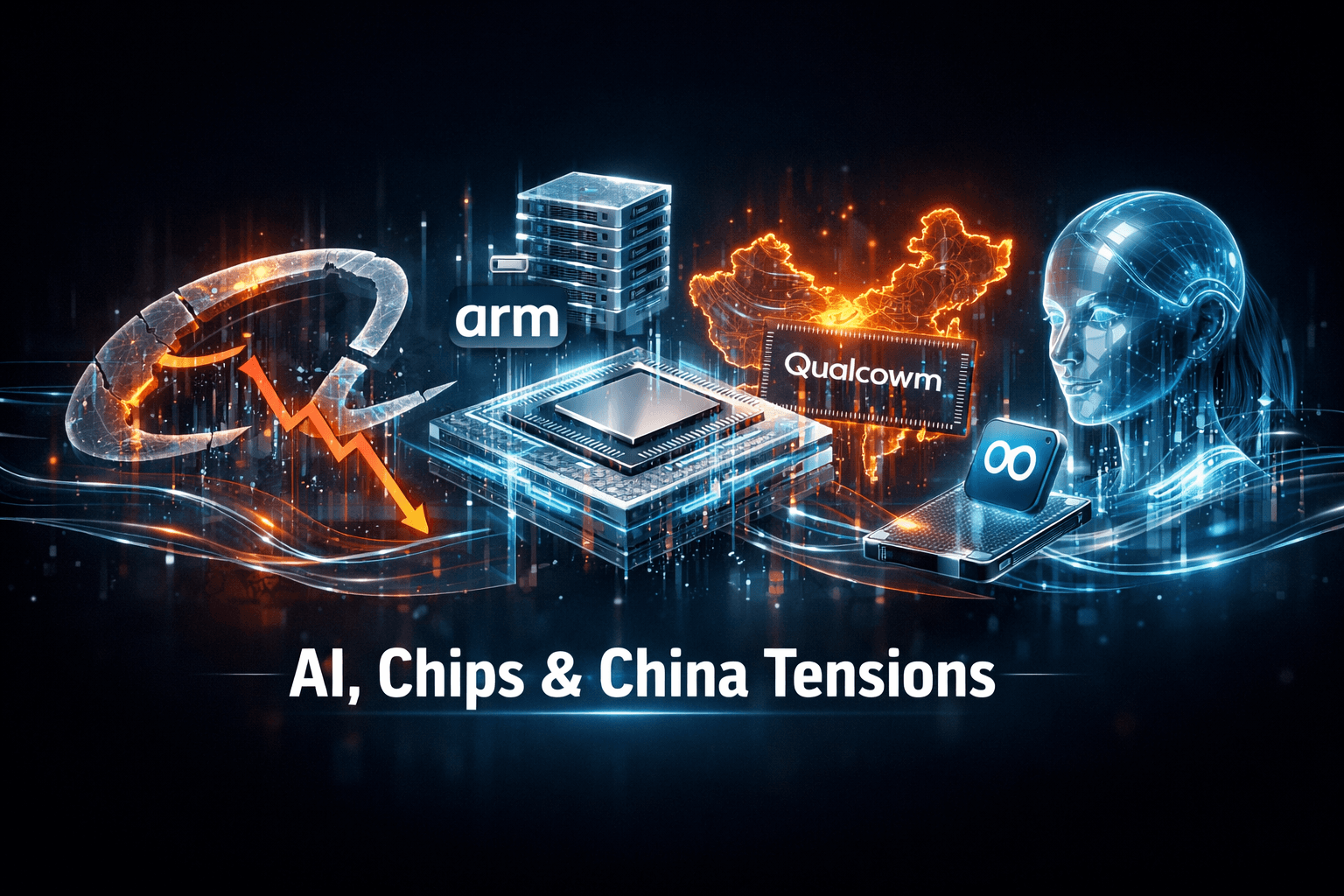
Alibaba’s share slide after an accusation from Anthropic grabbed headlines and pushed Asian tech names lower, while Arm and Qualcomm signaled demand shifts in the data center. Meanwhile, Meta and device makers are rolling out AI consumer features that keep the narrative of AI-driven growth alive.
Market Highlights
Quick facts and movers to know this morning.
- Alibaba Group, $BABA, dropped about 5% in Hong Kong trading, hitting a 16‑month low and extending its year‑to‑date decline to roughly 33% after Anthropic accused it of illicitly accessing AI models.
- Xiaomi and Baidu, reported down more than 3% in Hong Kong following the headlines, reflecting sector spillover for China tech names, $XI and $BIDU respectively.
- Arm, $ARM, said its architecture now powers over 50% of the hyperscale cloud market, a notable milestone for chip competition in data centers.
- Qualcomm, $QCOM, confirmed it’s designing data center chips for Chinese customers that comply with U.S. export controls, signaling a tailored approach to a sensitive market.
- Meta, $META, relaunched Facebook Creator Studio as an AI companion app, underlining product-level AI monetization efforts in the creator economy.
Key Developments
Alibaba hit by Anthropic accusation
Anthropic accused Alibaba of “illicitly” accessing its models, which triggered a sharp move in Alibaba shares and pulled down other China tech names. For you, this is a reminder that legal and trust issues around data and AI access can create sudden volatility for large platform companies.
The allegation adds a reputational and regulatory risk layer for Chinese firms operating global AI partnerships, and analysts note it could prompt closer scrutiny of cross-border AI model access.
Arm wins share as cloud demand shifts
Arm EVP Mohamed Awad said Arm architectures now account for more than half of the hyperscale cloud market. That’s significant because it shows hyperscalers are increasingly choosing energy‑efficient designs to meet AI compute needs.
This momentum supports the broader thesis that non‑x86 architectures are taking meaningful market share in data centers, and it may pressure incumbents to accelerate road maps or partnerships.
Qualcomm targets China with compliant data center chips
Qualcomm CEO Cristiano Amon said the company is designing data center processors specifically for Chinese customers while adhering to U.S. export controls. That approach attempts to thread the needle between market access and compliance.
For investors, it’s a sign chipmakers are pursuing segmented product lines and legal buffers rather than walking away from large, strategic markets.
Meta revives Creator Studio as AI companion
Meta relaunched its Creator Studio as a standalone AI companion app focused on helping creators grow audiences. The move highlights continued investment in creator monetization and AI tooling at $META.
Product upgrades like this keep the user engagement narrative healthy and could support ad and commerce pathways over time, even if monetization is gradual.
Policy and consumer signals
Europe is signaling pushback on U.S. chip export restrictions, which adds a policy uncertainty element for semiconductor supply chains. Meanwhile, Prime Day deals and new consumer devices like Google’s Home Speaker are generating demand signals in the gadget market.
Taken together, the policy and consumer items show the sector has both structural growth drivers and near‑term geopolitical risk.
What to Watch
Here are the catalysts and risk points you should monitor throughout the trading day and coming weeks.
- Regulatory fallout, investigations, or enforcement actions related to the Anthropic‑Alibaba claim. Any formal probes would amplify downside risk for $BABA and linked names.
- Follow‑through on Arm’s share gains, including quarterly data center revenue and customer wins. Will Arm’s momentum translate into faster revenue growth for public peers? That’s key.
- Qualcomm’s product disclosures and any clarifications on export compliance. Watch for technical specs and customer confirmations that indicate commercial traction in China.
- Policy developments from the U.S. and Europe on chip export controls. Divergent approaches could affect supply chains, equipment makers like $ASML, and chipmakers’ go‑to‑market strategies.
- Consumer demand signals from Prime Day sales and early reviews of Google’s new Home Speaker. These inputs matter for hardware margins and ecosystem adoption.
How should you interpret all this? It’s a case of reading the tea leaves. You’ll want to weigh headline risk against structural AI and cloud demand when assessing exposure.
Bottom Line
- Neutral near term: headline risk around Alibaba and geopolitical friction offsets chip architecture gains and product momentum.
- Arm’s claim of 50%+ hyperscale share reinforces the trend toward alternative architectures in AI data centers.
- Qualcomm’s China‑focused, compliance‑first strategy shows firms are adapting product plans to geopolitical constraints.
- Meta’s AI Creator app and consumer device moves keep user engagement and monetization narratives active.
- Watch regulatory developments closely, because enforcement or policy shifts could change market sentiment quickly.
FAQ Section
Q: What triggered Alibaba’s stock drop today? A: Alibaba fell after Anthropic accused the company of illicitly accessing its AI models, which raised trust and legal concerns and drove a sharp selloff.
Q: Does Arm’s 50% hyperscale claim change the chip landscape? A: It suggests accelerating adoption of Arm architectures in hyperscalers, increasing competitive pressure on x86 incumbents and influencing server OEM and cloud procurement decisions.
Q: Will Qualcomm’s China chips face export hurdles? A: Qualcomm says it’s designing products to comply with U.S. export controls, which indicates a strategy to serve China while staying within regulatory limits. Analysts will watch product details and customer adoption for proof.