The Big Picture
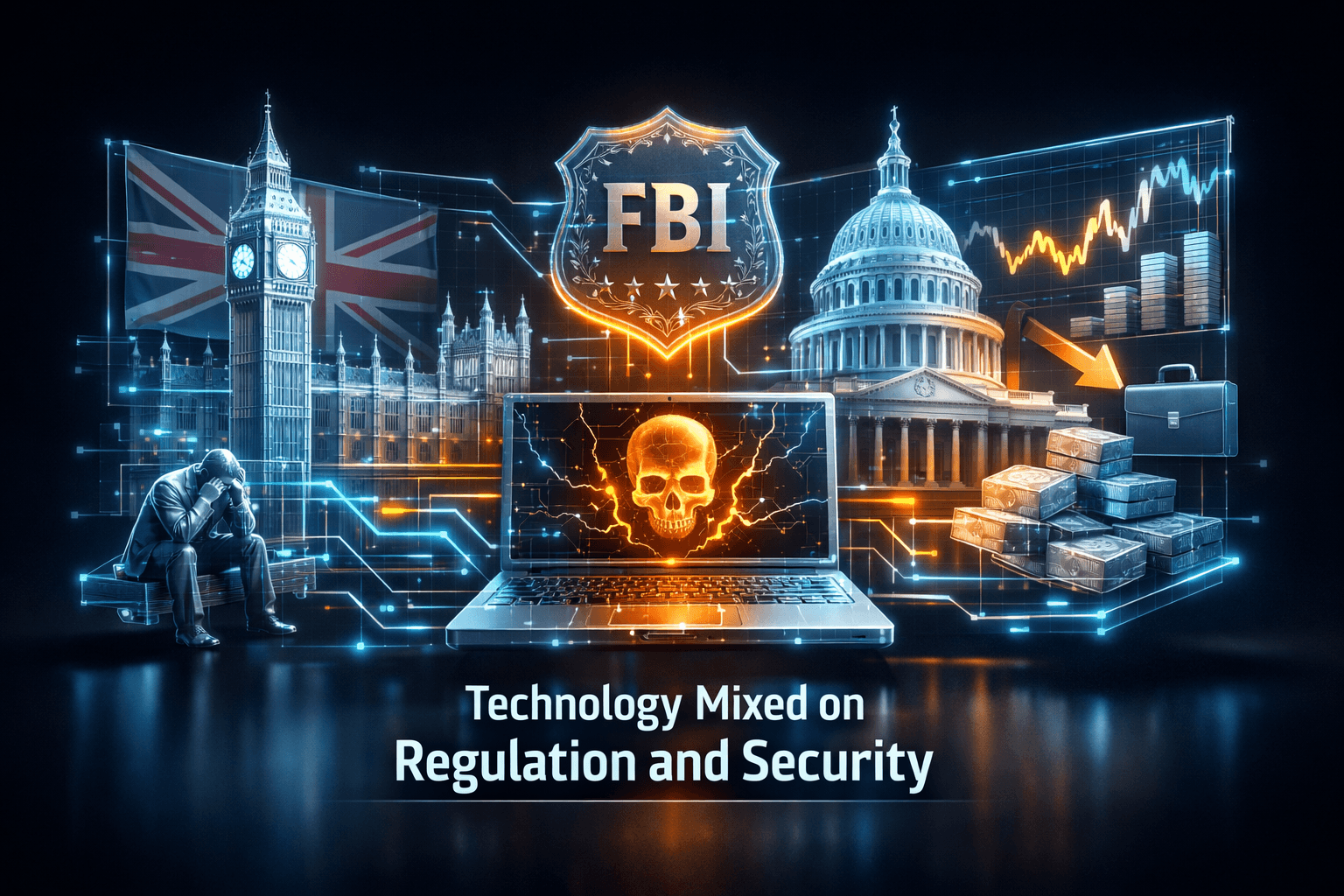
The biggest development this morning is regulatory pressure on consumer platforms, as the UK announced a sweeping ban on social media for under-16s that targets major apps and will take effect in early 2027. That move adds to a broader wave of policy and export controls shaping the AI and social-media landscape, and it's likely to affect ad models, user engagement, and compliance costs for big tech.
At the same time you should note a strong law-enforcement win, the FBI's dismantling of an AI-powered Chinese phishing operation and the seizure of $100,000 in Tether, showing improved public-private cooperation on cybercrime. Together these developments suggest more regulatory and security-driven volatility, so stay selective and keep an eye on policy and defense signals.
Market Highlights
Key facts and figures to start your trading day.
- UK social media ban, aimed at under-16s, will apply to Snapchat, TikTok, YouTube, Instagram, Facebook, and X and is expected to take effect in early 2027.
- FBI dismantled Outsider Enterprise, an AI-powered Chinese phishing operation, seizing $100,000 in Tether in a joint effort with Google and Black Lotus Labs.
- Anthropic remains at the center of U.S. export controls after reports China may have accessed Mythos, while U.S. cybersecurity leaders urged the White House to lift restrictions on Mythos and Fable 5, arguing the ban hurts defenders.
- Cyber readiness expands, the FBI's 22,000-square-foot Cyber Range in Huntsville simulates city-scale attacks for training and exercises.
- Funding and labor dynamics: Orbio raised $21 million to automate frontline hiring and onboarding, even as reporting highlights an AI-driven layoff wave that industry watchers call a potential powder keg.
Key Developments
UK under-16 social media ban
Prime Minister Keir Starmer announced a ban that will block major platforms from offering services to children under 16 and require platforms to stop livestreaming by minors. The rule names Snapchat, TikTok, YouTube, Instagram, Facebook, and X as in-scope services and is expected to begin in early 2027.
For you that means the largest consumer-facing platforms will face new compliance work and potential reductions in younger-user time spent. Analysts note ad targeting and engagement metrics for $META, $SNAP, and $GOOGL's YouTube could be affected, even if enforcement details and carve-outs are still being defined.
Anthropic export controls, national security questions
Reports say concerns that China may have accessed Anthropic's Mythos helped drive U.S. export restrictions on Mythos and Fable 5. In response, a coalition of U.S. cybersecurity leaders including CISOs and security execs sent a letter urging the White House to lift the ban, arguing defenders need access to those models to protect systems.
This is a policy tug-of-war that matters to enterprise security and AI developers. If access to top-tier models stays restricted, some defenders will be hampered, while broader deployment could pose national-security risks. You'll want to track guidance from the White House and any trade or export updates closely.
FBI takedown, cyber range and industry implications
The FBI announced it dismantled an AI-powered Chinese phishing operation called Outsider Enterprise with support from Google and Black Lotus Labs and seized about $100,000 in Tether. The operation highlights both the scale of AI-enabled threats and the improving cooperation between tech firms and law enforcement.
Separately the FBI's Cyber Range in Huntsville, a 22,000-square-foot facility that simulates an entire town, indicates continued investment in defensive capabilities. Together, these stories suggest cybersecurity firms and infrastructure providers may see steady demand as companies shore up defenses.
What to Watch
Here are the catalysts and risk factors that could move the tape in tech today and in coming weeks.
- Policy developments: Watch for U.K. regulatory guidance and the detailed rulemaking that will clarify how platforms must verify age and restrict livestreams. That will determine compliance costs and timing for affected firms.
- U.S. export and national-security updates: Follow statements from the White House and Commerce Department on Anthropic models. Will restrictions be narrowed or extended? That will influence enterprise security tooling and partnerships.
- Cyber incidents and enforcement: Expect more joint actions between regulators, law enforcement, and large cloud providers. You should monitor breach notifications and vendor contract language around breach response.
- Labor and cost structure: Keep an eye on layoff announcements and any follow-on guidance from large AI employers. How will shrinking headcounts reconcile with continued investment in AI infrastructure?
- Startup funding signals: Watch for follow-on rounds from companies like Orbio and other automation plays, as they may indicate investor appetite for productivity-focused AI even while consumer AI faces scrutiny.
Bottom Line
- Regulation is the headline risk today, with the U.K. under-16 ban likely to reshape user demographics and compliance needs for major platforms.
- Security wins, like the FBI takedown, show defenders are improving cooperation with tech firms, which suggests steady demand for cybersecurity services.
- Export controls on advanced AI models create a policy trade-off between national security and defender capabilities; expect more lobbying and possible adjustments.
- AI layoffs and selective funding rounds point to industry bifurcation, where infrastructure and enterprise security may hold up better than some consumer AI plays.
- Monitor regulatory rulemaking, federal export guidance, and major breach reports as the primary catalysts that will influence tech stock volatility in the coming weeks.
FAQ Section
Q: How will the U.K. ban affect large social platforms? A: The ban targets under-16 access and livestreaming by minors, which will increase compliance work and could reduce youth engagement metrics that advertisers value.
Q: Does the FBI takedown reduce AI-driven cyber risk? A: The operation shows that coordinated response and threat intelligence can disrupt threats, but analysts note attackers will adapt quickly so risk remains elevated.
Q: Will export restrictions on Anthropic slow AI adoption? A: Restrictions could limit defender access to top models and delay some enterprise deployments, while policy changes or carve-outs may restore access for security teams.