The Big Picture
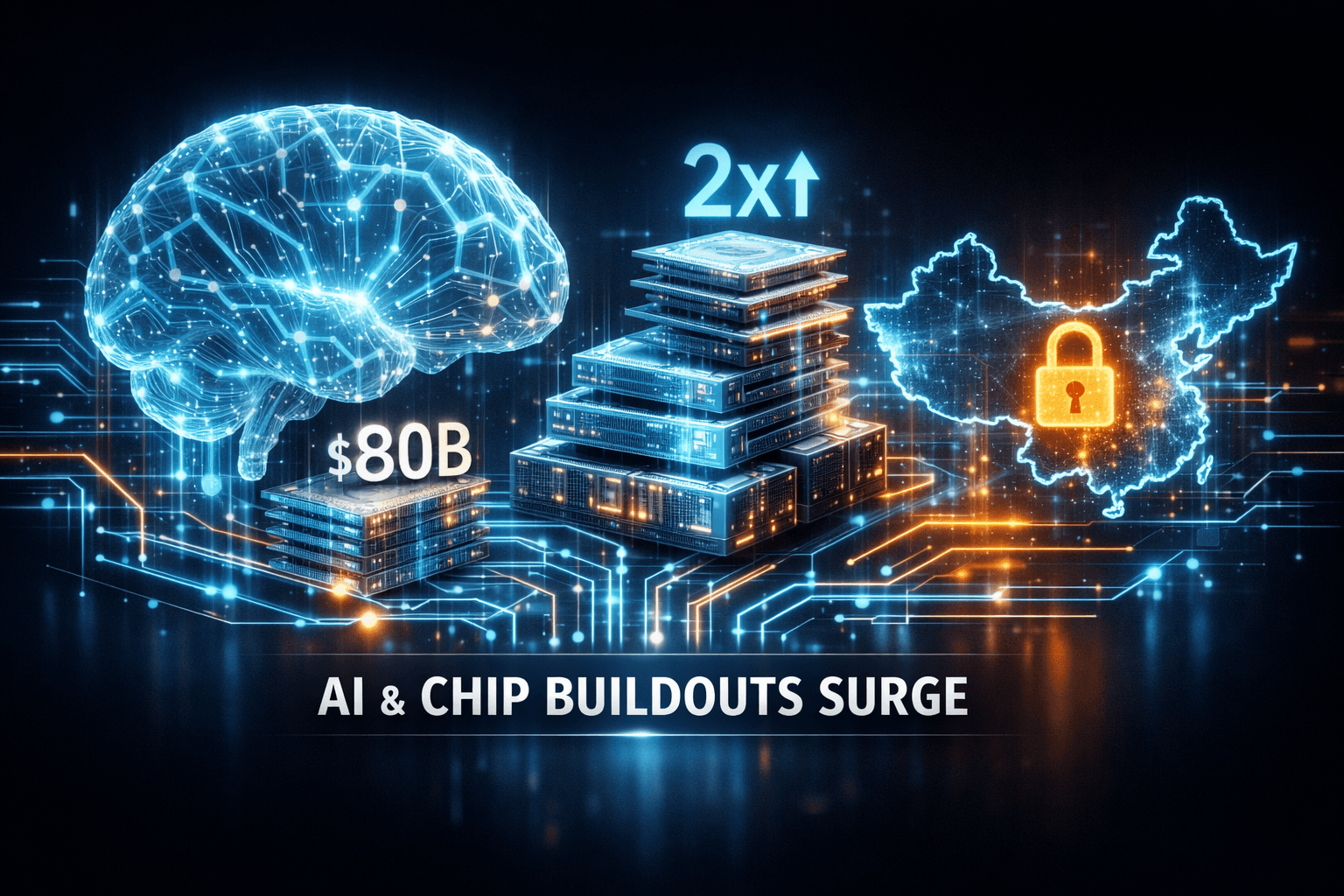
Alphabet's announcement that it plans to raise $80 billion to finance an AI buildout and SK Hynix's plan to double memory capacity over five years are the two standout developments driving the technology narrative today. Both moves reflect companies responding to outsized demand for AI compute and memory, and they signal meaningful, multi-year capital deployment into the sector.
Those expansion plans come while regulators and geopolitics remain in play, as Beijing tightens trade secret rules to include data and algorithms. You should pay attention to how supply, demand, and policy interact this year, because these forces will influence earnings, capex cycles, and vendor selection.
Market Highlights
Quick facts and context to start your trading day.
- Alphabet, $GOOGL, said it will raise roughly $80 billion to fund data centers, chips, and AI infrastructure as demand exceeds current supply.
- SK Hynix plans to double memory chip capacity over the next five years, aiming to ease a shortage analysts say could persist to 2030.
- China updated its trade secret rules to explicitly include data and algorithms, a regulatory shift that targets technology transfers and could affect multinational R&D and supply chain strategies.
- Pew Research analysis showed 22 of 24 US executive agencies saw year over year increases in average X account engagement during the first year of the current administration, highlighting rising government visibility on social platforms.
- Product and developer stories this morning include ZDNet reviews and how-to pieces on Wi-Fi 7 routers, DIY cyberdecks, and Linux skills, reflecting steady consumer and developer interest in foundational tech tools.
Key Developments
Alphabet's $80B Raise for AI
Alphabet said it will raise about $80 billion to finance an AI buildout, citing demand from enterprises and consumers that currently exceeds supply. This is a large, explicit bet on generative AI services, hyperscale data centers, and custom silicon, and analysts note it will accelerate competition for compute and talent.
For you, expect more capital spending headlines from cloud and AI leaders and increased scrutiny on infrastructure partners. Who benefits from Alphabet's spend will be an important theme to watch in supplier earnings and vendor contracts.
SK Hynix Moves to Double Memory Capacity
SK Hynix's chair Chey Tae-won said the company intends to double memory chip capacity over five years to meet a shortage that could last to 2030. The move is a direct response to persistent demand for DRAM and NAND, driven in part by AI training workloads and higher memory per server.
This buildup should ease tightness over time but may also mean elevated capex and a multi-year cycle of supply increases. You'll want to monitor pricing trends, wafer starts, and equipment orders as the expansion progresses.
China Expands Trade Secret Rules to Data and Algorithms
Beijing's change to include data and algorithms under trade secret protections tightens control over technology flows and may complicate cross-border R&D and M&A activity. Bloomberg's reporting frames this as part of a broader push to limit leaks amid strategic competition with the US.
For global players, the rule change raises compliance and operational questions. Will companies alter data residency plans or slow collaborative projects? Those are realistic outcomes to consider.
What to Watch
Focus on catalysts and risks that will move stocks and portfolios during the trading day and beyond.
- Alphabet follow-ups: expect details about the structure and timing of the $80 billion raise, where funds will be allocated, and commentary on customer demand. These details will shape how suppliers and cloud peers react.
- SK Hynix capex timeline: look for clarity on plant locations, technology nodes, and supplier contracts. You should watch equipment vendors and materials suppliers for early signals of spend.
- China regulatory guidance: keep an eye on implementation details, enforcement notices, and guidance for foreign companies. Policy clarifications could materially affect cross-border projects and partnerships.
- Earnings and conference calendars: watch earnings calls from major cloud, chip, and enterprise software names this quarter. Data on capacity utilization, backlog, and AI customer adoption will be most relevant.
- Macro and rates: larger capex plans make the sector more sensitive to financing costs. Monitor interest rate commentary and credit market conditions, since they influence how companies finance expansions.
How should you prioritize your watchlist? Focus on companies linked to AI compute, memory supply chains, and cloud infrastructure because they're directly impacted by these developments.
Bottom Line
- Alphabet's planned $80 billion raise and SK Hynix's capacity doubling point to accelerating capital deployment into AI and memory, indicating momentum in demand.
- China's expanded trade secret rules add regulatory risk for cross-border data and AI work, so compliance and strategic shifts may follow.
- Short-term volatility is possible as markets digest funding details, capex timelines, and policy guidance, so keep a selective approach when you review holdings.
- Watch supplier orders, pricing trends for memory, and cloud usage metrics to track how supply and demand balance unfolds.
FAQ Section
Q: How will Alphabet's $80B raise affect AI suppliers and cloud peers? A: Analysts note it will boost demand for data center construction, custom chips, and cloud services that support AI workloads, benefiting infrastructure suppliers over the coming years.
Q: Will SK Hynix's expansion immediately relieve memory shortages? A: No, capacity builds take time. The plan should ease tightness over several years, and data suggests shortages could persist into 2030 before supply catches up.
Q: Should I worry about China's new trade secret rules for US tech companies? A: The rules increase policy risk and may lead companies to adjust data practices and partnerships. You'll want to watch enforcement guidance and any corporate compliance updates.