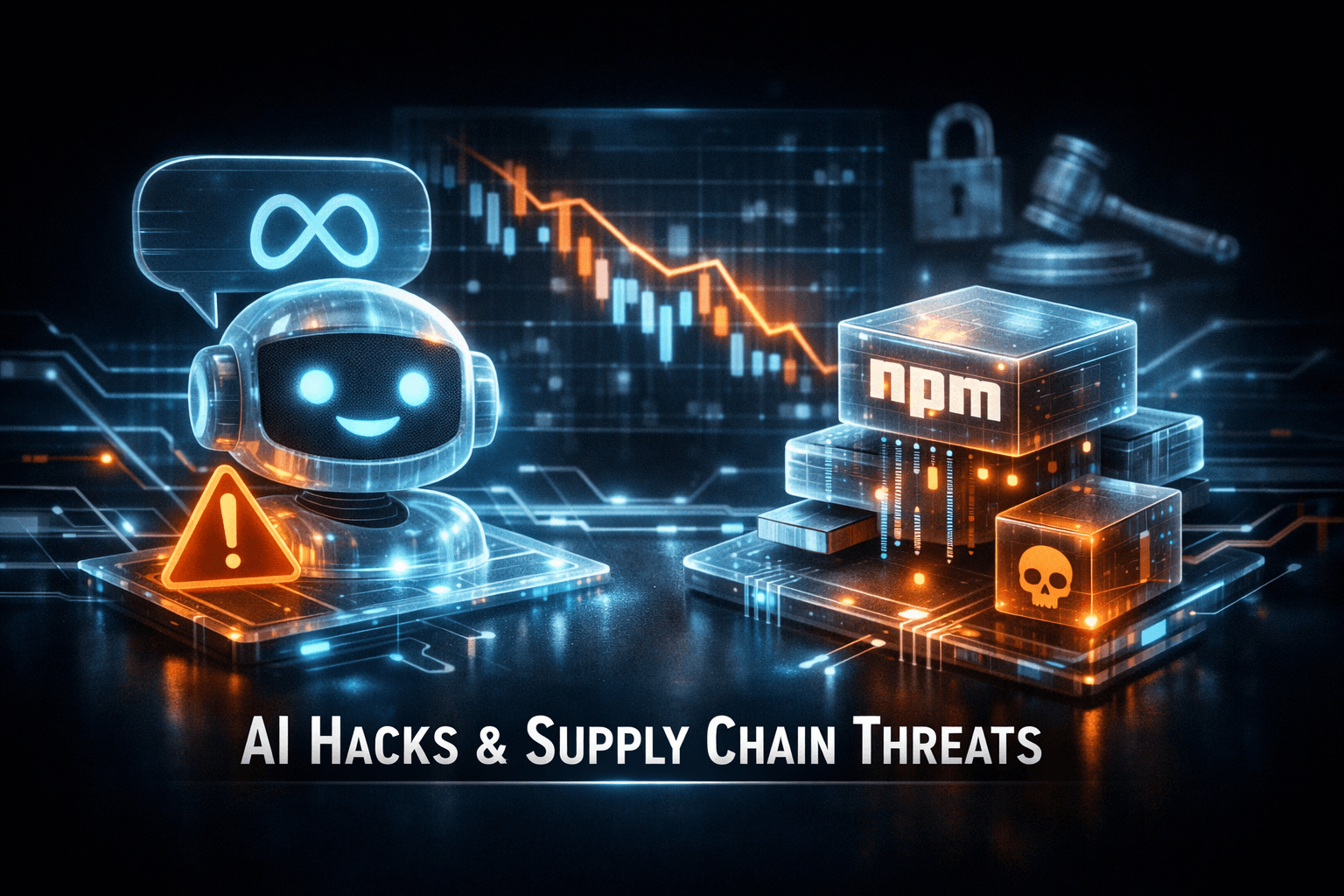
The Big Picture
Security and operational risks came to a head in the technology sector today, as reports showed Meta's AI support chatbot was exploited to hijack Instagram accounts and researchers discovered malicious npm packages that steal cloud credentials. These incidents highlight how AI and open source supply chain issues are creating concrete threats to user safety and corporate reputation.
For you as an investor, that means scrutiny on AI deployments, customer support automation, and software supply chains will likely intensify. Companies that rely on automated support or third party packages may face increased compliance costs and short-term volatility.
Market Highlights
Today's headlines were led by breaches and software-supply risks, alongside smaller consumer tech stories that underscore shifting user behavior and DIY security measures.
- $META: Multiple outlets reported that Meta's AI support chatbot was used by attackers to change emails and reset Instagram passwords, prompting Meta to say it fixed the issue and investigate.
- Open source supply chain: Researchers flagged packages in the @redhat-cloud-services npm namespace that contained malware targeting credentials for GitHub Actions, AWS, GCP and Azure, raising concerns for developers and cloud operators.
- SpaceX IPO risk: TechCrunch highlighted that access to abundant, affordable water for data center cooling was listed as a material risk in SpaceX's IPO materials, underlining environmental and infrastructure constraints for hardware-heavy firms.
- Consumer-level fixes: ZDNet ran practical guides on adding VPNs to smart TVs and a $4 router reboot timer, showing users are taking network hygiene into their own hands.
- New products and content: The Mall launched a universal shopping feed and MX Linux released a distro aimed at newer hardware, while The Verge moved its podcast to a daily cadence with new content from creators like Casey Neistat.
Key Developments
Meta's AI support chatbot exploited, account takeovers reported
Multiple outlets including The Verge, TechCrunch and Techmeme reported that attackers used Meta's own AI support chatbot to change emails on Instagram accounts and then reset passwords. Meta says it fixed the vulnerability and is investigating, but the episode underscores the risks of delegating sensitive account actions to automated systems.
Implication for investors: Automated support can scale cost savings, but today's events show it can also amplify breach impact and regulatory attention, which could pressure reputation and operating costs for companies that lean heavily on similar systems. What does this mean for your exposure to firms using AI for critical account controls?
Supply chain malware found in npm packages targeting cloud credentials
Researchers discovered malicious code in packages under the @redhat-cloud-services namespace that executes via a preinstall hook and harvests credentials used for GitHub Actions and multiple cloud providers. The finding was documented on Step Security Blog and amplified across Techmeme and security channels.
Implication for investors: Software supply chain attacks are becoming more sophisticated and widespread. Firms with large developer footprints or heavy dependency on open source ecosystems may face remediation costs and operational disruption, and cloud service providers could see increased demand for hardened CI/CD controls.
Infrastructure and environmental risk surfaces in SpaceX IPO filing
TechCrunch reported that SpaceX disclosed water access for data center cooling as a material risk in its IPO paperwork. The acknowledgment links physical resource constraints to the tech sector's capital plans and growth strategies.
Implication for investors: Resource availability is increasingly part of technology firms' risk profiles, especially for companies scaling data center footprints. Environmental and local infrastructure factors could shape where companies invest and how regulators respond.
What to Watch
Monitor immediate reactions and follow-ups over the next 24 to 48 hours. Regulators, security vendors and large cloud providers will likely issue guidance or patches that affect near-term sentiment.
- Regulatory scrutiny: Watch for statements or inquiries from data protection and consumer agencies about automated support systems and account security. That could lead to guidance or enforcement actions.
- Patch and mitigation announcements: Track Meta's investigation updates and vendor advisories about the malicious npm packages. Prompt fixes could limit damage, while slow responses could raise questions about governance.
- Supply chain audits: Companies and platform operators may accelerate third party package vetting and CI/CD hardening. If you follow developer-tool or cloud security vendors, expect heightened demand signals.
- Corporate disclosures: Keep an eye on earnings calls and investor presentations where management may be asked about AI risk controls, supply chain security, and infrastructure constraints like water access.
- User behavior shifts: Consumer guides on VPNs and cheap router rebooters suggest end users are taking more responsibility for network hygiene. Could increased consumer security spending follow?
Bottom Line
- Security incidents led the day's headlines, emphasizing operational and reputational risk across tech companies and platforms.
- Meta's chatbot exploit and malicious npm packages show both AI automation and open source supply chains are attack surfaces investors should track.
- Resource constraints such as water access can appear as material risks in IPO filings and shape capital allocation for hardware-intensive businesses.
- Expect increased regulatory and vendor activity in the near term, and look for remediation timelines from affected companies.
- Keep a selective approach as the sector digests these developments, and watch for follow-up disclosures tomorrow.
FAQ Section
Q: Should I change how I use connected devices after these stories? A: You should consider basic network hygiene like using strong passwords, enabling two factor authentication, and applying vendor security updates, as these steps reduce common attack vectors.
Q: Will the Meta incident hurt other AI projects? A: Analysts note the event raises broader scrutiny of AI in customer support and may slow or complicate deployments until controls and oversight improve.
Q: How serious is the npm supply chain problem for cloud services? A: Data suggests supply chain malware can expose credentials and automation pipelines, so organizations should audit dependencies and enforce least privileged credentials in CI/CD workflows.