The Big Picture
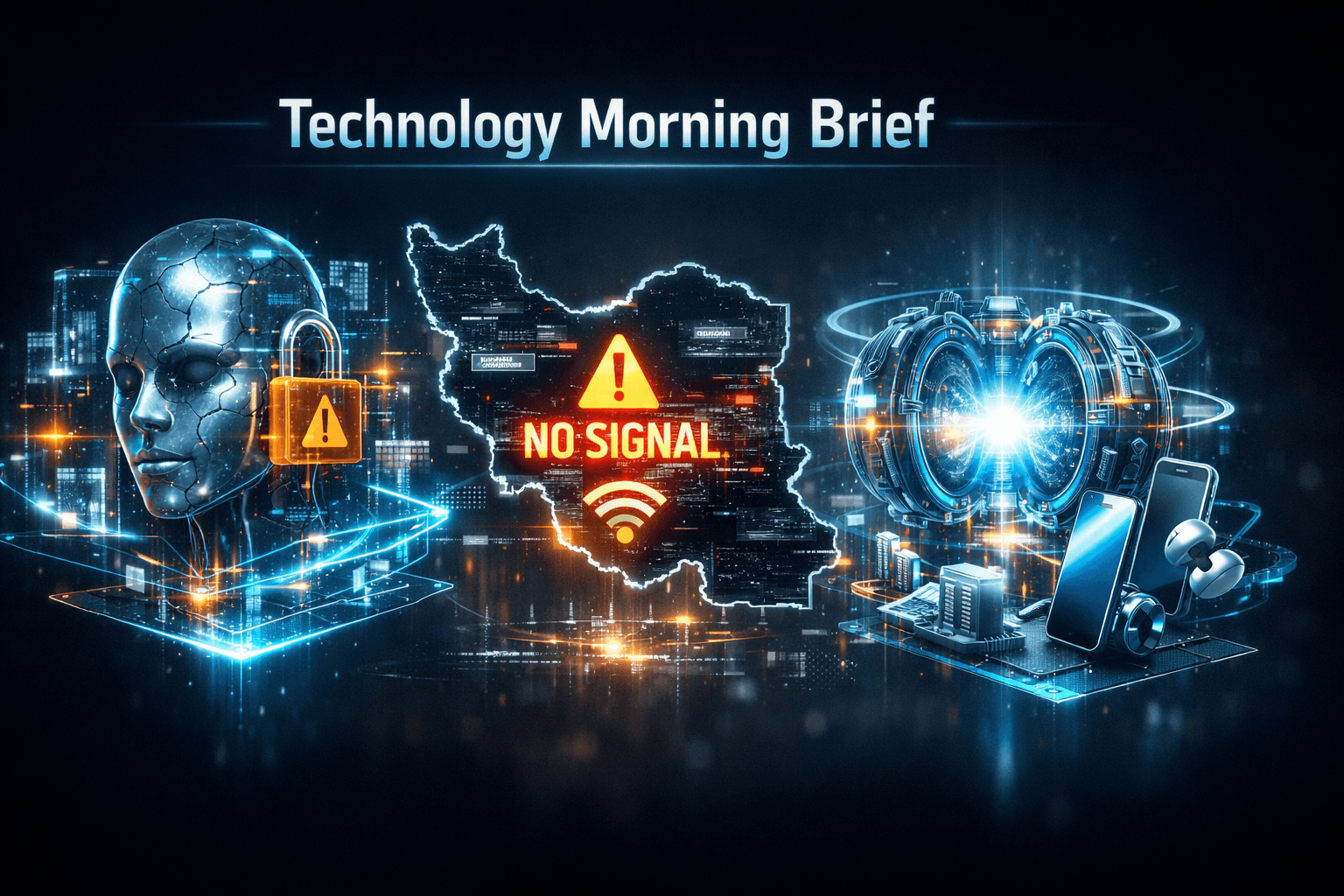
Today’s tech headlines are a study in contrasts. You’ve got breakthrough commercialization and new consumer devices sharing the spotlight with security threats and geopolitical disruption.
Why this matters to you is simple, technology isn’t just about products anymore. It’s also about policy, safety and supply chain resilience, and those factors can affect valuation, regulation and consumer demand in different ways.
Market Highlights
Quick facts and movers to watch in the session.
- Inertia signed three agreements with Lawrence Livermore National Laboratory, a key step toward commercializing a fusion reactor and advancing energy infrastructure partnerships.
- OpenAI is again in the headlines, this time for internal policy positioning and outside criticism, while a separate security incident involved an attacker linked to Sam Altman’s home, spotlighting physical safety risks tied to AI leadership.
- Consumer hardware updates are visible across the board, from a redesigned Trump Mobile T1 phone to a new skinsuit-based cyclist airbag developed by Van Rysel and In&motion.
- Geopolitics remains front and center, Iran’s internet blackout entered its 45th day, affecting roughly 90 million people and increasing reliance on a domestic National Information Network.
- Items affecting public companies: $AMZN was in the news after a reported worker death at an Oregon facility, and consumer stories around wireless charging tips and tracker hardware touch $AAPL and broader accessories markets.
Key Developments
AI security and governance
Two AI-related items landed overnight. First, authorities say a 20-year-old charged in an attack on Sam Altman’s home had a document naming other AI executives, underscoring a physical security risk tied to the sector’s profile. Second, public debate over OpenAI’s policy agenda continues after critique of its political alignments.
For you, this means heightened regulatory and reputational scrutiny may stay elevated as lawmakers and companies respond. Which policy moves will stick and how quickly will firms adapt?
Consumer hardware and product testing
Product news ranged from a new wearable airbag built into a cyclist skinsuit by Van Rysel and In&motion to a redesign of the Trump Mobile T1 phone and positive long-term durability coverage for UAG’s Metropolis tracker card. ZDNet also released comparative testing between ChatGPT Plus and Google’s Gemini Pro and practical advice on wireless charging for iPhones.
These stories show incremental product improvements and competition across devices and services. You may see modest demand shifts in accessories and subscription services, and product durability can influence replacement cycles.
Energy tech commercialization
Inertia’s three agreements with Lawrence Livermore National Laboratory mark a real step toward commercial fusion development. TechCrunch frames this as a move to bring an elaborate science experiment closer to market.
Energy-related commercialization can change long-term industrial demand patterns, but it’s a multi-year story. For now, the deal is notable for signaling private-public collaboration and potential future capital needs.
What to Watch
Here’s how to turn headlines into a checklist you can follow through the trading day and beyond.
- Security and policy: Monitor any regulatory responses or corporate disclosures tied to the attack on an AI executive and the OpenAI debate. These could trigger governance reviews or security spending announcements.
- Earnings and guidance cadence: Keep an eye on quarterly updates from major platforms and device makers, especially $AAPL and Alphabet, where AI and consumer hardware competition are top themes.
- Commercialization milestones: Watch for further announcements from Inertia and government labs, including timelines, investment rounds and pilot projects. Those will tell you whether the fusion story is advancing or stalling.
- Geopolitics and connectivity: The Iran blackout is a reminder that internet resiliency is a strategic issue. If other regions see similar measures, cloud providers and content delivery networks may face renewed scrutiny.
- Operational risk: Follow $AMZN’s statements about the reported worker death and any safety audits or policy changes. Labor and logistics remain a persistent operational variable for retailers and cloud logistics providers.
You’ll want to check news flow on these items throughout the day. Which developments will move the needle and which will be background noise?
Bottom Line
- Mixed headlines create a balanced risk environment for tech stocks today, with both innovation wins and operational or geopolitical risks in play.
- AI remains a two-sided narrative, bringing product and policy headlines that can affect sentiment and governance costs.
- Commercialization moves in fusion are notable but long term, while consumer hardware updates can influence short-term accessory and services demand.
- Operational and safety issues, including the reported Amazon worker death and the security incident involving an AI executive, are reminders of real-world risks investors should track.
- Stay selective, monitor company disclosures and regulatory signals, and follow the specific catalysts listed above to guide your attention today.
FAQ Section
Q: What immediate market actions should I expect from these headlines? A: You may see short-term volatility around companies named in security or safety stories and measured interest in companies tied to consumer hardware and energy commercialization, according to market commentary.
Q: Will the Iran internet blackout affect global tech firms? A: It can affect regional user growth, ad revenue and cloud traffic, and it raises questions about geopolitical risk for firms with exposure in the region.
Q: How material is the Inertia-Livermore deal for investors? A: The agreements are an important commercialization step, but they signal a long horizon for revenue and require follow-up on pilot timelines and capital commitments.