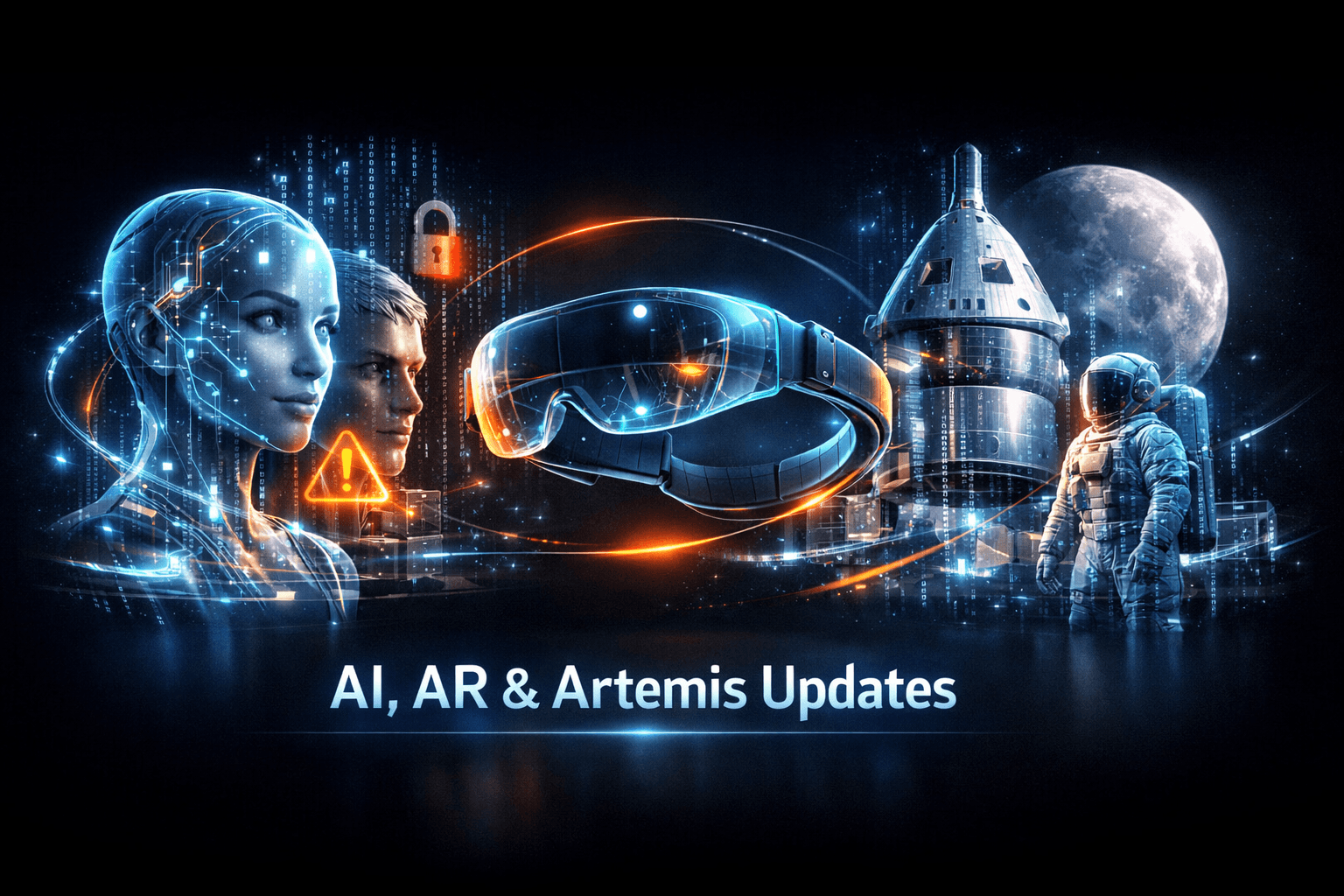
The Big Picture
Overnight technology headlines delivered a split picture for investors, with solid adoption signals from AI rivals and a sweep of product and space milestones contrasted by legal fights and a high-profile security incident. Markets were closed on Saturday, so any price reaction will show up when U.S. trading resumes on Monday, Apr 13; use references noted here as of Friday, Apr 10 or earlier.
The key takeaway is simple: you can see momentum in customer adoption and hardware innovation, but you should also watch legal and access risks closely. What does that mean for portfolios? It points to selective exposure and active monitoring rather than broad assumptions about the sector.
Market Highlights
Quick facts and figures to scan before the next session.
- Ramp adoption snapshot: 30.6% of U.S. businesses paid for Anthropic tools in March, up from 24.4% in February, while OpenAI adoption held near 35% month over month, according to the Financial Times summary of Ramp data.
- Legal and security headlines intensified: OpenAI called Elon Musk's amended lawsuit filings a "legal ambush" in a Bloomberg-reported court filing, and a 20-year-old was arrested after allegedly throwing a Molotov cocktail at OpenAI CEO Sam Altman's home, reported by The Verge.
- Product and hardware focus: ZDNet published an expert review of the best AR and MR glasses for 2026, spotlighting an accelerating market for mixed reality devices from major players including those linked to $AAPL, $META, and $MSFT ecosystems.
- Space tech milestone: NASA's Artemis II crew splashed down successfully in the Pacific Ocean, a widely covered TechCrunch and Verge story that renews attention on aerospace suppliers such as $LMT and $BA.
- Platform controversy: Anthropic temporarily banned the creator of OpenClaw from using Claude after a pricing change, according to TechCrunch, raising questions about developer relations and platform governance.
Key Developments
AI adoption divergence: Anthropic gains ground
Ramp's data signals rising paid adoption for Anthropic, with March adoption jumping to 30.6% from 24.4% in February. OpenAI's business adoption remained near 35% and showed little month-over-month change, indicating a competitive dynamic where Anthropic is closing some of the gap with offerings like Claude Code.
For you, that means technology spending trends could shift toward niche or differentiated AI products, so watch vendor-specific metrics and platform pricing as indicators of momentum.
OpenAI legal fight and security incident increase scrutiny
OpenAI's court filing calling Elon Musk's amended suit a "legal ambush" elevates regulatory and litigation risk for one of the sector's leading AI outfits. At the same time, the arrest in the alleged attack on Sam Altman adds a security and reputational dimension to those risks.
Will legal battles and safety incidents slow enterprise adoption? They may increase scrutiny from customers and regulators, and you should track filings, hearing dates, and any policy responses closely.
AR hardware reviews and Artemis II landing renew product and aerospace narratives
ZDNet's hands-on roundup of the best AR and MR glasses reinforces a growing narrative that mixed reality devices are becoming practical for work and entertainment. That narrative supports broader hardware and software ecosystems tied to $AAPL, $META, and $MSFT.
Meanwhile, Artemis II's successful splashdown put the spotlight back on space tech after a milestone human mission. Contractors and platform vendors could see renewed interest, but remember this is a long-cycle industry with selective exposure benefits.
What to Watch
As markets reopen on Monday, Apr 13, here are the catalysts and risks that could move technology names you follow.
- Legal calendar, filings, and hearings related to the OpenAI litigation, along with any public statements from Elon Musk and OpenAI. These could shape sentiment and regulatory focus.
- Anthropic pricing and developer access policies after the OpenClaw ban, plus follow-up Ramp data in coming months. Those metrics will tell you whether the adoption trend is sticky.
- AR/MR product releases and reviews, particularly from ecosystems around $AAPL, $META, and $MSFT. New launches or developer tools could drive software monetization paths.
- Policy and labor items, such as the FAA's push to recruit gamers for air traffic control, which signals creative workforce solutions and regulatory creativity that could spill into tech hiring conversations.
- Geopolitical and safety risks after the attack linked to OpenAI leadership, plus any company-level security updates. These are reputational and operational risk factors you should monitor.
Bottom Line
- Adoption trends are mixed but meaningful, with Anthropic showing month-over-month gains while OpenAI's share was flat in the latest Ramp snapshot.
- Legal and security developments raise near-term headline risk for major AI players and may influence customer and regulatory behavior.
- Hardware and space milestones, such as AR/MR reviews and Artemis II, provide positive narrative catalysts for related suppliers and ecosystems.
- Be selective and stay informed: watch vendor-specific metrics, court filings, and platform policy changes before drawing conclusions about longer-term market share shifts.
FAQ Section
Q: How should I interpret the Ramp adoption numbers for Anthropic and OpenAI? A: Ramp's March data shows Anthropic's paid adoption rising to 30.6% from 24.4% in February while OpenAI stayed around 35%, suggesting competitive gains for Anthropic but not a definitive market-share reversal yet.
Q: Do the legal filings against OpenAI mean broader regulatory action is coming? A: Not necessarily, but intensified litigation raises the chance of closer regulatory scrutiny, so you should monitor court schedules and any related policy commentary.
Q: Will the Artemis II splashdown help aerospace tech stocks? A: Successful missions tend to boost industry interest and contractor visibility, but aerospace results often play out over long contracts and multi-year cycles, so watch contract announcements and NASA program updates.