The Big Picture
Big hardware moves and AI headlines set the tone for the technology sector heading into Monday, Mar 23. Elon Musk’s Terafab chip plant announcement and a meteoric rise in a Huawei-backed photonics chip maker underline continued investment in AI infrastructure and optical interconnects, which could matter to hardware supply chains for years.
At the same time, regulatory and provenance issues cropped up across the industry, from the SEC formally dropping its long-running probe into Faraday Future to questions about AI sourcing in developer tools and games. You’ll want to weigh growth potential against governance and geopolitical risk as trading resumes.
Market Highlights
Markets were closed on Sunday, Mar 22, and the last U.S. trading day was Friday, Mar 20. Below are the key, quantifiable takeaways from the stories that circulated while U.S. markets were offline.
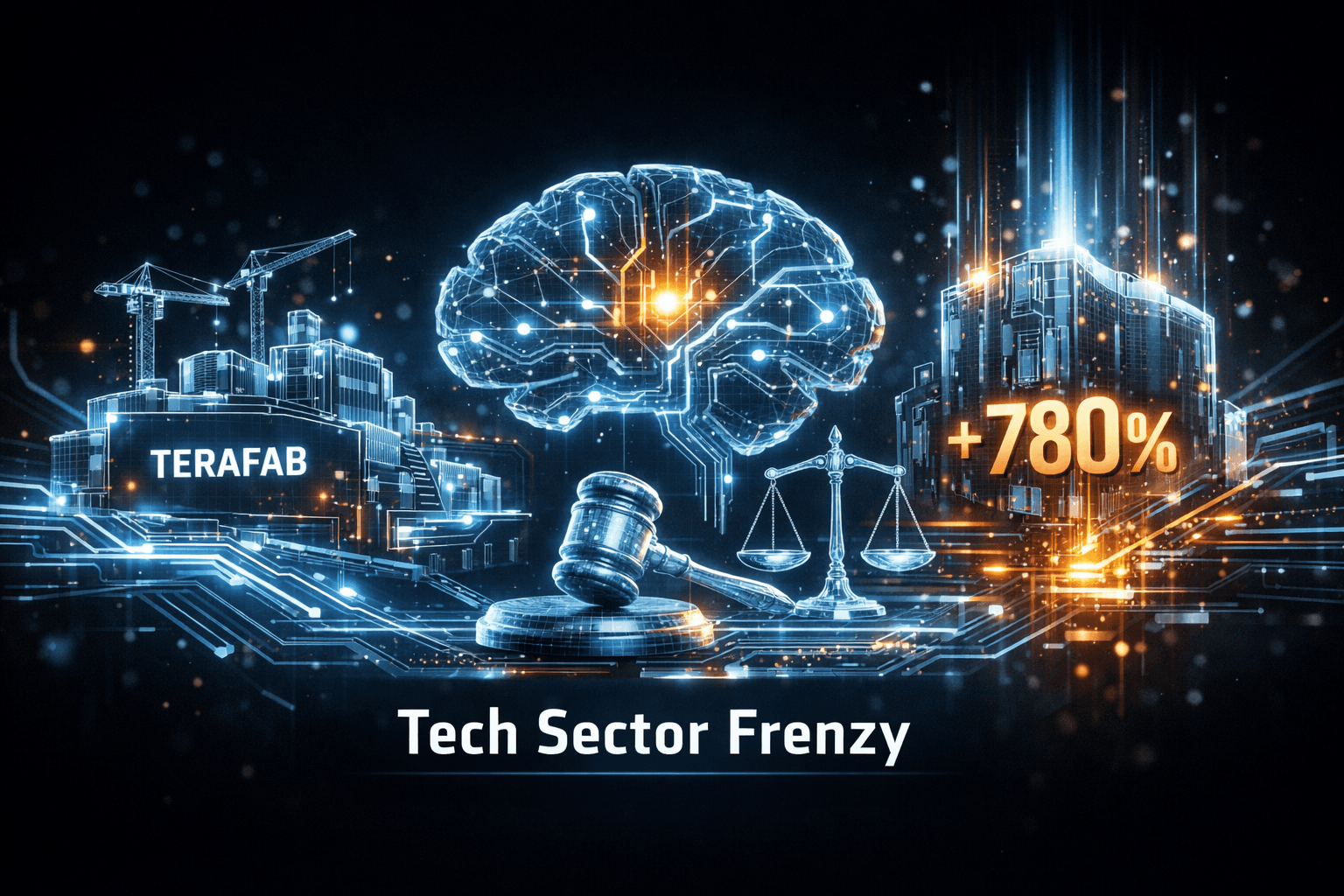
- Yuanjie Semiconductor Technology, a Huawei-backed photonics chip maker, has seen its stock surge roughly 780% over the past year, highlighting intense investor interest in AI-oriented optical interconnects.
- Elon Musk announced plans for a Terafab chip plant in Austin, Texas, aimed at scaling chips for robotics, AI and space applications. The plan explicitly involves Tesla and SpaceX operational links, raising strategic implications for $TSLA.
- The SEC dropped a four-year investigation into EV startup Faraday Future after multiple subpoenas and depositions, removing a legal overhang for the company.
- Amazon’s Big Spring Sale runs March 25-31, offering short-term consumer demand signals to watch for $AMZN, even if it’s not as large as Prime Day.
Key Developments
Terafab and the chip supply chain
Elon Musk said he’s building a Terafab chip plant in Austin that will be jointly run by Tesla and SpaceX. The stated goal is to produce chips at scale for robotics, AI and space-based data centers, a move that’s meant to hedge concerns about the broader chip industry’s capacity and supply-chain resilience.
For you, this raises a few questions: will vertically integrated chip production materially change supply dynamics, and how long before output meaningfully affects available capacity? Analysts note such projects take years to scale, so near-term market effects may be limited, but the announcement signals a longer-term strategic push into domestic chip manufacturing.
Photonic chips surge, and why it matters
Forbes coverage of Yuanjie, a Huawei-backed maker of photonic chips used in AI data center optical interconnects, highlights how narrow infrastructure plays can explode when end demand for AI compute rises. The reported 780% stock surge over the past year points to intense investor appetite for companies tied to faster, lower-latency interconnects inside AI clusters.
That’s a classic case of infrastructure catching up to software-driven demand. If you’re tracking AI hardware, note that winners in photonics and optical interconnects could see outsized returns, but geopolitical and supply-chain constraints can amplify volatility.
AI models, provenance and consumer trust
Several stories this weekend focused on where AI models and assets come from. Cursor acknowledged its new coding model was built on top of Moonshot AI’s Kimi, a disclosure that raises sourcing and geopolitical questions given current sensitivities around Chinese AI models. Separately, game developer Pearl Abyss apologized after AI-generated art appeared in Crimson Desert’s final release, saying the art was meant to be replaced before launch.
These incidents highlight two risks you should monitor: compliance and reputational damage. Companies that rely on third-party or foreign-trained models may face regulatory scrutiny or user backlash, and the Crimson Desert episode shows how production shortcuts can create long-term brand pain.
What to Watch
Heading into Monday, Mar 23, here are the catalysts and risks that could steer technology names you follow.
- Chip project timelines — Watch for details on Terafab’s financing, permitting and production timeline. Early public filings or supplier deals would move the needle.
- AI model disclosures and regulation — Expect more scrutiny of model provenance and licensing. Will regulators or major customers demand stricter supply-chain transparency?
- Earnings and guidance season — As companies report results in coming weeks, look for commentary on AI-related capex and supply-chain constraints that could affect hardware makers and cloud providers.
- Consumer demand signals — Amazon’s Big Spring Sale (Mar 25-31) will offer short-term insight into gadget sales and promotional pressure ahead of Prime Day timing speculation.
- Geopolitical and security probes — Profiles like the one on Bitmain highlight how national-security questions can reframe partnerships and capital flows, especially for crypto and hardware firms connected to China.
Bottom Line
- Infrastructure is the weekend’s dominant theme: chip capacity and photonic interconnects are getting fresh investor attention, but timelines to production remain long.
- Regulatory and provenance issues are rising, from the SEC’s closure of Faraday’s probe to concerns over AI model sourcing and AI-generated assets in gaming.
- You should watch for concrete milestones, not just announcements — permits, supplier agreements and timelines matter for chip facilities and for photonics suppliers.
- Consumer promotions like Amazon’s Big Spring Sale will give early signals on demand ahead of larger seasonal events; short-term promotions can still influence margins and inventory plans.
- Overall, the mix of bullish capital investment and bearish governance risk leaves the near-term picture mixed, so stay selective and monitor developments as markets reopen.
FAQ Section
Q: What does Musk’s Terafab announcement mean for Tesla and chip supply? A: It signals a strategic push into domestic chip capacity that could reduce long-term supply risk, but real production effects will take years and depend on financing and supplier deals.
Q: Should I be worried about AI models built on foreign foundations like Kimi? A: You should monitor disclosures and any regulatory guidance. Data suggests sourcing and licensing transparency will be a growing compliance focus for customers and regulators.
Q: How significant is the Faraday SEC development? A: The SEC dropping a four-year probe removes a legal overhang for Faraday Future, but the company still faces operational and market challenges, so evaluate broader fundamentals rather than the legal outcome alone.