The Big Picture
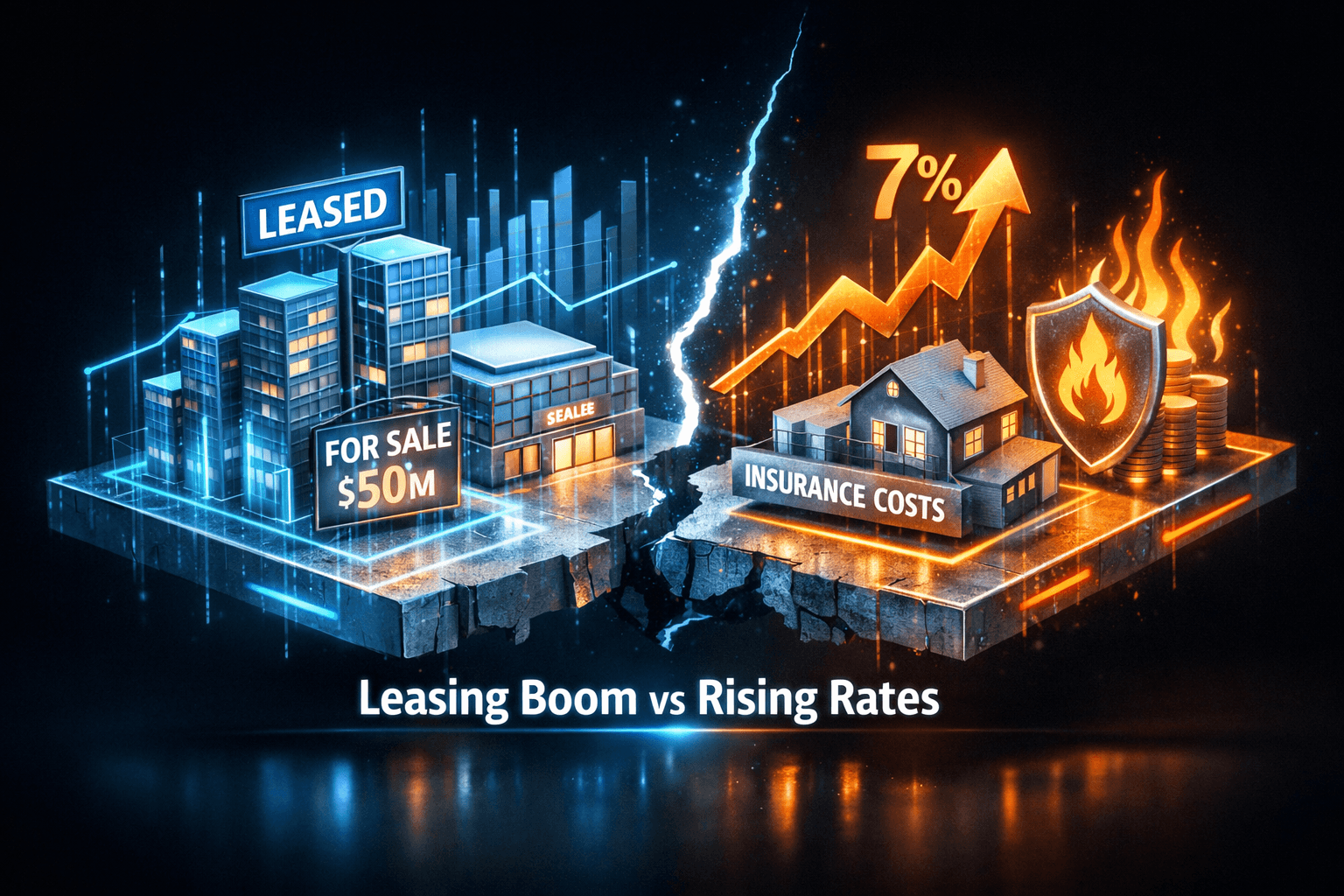
Commercial real estate activity kept humming today with several sizable leasing wins and a notable retail asset sale, showing continued tenant demand in industrial, grocery-anchored retail and neighborhood retail. At the same time, rising mortgage rates and record-high homeowners insurance costs are tightening the headlines for owners and buyers in the housing market.
Why this matters to you: leasing momentum suggests stable rental demand for many property types, but financing and insurance pressures mean acquisition economics and home affordability are under fresh scrutiny.
Market Highlights
Quick facts and the numbers investors watched today.
- Industrial/leasing: Innovo Property Group leased a combined 231,000 square feet at 28-90 Review Avenue, with Roadway Moving taking 117,000 square feet and Contenur taking the balance.
- Retail transaction: Kite Realty Trust sold City Center in White Plains for $50.0 million; JLL Capital Markets arranged the sale and $39.2 million acquisition financing for the buyer, PropUp Group. (Seller: $KRG, arranger: $JLL)
- Office and fashion: Bagatelle International signed a roughly 23,785 square foot full-floor lease at 463 Seventh Avenue, part of two new office deals totaling about 33,083 square feet.
- Neighborhood retail: Two supermarkets, including CTown, signed long-term leases on Atlantic Avenue in Prospect Heights, with the largest lease at 8,400 square feet and a 20-year term.
- Industrial manufacturing: Nominal Machining leased 21,105 square feet in Rancho Cordova; the deal was handled by Newmark agents. (Broker: $NMRK)
- Housing and finance headlines: Mortgage rates climbed above 7%, oil touched $100 per barrel, and homeowners insurance averaged a record $209 per month in Q2 2026.
Key Developments
Industrial demand stays robust in core coastal markets
Innovo Property Group's leases at 28-90 Review Avenue total 231,000 square feet and underscore sustained demand for last-mile industrial and logistics footprints in Long Island City. Roadway Moving's 117,000 square foot commitment highlights how nontraditional industrial occupiers are taking large blocks of space, and that could support rents in infill markets.
For you, that means selective exposure to industrial-focused REITs or funds may still reflect solid fundamentals, though pricing and caps vary by submarket.
Retail transactions and neighborhood grocers show investor appetite
Kite Realty Trust's $50 million sale of City Center in White Plains signals continued investor appetite for grocery-anchored retail, especially downtown assets with stable income. JLL's financing placement of $39.2 million suggests lenders remain willing to back well-leased retail assets.
Meanwhile, supermarket leases on Brooklyn's Atlantic Avenue reinforce the importance of essential retail in mixed-use neighborhoods, as grocers lock in long leases that underpin cash flow stability.
Residential and finance pressures complicate the picture
Mortgage rates topping 7% and homeowners insurance costs averaging $209 per month add pressure on housing affordability and owner operating costs. The spike in insurance premiums is particularly relevant in regions facing climate or underwriting stress.
These headwinds could weigh on single-family transactions and force firms with residential exposure to reassess underwriting. What does that mean for your exposure to residential REITs or mortgage-sensitive securities?
What to Watch
Near-term catalysts that will keep moving prices and sentiment across property types.
- Interest rates and policy: Fed commentary, upcoming economic data and Treasury yields will keep mortgage spreads and borrowing costs in focus. Higher yields typically raise cap rate pressure for rate-sensitive property valuations.
- REIT and earnings calendar: Watch urban and industrial REIT reports this quarter for leasing velocity, rent growth and occupancy updates. Tenant demand metrics will clarify whether today's deals are isolated or part of broader momentum.
- Insurance and regulatory action: State-level insurance initiatives or federal relief discussions could affect property operating expenses and the cost of insuring portfolios, especially in disaster-prone markets.
- Geopolitical risk and commodities: Oil trading near $100 and geopolitical developments drove mortgage rates today. Continued escalation could keep borrowing costs elevated and slow transaction volume.
- Legal and market structure: The Fifth Circuit's affirmation on the NAR three-way agreement could reduce litigation tail risk for MLS and brokerage practices, but appeals and other rulings remain a watch item for housing market intermediation.
Bottom Line
- Leasing and transaction activity across industrial, grocery-anchored retail and neighborhood retail remains constructive, supporting cash flows in those niches.
- Rising mortgage rates above 7% and record homeowners insurance costs are meaningful headwinds for residential demand and owner operating expenses.
- Lenders and capital markets are still financing well-leased assets, as shown by the $39.2 million loan tied to the $50 million White Plains sale.
- Be selective, because sector performance is bifurcated between commercial leasing strength and residential financing pressure.
- Analysts note that short-term volatility will likely track rates and insurance developments, so stay alert to macro data and legal rulings that affect market structure.
FAQ Section
Q: How will mortgage rates above 7% affect property prices? A: Higher mortgage rates generally raise borrowing costs, which can put upward pressure on cap rates and reduce buyer affordability, potentially cooling transaction volumes.
Q: Are supermarket and grocery-anchored leases safer than other retail? A: Grocery-anchored assets typically show stronger occupancy and longer lease terms, making them more resilient, but location and lease structure still drive outcomes.
Q: Should you worry about insurance cost increases? A: Rising homeowners insurance raises operating costs for owners and affects affordability, so you should monitor insurer availability, state relief efforts and portfolio expense assumptions.