The Big Picture
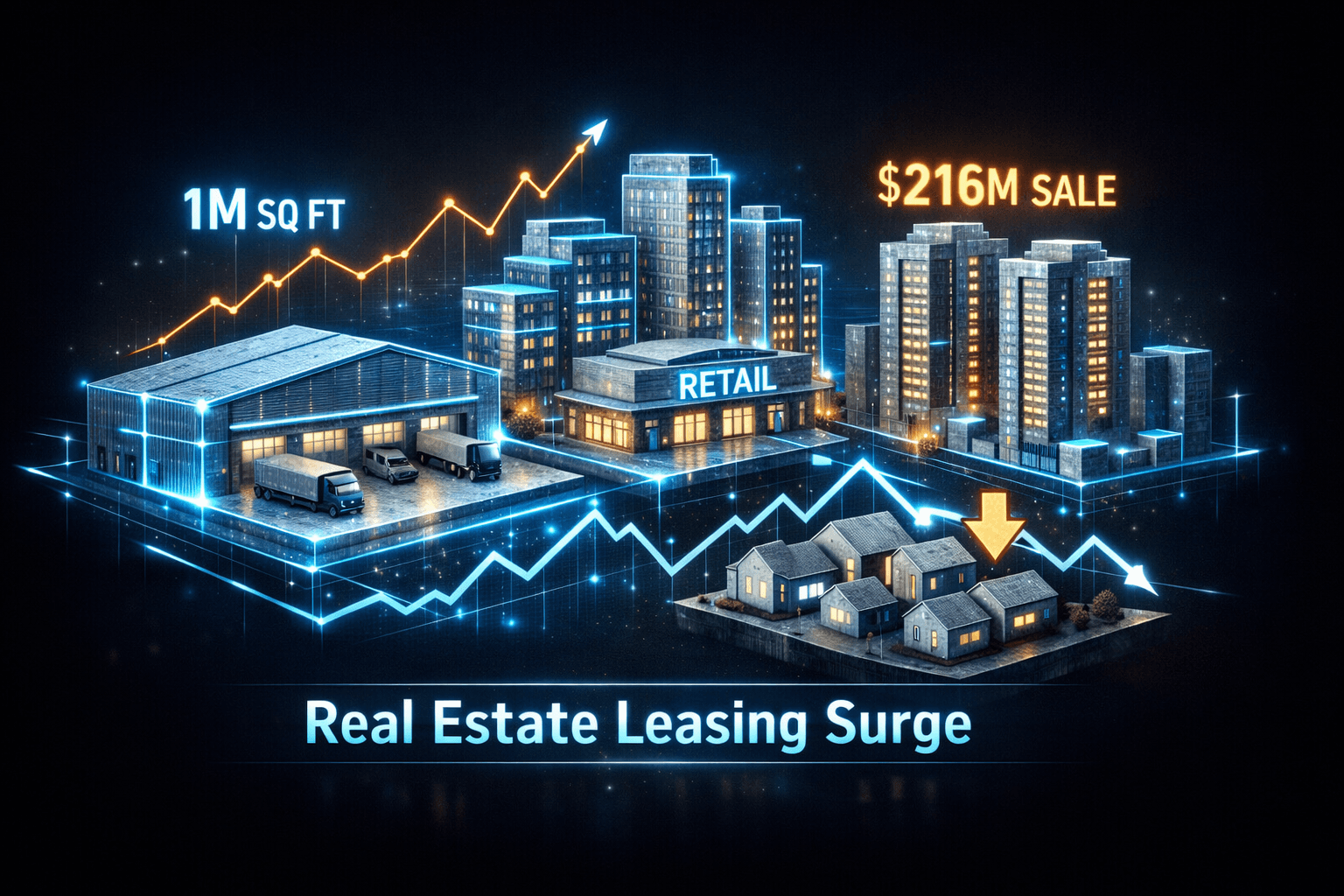
Leasing activity and deal flow took center stage in today’s Real Estate headlines, signaling continued demand across property types even as affordability worries linger. Major transactions ranged from a 1 million square foot industrial lease in Texas to more than 113,000 square feet of new office leasing at Transamerica Pyramid Center and a $215.8 million multifamily sale in Northern Virginia.
That mix matters because it shows where capital is moving today, and what might support valuations tomorrow. If you own exposure to real estate securities your portfolio could see sector rotation toward industrial and stabilized multifamily assets, while residential builders face pressure from affordability challenges.
Market Highlights
Quick facts and notable moves from today that you should know.
- Industrial: A packaging company signed a 1,000,000 square foot lease in Justin, Texas at 114 Logistics Park, underscoring continued demand for large distribution hubs near Fort Worth.
- Office: Isara Laboratories took 6,009 square feet at 515 West 20th Street in Manhattan, and YODA PLC reported over 113,000 square feet of leasing at Transamerica Pyramid Center since the start of 2026.
- Multifamily: Greystar sold a 423-unit luxury tower in Arlington, Virginia to GID for $215.8 million, reflecting active capital recycling in the sector.
- Retail investment: Southern California retail investment jumped 62 percent in H1 to $3.52 billion, pointing to renewed investor appetite in gateway markets.
- Residential sentiment: The NAHB/Wells Fargo Housing Market Index fell again in July as affordability pressures persist, providing a counterweight to the upbeat leasing and capital news.
- Brokerage and leasing wins: Bradford Allen closed roughly 25,000 square feet in medical leases; KLNB represented a restaurant lease at National Harbor; and a top-producing team moved to Compass Atlanta after a long run at Keller Williams.
Key Developments
Industrial demand: 1 MSF lease in Justin, Texas
A single anonymous packaging tenant signed a full-building, 1,000,000 square foot lease at 114 Logistics Park in Justin, north of Fort Worth. The space features 40 foot clear heights and significant parking, making it well suited for distribution and packaging operations. For you that means industrial fundamentals remain tight, especially for bulk distribution product near major logistics corridors.
Office momentum under new ownership at Transamerica Pyramid Center
YODA PLC reported seven leasing transactions totaling more than 113,000 square feet at Transamerica Pyramid Center since the start of the year, with five deals after it acquired the property in March. These leasing wins suggest active demand for well-positioned downtown office assets, and they show how fresh ownership can accelerate leasing velocity and tenant improvements.
Capital recycling and retail investment pick up
Greystar’s $215.8 million sale of a 423-unit tower to GID highlights continued secondary-market transactions in multifamily. At the same time Southern California retail investment rose 62 percent to $3.52 billion in H1 as investors chase income and scarcity. Those moves indicate capital is still chasing stabilized cash flow, even if certain segments face headwinds.
What to Watch
Here are the catalysts and risks that could shift sentiment into tomorrow and beyond. What should you monitor most closely?
- Earnings and earnings previews from large listed REITs, particularly industrial and multifamily operators, will show whether rent growth and occupancies are holding up under higher financing costs.
- NAHB and housing data next week, along with mortgage rate moves, will be key for homebuilder stocks and single family housing demand. Affordability remains a clear risk for new construction starts.
- Tenant demand in major coastal office markets deserves attention, especially leasing velocity at buildings repositioned under new owners like Transamerica Pyramid Center. That will show whether downtown offices can stabilize.
- Capital flows into retail and niche assets in gateway markets may accelerate if investors seek yield. Track transaction comps and cap rate trends in Southern California for pricing signals.
- Watch macro variables such as Treasury yields and funding availability, because financing terms will shape deal economics for the largest transactions you see in the market.
Bottom Line
- Leasing and transaction activity was the headline today, with sizeable deals in industrial, office, and multifamily signaling durable demand in those segments.
- Retail investment surged in Southern California, showing appetite for income-producing retail in gateway cities despite fewer listings.
- Builder confidence fell in July, so residential exposure remains sensitive to affordability and rate moves.
- New ownership at landmark office assets is driving leasing wins, which could support valuations for repositioned properties.
- For tomorrow expect focus on listed REIT results and housing data, which will help clarify whether momentum is broad based or concentrated in specific property types.
FAQ Section
Q: How should I interpret the 1 million square foot industrial lease? A: It signals continued strong demand for bulk logistics near major transport hubs and suggests industrial occupancies remain tight in key markets.
Q: Does the Greystar sale mean multifamily values are rising? A: The sale shows active capital recycling into stabilized multifamily, but you should watch yield spreads and financing costs to gauge sustainable valuation trends.
Q: What does the drop in builder confidence mean for stocks and housing? A: Lower builder confidence points to weaker new home starts and potential pressure on construction firms and suppliers, while renters and multifamily owners may benefit from constrained new supply.