The Big Picture
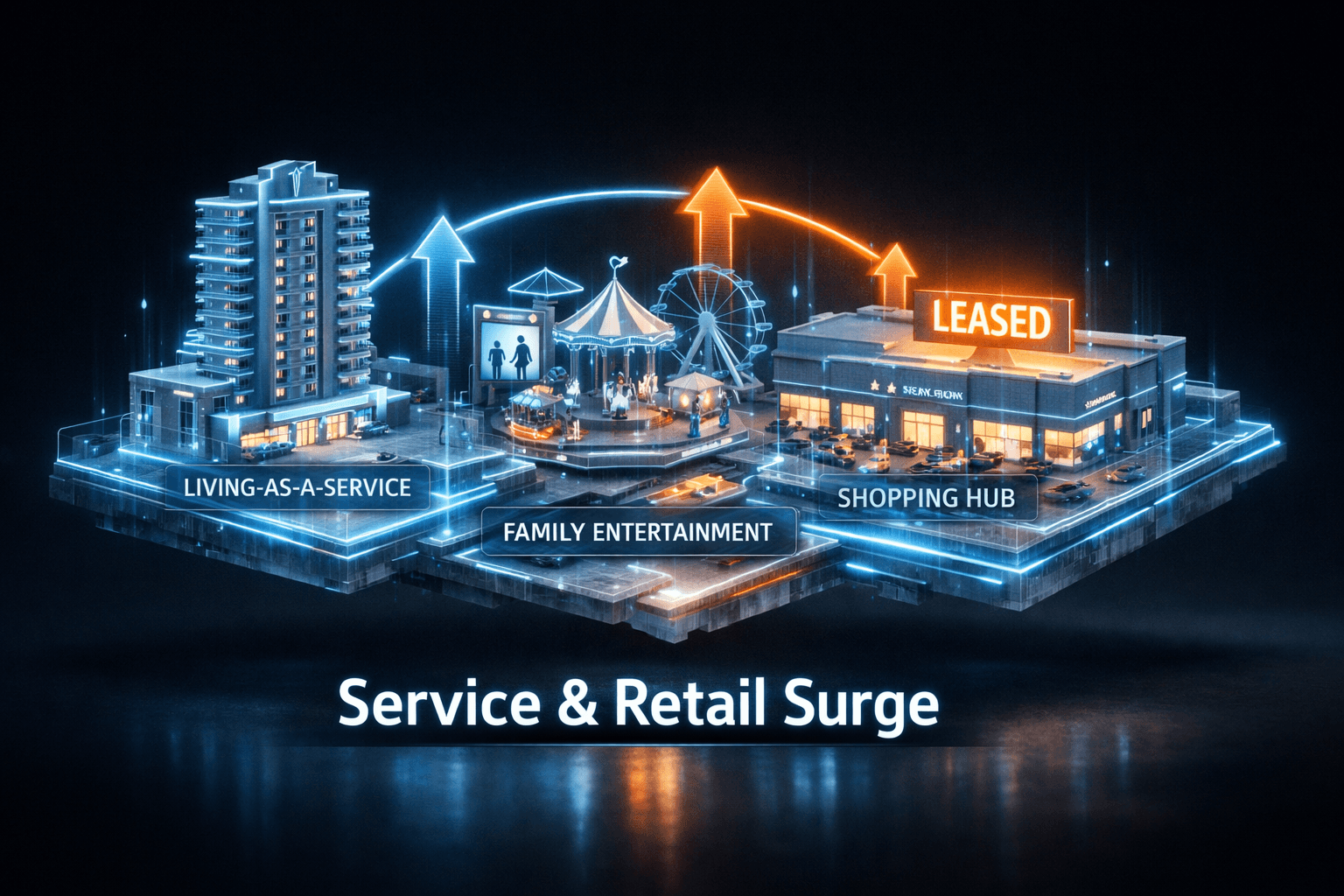
Multifamily operators and retail developers are finding fresh ways to expand revenue as demand patterns shift. A Deloitte-backed push toward Living-as-a-Service and a wave of experiential retail repurposing are giving owners new levers to grow cash flow, while pre-leasing activity in Southern California shows tenant demand ahead of construction.
That matters to you because these trends affect occupancies, rent resilience, and asset valuations across core and value-add strategies. If you own or follow real estate names, today’s stories suggest owners are adapting to capture subscription income and experiential foot traffic, not just rents and leases.
Market Highlights
Quick facts and figures to scan before the open.
- Living-as-a-Service is gaining traction as a multifamily strategy, according to a recent Deloitte-cited report covered by Connect CRE, with operators exploring subscription-driven platforms and expanded onsite services.
- Retail repurposing example: a 160,000-square-foot former trade center in Farmers Branch, Texas, was converted into an 11 MAX Indoor Fun Park, with additional entertainment tenants planned.
- NewMark Merrill secured 11 tenants for a Victorville, California shopping hub before ground was broken, including Ross Dress For Less, which signed 25,000 square feet. A 1-acre 7-Eleven fuel and convenience site is also planned.
- Large pre-leases and entertainment anchors are signaling developer confidence in adaptive reuse and suburban retail demand, particularly in Sun Belt and Inland Empire markets.
Key Developments
Living-as-a-Service Could Lift Multifamily Margins
Connect CRE highlights a Deloitte-backed trend where apartment owners move beyond amenities to subscription-style service platforms. Operators are testing concierge services, bundled utilities and amenities, tech-enabled convenience, and recurring service fees to boost ancillary revenue.
For investors, this matters because recurring service revenue can improve NOI predictability and lower vacancy sensitivity. Are management teams equipped to execute these platforms at scale, and will tenants pay for bundled convenience? Those questions will shape winners in the multifamily space.
Experiential Retail Gains Ground with Entertainment Conversions
A 160,000-square-foot example in Farmers Branch, Texas, shows how landlords are repurposing big-box and legacy assets into family-oriented entertainment destinations. The 11 MAX Indoor Fun Park anchors the space, and developers are adding rides and leisure concepts to drive weekday and weekend traffic.
That strategy gives retail landlords a path to higher foot traffic and better tenant mixes. If you follow retail or mall-adjacent properties, look for similar adaptive reuse plays in secondary and tertiary markets, where construction costs and land availability support conversions.
Victorville Pre-Leases Signal Retail Demand, Developer Confidence
Commercial Observer reports NewMark Merrill signed 11 tenants for a Victorville shopping hub ahead of groundbreaking. Ross Dress For Less took 25,000 square feet, and 7-Eleven will develop a 1-acre fuel and convenience node.
Pre-leasing steps up project de-risking for lenders and equity partners. Analysts note that securing national tenants early can shorten lease-up timelines and improve initial cash flow, which in turn supports valuations and financing terms.
What to Watch
Expect a focus on execution and scalability in the weeks ahead. Watch how operators roll out subscription services and whether they can keep churn low and margins high. You should track pilot programs, fee structures, and tenant uptake data if it becomes available.
On retail, monitor additional adaptive reuse announcements and any further pre-leasing data from the Victorville project. Will other developers replicate entertainment-centric conversions? That could reshape demand for shopping-center redevelopment, especially in suburban markets.
Keep an eye on lending conditions too. Construction financing spreads and lender appetite will determine how quickly these projects move from blueprint to break ground. How tight are underwriting standards in your markets of interest, and what yields are lenders requiring?
Bottom Line
- Living-as-a-Service, if well executed, offers multifamily operators new recurring revenue streams and better NOI stability.
- Experiential and family-focused entertainment is proving a viable reuse strategy for large, underperforming retail spaces.
- Pre-leasing of 11 tenants in Victorville, including $ROST and a 7-Eleven fuel site, de-risks new retail projects and signals tenant demand ahead of construction.
- Focus on execution risks: platform rollouts, tenant retention, construction financing, and local market dynamics will determine outcomes.
- Data suggests momentum across multifamily and retail adaptation, but you should prioritize selectivity and follow announced pilot results and leasing metrics.
FAQ Section
Q: What is Living-as-a-Service, and why does it matter? A: Living-as-a-Service is a subscription-driven model where operators bundle services and amenities into recurring fees, and it matters because it can increase ancillary revenue and make occupancy less cyclical.
Q: Will entertainment conversions help struggling malls and big-box sites? A: They can, by driving foot traffic and diversifying tenant mixes, but success depends on local demand, execution, and cost-effective redevelopment plans.
Q: How should you track developer progress on pre-leased projects like Victorville? A: Watch construction milestones, tenant improvement timelines, permitting updates, and any reported lease commencement dates to gauge risk and expected cash flow timing.