The Big Picture
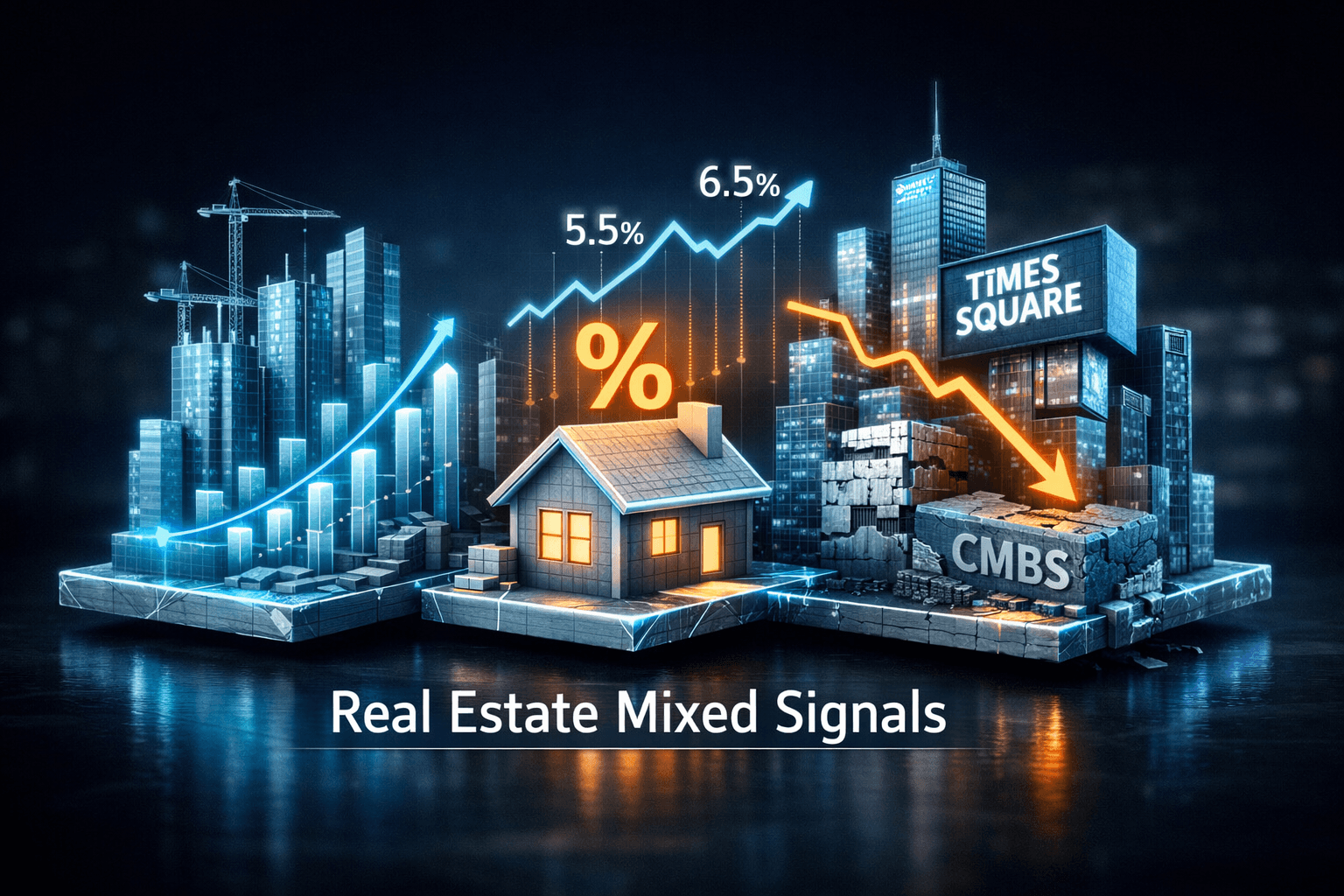
Commercial deals and development activity dominated headlines this week, even as mortgage rates stayed elevated and a high‑profile CMBS loan returned to special servicing. Markets are closed today, Sunday, May 17, so the price and market references below reflect data and events reported through Friday, May 15 and news published over the weekend.
This mix matters because it illustrates a split market, where transaction velocity and niche asset demand are holding up while financing costs and credit stress are producing localized strain. If you follow real estate, you need to weigh durable demand signals against tighter financing conditions and upcoming catalysts that could change the tone quickly.
Market Highlights
Key numbers and moves to know as you head into the long weekend and the next trading day, Monday, May 18.
- Housing demand: Pending home sales rose to 78,006 and purchase mortgage applications were up 7% year over year, signaling continued buyer activity even with rates elevated.
- Mortgage rates and yields: Different measures showed pressure, with some reports saying 30‑year fixed rates crossed 6.6% while Treasury‑linked yields neared 4.60% in mid‑May.
- Big sale comps: The Sophia Hollywood multifamily property traded for about $16 million, a three‑year high in price per unit for that submarket, brokered by Colliers $CIGI.
- High‑profile flip: The Chateau Grove condominium in Miami’s Coconut Grove sold for roughly $45.5 million to El‑Ad National Properties, a sign of selective strength in prime coastal markets.
- CMBS watch: A $647.5 million CMBS loan on 20 Times Square moved to special servicing, flagging borrower or cash flow stress at a marquee asset.
- Industrial and logistics: Realterm closed on an outdoor storage facility in Hunts Point, and Stotan Industrial launched a 306,980 square foot NASA Causeway Logistics Center in Titusville, Florida.
Key Developments
Housing demand holds up despite higher mortgage rates
HousingWire reported pending sales of 78,006 and a 7% year over year increase in purchase applications, indicating sustained buyer interest. At the same time, other coverage noted 30‑year mortgage rates above 6.6% and yields near 4.60% in mid‑May, so you’re seeing demand resilience even as financing costs bite into affordability.
What does that mean for you as an investor or prospective buyer? Expect pockets of activity to persist, especially in affordable or supply‑constrained markets, but also anticipate that rate volatility will continue to shape deal pacing.
Transaction activity and niche asset strength
Several transaction headlines point to selective pricing power. Colliers $CIGI marketed the 28‑unit Sophia Hollywood sale at about $16 million, reported as the highest price per unit in Hollywood in three years. In Miami, a terminated condo project flipped for roughly $45.5 million, showing appetite for redevelopment sites in strong submarkets.
On the industrial side, Realterm added an outdoor storage and maintenance facility in Hunts Point, marking its fifth Bronx property, and Stotan Industrial with CrossHarbor closed on land for a two‑building logistics campus in Titusville totaling more than 300,000 square feet. These moves underscore continued demand for industrial, logistics and value‑add plays.
Credit stress: 20 Times Square loan moves to special servicing
Commercial Observer and Morningstar Credit flagged that a $647.5 million CMBS loan tied to 20 Times Square returned to special servicing. That step usually indicates repayment or covenant concerns and raises questions about cash flow, ground lease structure, or tenant stability at a landmark asset.
This is a reminder that even marquee properties can face financing strain in a higher‑rate environment, and servicer activity is a bellwether you’ll want to monitor for contagion risk in CMBS pools.
What to Watch
Watch these catalysts and risk factors as markets reopen on Monday, May 18. Which items will move the needle for your positions or watchlist?
- Mortgage rate direction and Fed commentary, since further rate moves will affect affordability and cap rates.
- CMBS special servicing updates, particularly on 20 Times Square, and any spillover to other large single‑asset loans.
- Local market sales comps in LA and Miami, where recent trades could reset pricing expectations for Class A multifamily and redevelopment sites.
- Industrial supply pipeline and leasing updates in South Florida and the New York metro, where outdoor storage and last‑mile logistics remain in demand.
- Tech and listing platform partnerships, like Momentum MLS adding Rayse, which can subtly improve transaction efficiency and transparency for brokers and buyers.
Bottom Line
- Sector sentiment is mixed, with transaction momentum and development deals offset by credit stress and higher mortgage rates.
- Housing demand metrics are encouraging, but 30‑year rates above 6.6% and tighter financing will temper buyer affordability and deal structuring.
- Keep an eye on CMBS servicer actions, starting with 20 Times Square, as they can signal broader stress in commercial mortgage credit.
- Industrial and select multifamily markets continue to attract capital, so your focus should be on submarket fundamentals and rent growth prospects.
- This article is informational only. Analysts note these developments and data suggest trends, but nothing here should be construed as personalized investment advice.
FAQ Section
Q: How will rising mortgage rates affect home sales in the near term? A: Higher rates increase monthly payments and reduce purchasing power, which can slow some buyer segments, but current data shows pending sales and purchase apps remained positive in mid‑May, suggesting mixed impacts across markets.
Q: Should I be worried about the 20 Times Square loan moving to special servicing? A: It’s a cautionary signal that servicing sees repayment or covenant risk, and you should watch servicer updates and related CMBS tranche performance for possible contagion.
Q: Are industrial and logistics projects still a safe place for capital? A: Demand for well‑located logistics and specialized facilities remains strong in many markets, though you should evaluate local fundamentals, lease terms, and financing spreads before drawing conclusions.