The Big Picture
Capital kept flowing into real estate markets today, with a string of refinancings, acquisitions and new development mandates that underline steady investor appetite across multifamily, mixed-use and office-to-residential conversion plays. You saw large loans and site buys from Austin to Palm Beach County and active midtown repositioning in Manhattan, and that matters because continued deal activity implies lenders and buyers still see value despite higher costs.
Policy and structural headwinds remain, so you should watch how financing costs and local regulation shape underwriting over the next quarters. What will tilt returns for assets you follow, cost pressure or persistent demand?
Market Highlights
Quick facts and numbers from today’s top stories:
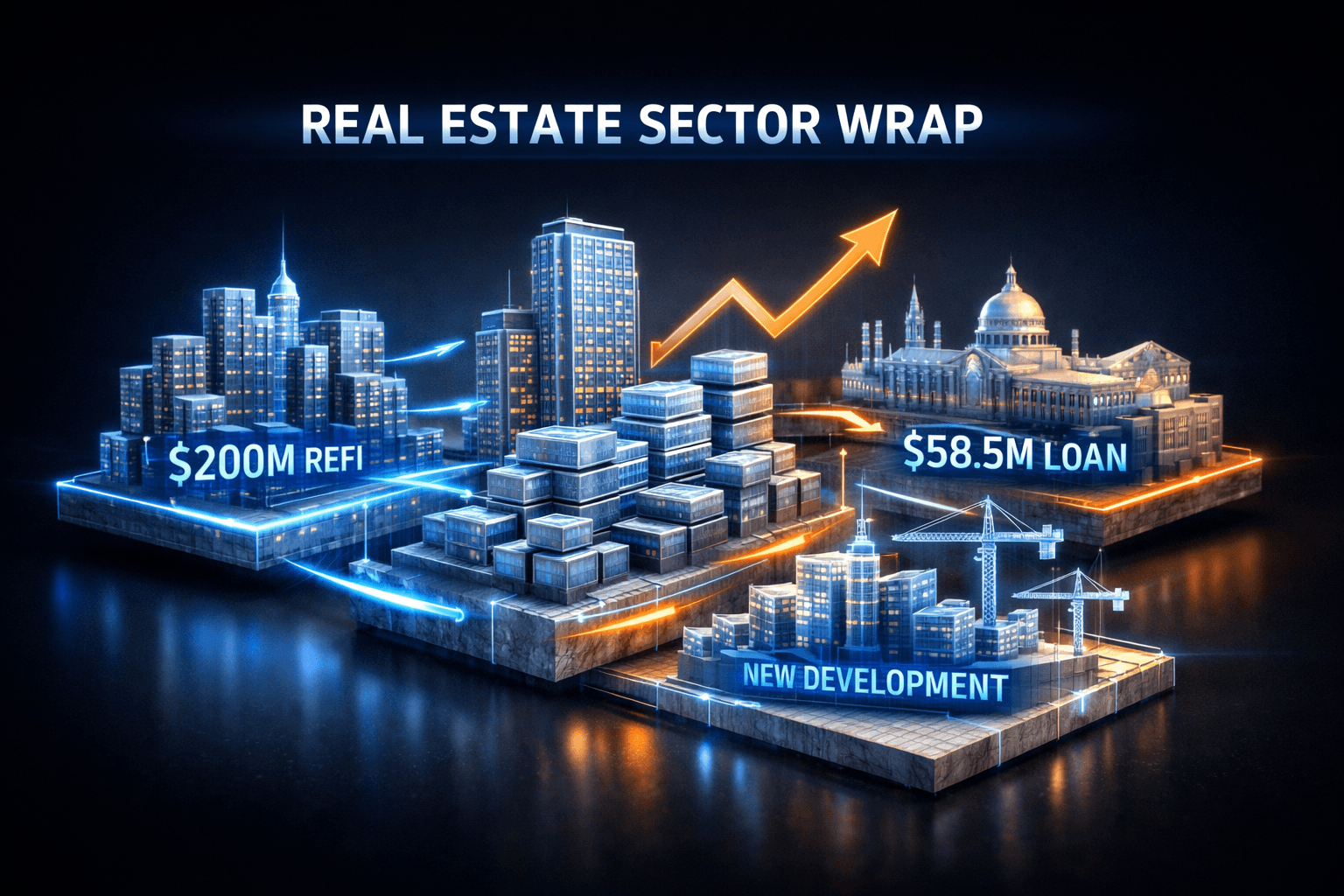
- PGIM provided a $58.5 million floating-rate loan to refinance One Brattle Square, a 94,800-square-foot office and retail building in Cambridge, Massachusetts.
- New Empire Corporation entered a contract to buy 4 West 43rd Street in Midtown Manhattan for $51 million, signaling more potential housing or mixed-use conversion near Bryant Park.
- GID acquired Metro Mission Valley, a 305-unit luxury apartment community in San Diego, closing via Berkadia; buyer and seller details show continued appetite for core-plus multifamily.
- Concord Wilshire bought a 43-acre Royal Palm Beach development site out of bankruptcy for $60 million, planning 401 multifamily units as part of a master-plan.
- German bank Helaba provided a $200 million loan to refinance luxury apartments in Austin at the Residences at 6G, reflecting large scale debt availability for high-quality multifamily.
- Technology and capital stack trends: C-PACE continues scaling beyond solar projects, and Dark Matter says AI covers 94% of its mortgage workflow while cutting 5% of staff.
Key Developments
Big debt moves, from Cambridge to Austin
PGIM’s $58.5 million floating-rate loan for One Brattle Square and Helaba’s $200 million refinance for the Residences at 6G in Austin show lenders are underwriting sizable loans on core and newly built multifamily assets. You should note the variety of lenders involved, from U.S. institutional managers to international banks, which spreads liquidity sources for high-quality projects.
For investors tracking credit risk, these deals suggest lenders still favor stabilized assets and prime locations, even in a higher-rate environment. Will underwriting tighten if rates spike again, or will competition keep spreads compressed?
Acquisitions and conversions signal urban housing appetite
New Empire’s contract for 4 West 43rd Street at $51 million and Concord Wilshire’s $60 million buy of a large Palm Beach County site both reflect ongoing demand for land and convertibility into housing or mixed-use product. Midtown Manhattan remains a focus for developers courting residential conversions near transit hubs.
That matters for you if your portfolio screens for urban redevelopment opportunities, because conversion economics can drive outsized yields when zoning and market rents line up.
Institutional multifamily and master-planned projects advance
GID’s purchase of Metro Mission Valley and Craig International’s selection to develop 189 acres in Denison, Texas highlight the push for suburban and Sun Belt growth. The Denison project is being positioned as a gateway parcel to a larger master-planned vision worth billions in long-term development potential.
These stories underscore a bifurcation in demand, where Sun Belt and well-located suburban assets continue to attract institutional capital while gateway cities see selective redevelopment plays.
What to Watch
Monitor upcoming catalysts and risks that will influence the flows you care about.
- Policy and legislation: Virginia’s Faith in Housing Act remains in limbo after governor amendments, with lawmakers reconvening April 22. A missed or altered bill could change local development economics.
- Cost pressures: The St. Louis Fed flagged higher labor, land, capital and materials costs as drivers of the housing shortage. Watch construction cost indices and labor markets, because they directly affect margins for new supply.
- Capital stack innovation: C-PACE is evolving into a more common financing piece. Keep an eye on pricing and lien structures as C-PACE joins mezzanine and preferred equity in complex deals.
- Technology and operations: AI is reshaping mortgage processing, with one firm automating 94% of workflow and cutting 5% of staff. That could lower loan production costs, but also change where you see efficiencies and execution risk.
- Refi and rate environment: Large refinancings like the $200 million Austin loan and PGIM’s Cambridge loan mean lenders are comfortable with floating and fixed rate structures for stabilized assets. Still, you should watch yield spreads and forward rate markets to gauge future loan terms.
Bottom Line
- Deal activity stayed brisk across multiple markets today, indicating active capital despite cost and policy headwinds.
- Refinancings and large loans show lenders remain willing to finance stabilized multifamily and mixed-use assets.
- Urban conversion and Sun Belt master-planned projects both attracted buyer interest, so location and use-case will continue to drive selectivity.
- Rising construction and land costs remain a key risk for new supply, while C-PACE and AI are reshaping costs and capital stacks.
- Watch legislative calendars and rate trajectories, because both will materially affect underwriting and returns in the months ahead.
FAQ Section
Q: How does a large refinance affect local property values? A: A sizeable refinance indicates lender confidence in cash flow and asset quality, which can support local pricing and signal market liquidity, but it does not automatically change market comps.
Q: What is C-PACE and why does it matter to investors? A: C-PACE is a financing tool for energy and resiliency upgrades that is increasingly used in broader capital stacks, reducing upfront costs for owners and potentially improving property cash flow and valuation.
Q: Should policy delays like Virginia’s housing bill change my approach? A: Policy uncertainty can shift timing for projects and influence zoning and incentives, so you should monitor legislative outcomes and factor potential delays into project timelines and yield assumptions.