The Big Picture
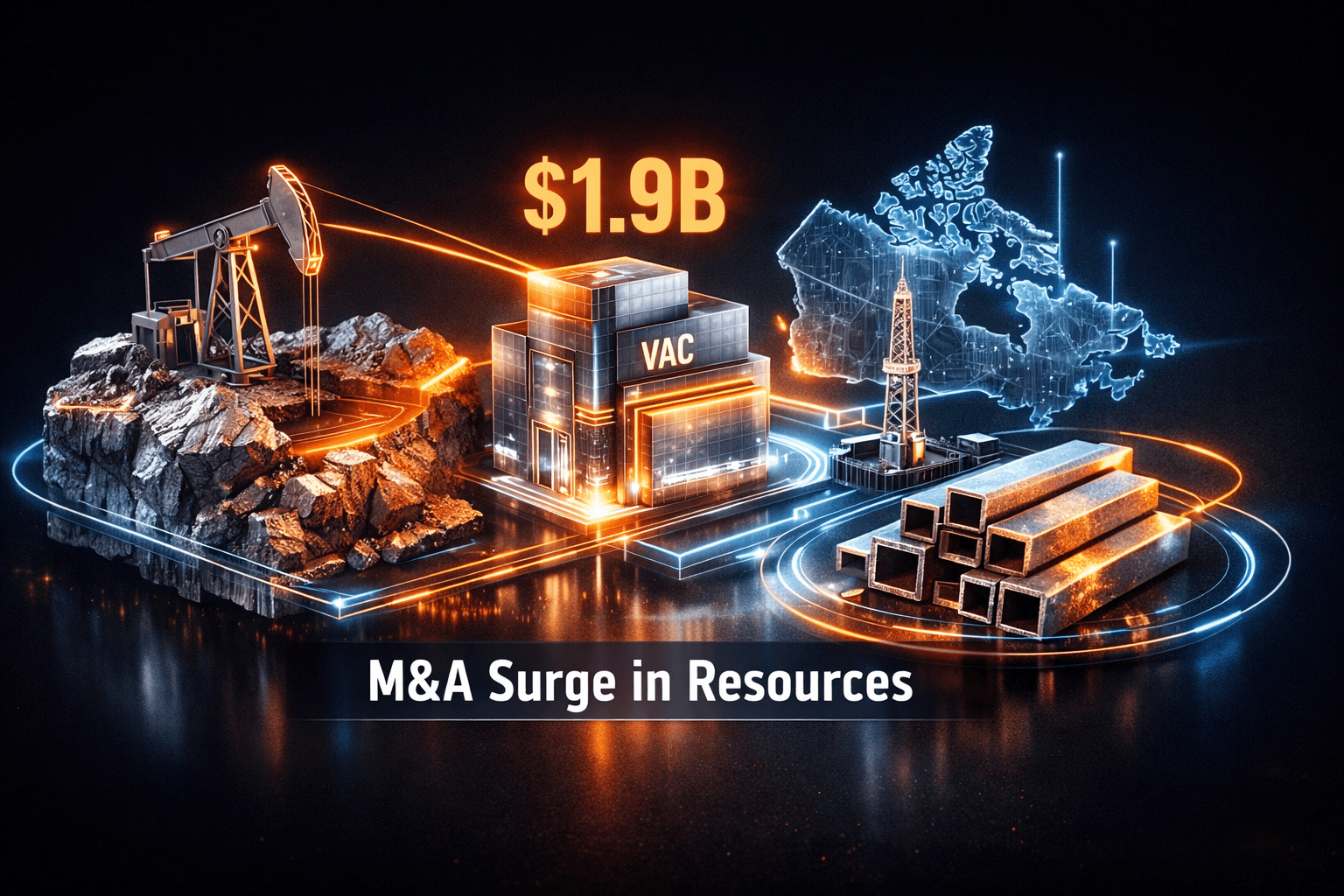
Energy Fuels' announced acquisition of VAC in a nearly $1.9 billion cash and stock deal is the biggest headline for the Materials & Mining sector this morning, and it could reshape Western access to permanent magnet manufacturing. That transaction, coupled with renewed drilling and geophysical work in Canada and fresh investment into recycled steel capacity, points to growing industrial and strategic momentum across the space.
Why does this matter to you as an investor? These moves are less about a single commodity price and more about assembling supply chains and capacity that can underpin demand for critical minerals, recycled metals, and downstream manufacturing for years to come.
Market Highlights
Quick facts and figures to start your trading day.
- Energy Fuels announced a definitive agreement to buy VAC for nearly $1.9 billion in a cash-and-stock deal, a vertical integration step that aims to create a Western magnet supply chain. Coverage notes this as a rare strategic breakthrough.
- Blue Star Gold has kicked off phase two drilling at its North Nutaaq and Auma targets in Nunavut, signalling continued exploration momentum in the Kitikmeot region.
- TomaGold started an audio-frequency magnetotelluric survey at the Berrigan project in the Chibougamau camp, a low-impact geophysical step that helps vector future drill targets.
- World steel output rose 2.8 percent in May versus April, according to the World Steel Association, though production remains slightly below year-ago levels.
- Tenaris plans to invest more than $90 million to upgrade its recycled-content EAF mill in Koppel, Pennsylvania, indicating stronger private capex into low-carbon and recycled steel routes. Mentioned companies include Tenaris $TS and Energy Fuels $UUUU.
Key Developments
Energy Fuels' $1.9bn VAC Acquisition
Energy Fuels' deal to acquire Vacuumschmelze, known as VAC, is being framed as a strategic inflection point for Western magnet supply chains. Analysts and sector commentary suggest the deal brings mine-to-magnet integration under one roof for the first time in a generation, reducing reliance on a single dominant supplier base overseas.
For you, that means renewed focus on downstream processing and rare earth refinement as drivers of mid- to long-term value, but integration and execution risk remain material as the companies combine operations and technologies.
Exploration Ramps in Canada
Blue Star Gold has launched phase two drilling at North Nutaaq and Auma in Nunavut, while TomaGold has deployed an AMT geophysical survey at Berrigan in Québec. These are classic early-to-intermediate stage plays that aim to convert geophysical signals into drill targets and resource growth.
What should you watch for? Drill intercepts and technical results from Blue Star and follow-up targets from TomaGold will determine whether these projects move from regional promise to defined resources.
Steel Production and Recycling Momentum
World steel output climbed 2.8 percent month on month in May, a sign of short-term demand stabilization. At the same time Tenaris is committing over $90 million to upgrade recycled-content capacity in Pennsylvania, a move that ties sustainability goals to potential cost improvements.
That combination suggests you're seeing both cyclical recovery and structural shifts toward recycled and low-carbon steel, which could influence raw material sourcing and scrap markets.
What to Watch
Here are the catalysts and risks that could move stocks and sentiment today and in coming weeks.
- Drill and survey results, especially any assays from Blue Star Gold's phase two program and follow-up targets from TomaGold, will be immediate value inflection points. You should track release schedules closely.
- Energy Fuels integration milestones, financing details and regulatory approvals for the VAC acquisition will determine near-term execution risk. Watch for management presentations and any investor Q&A.
- Policy and trade signals around critical minerals, including G7 coordination and any new industrial incentives, will shape whether Western onshoring strategies gain traction. Can the West build a full magnet supply chain without sustained policy support?
- Tenaris' implementation timeline for its EAF upgrades and broader steel demand indicators will influence scrap flows and pricing. Keep an eye on monthly steel production and regional scrap price reports.
- Event watch: a Defense Metals management-hosted InvestorTalk is scheduled today at 4:05 PM EST, which may refresh interest in North American REE development narratives.
Bottom Line
- Major M&A in critical minerals, led by Energy Fuels' $1.9bn VAC deal, is the dominant bullish catalyst today, indicating strategic consolidation toward a Western magnet supply chain.
- Exploration activity in Canada is active, with phase two drilling and AMT surveys under way; drilling results will be the next tangible test of resource upside.
- Steel output is showing month-on-month improvement while private capex into recycled steel capacity is increasing, highlighting both cyclical and structural themes.
- Execution and integration risk, where mergers and large capex plans are involved, remain the key watch points for near-term volatility.
- Analysts note that policy support and sustained industrial demand will be necessary for these strategic moves to translate into long-term sector re-rating.
FAQ Section
Q: What does Energy Fuels buying VAC mean for the rare earths supply chain? A: It creates a more integrated Western pathway from processing to magnet manufacturing, potentially reducing reliance on single-source suppliers, though integration and scale-up still need to prove out.
Q: How soon will exploration activity like Blue Star Gold's phase two drilling translate into value? A: You should expect an initial series of drill results and assays over weeks to months; meaningful resource upgrades can take longer and depend on consistent positive intercepts.
Q: Will Tenaris' investment change scrap or steel pricing right away? A: The $90 million upgrade signals longer term structural demand for recycled steel but it is unlikely to shift regional scrap prices immediately, since commissioning and throughput gains take time.