The Big Picture
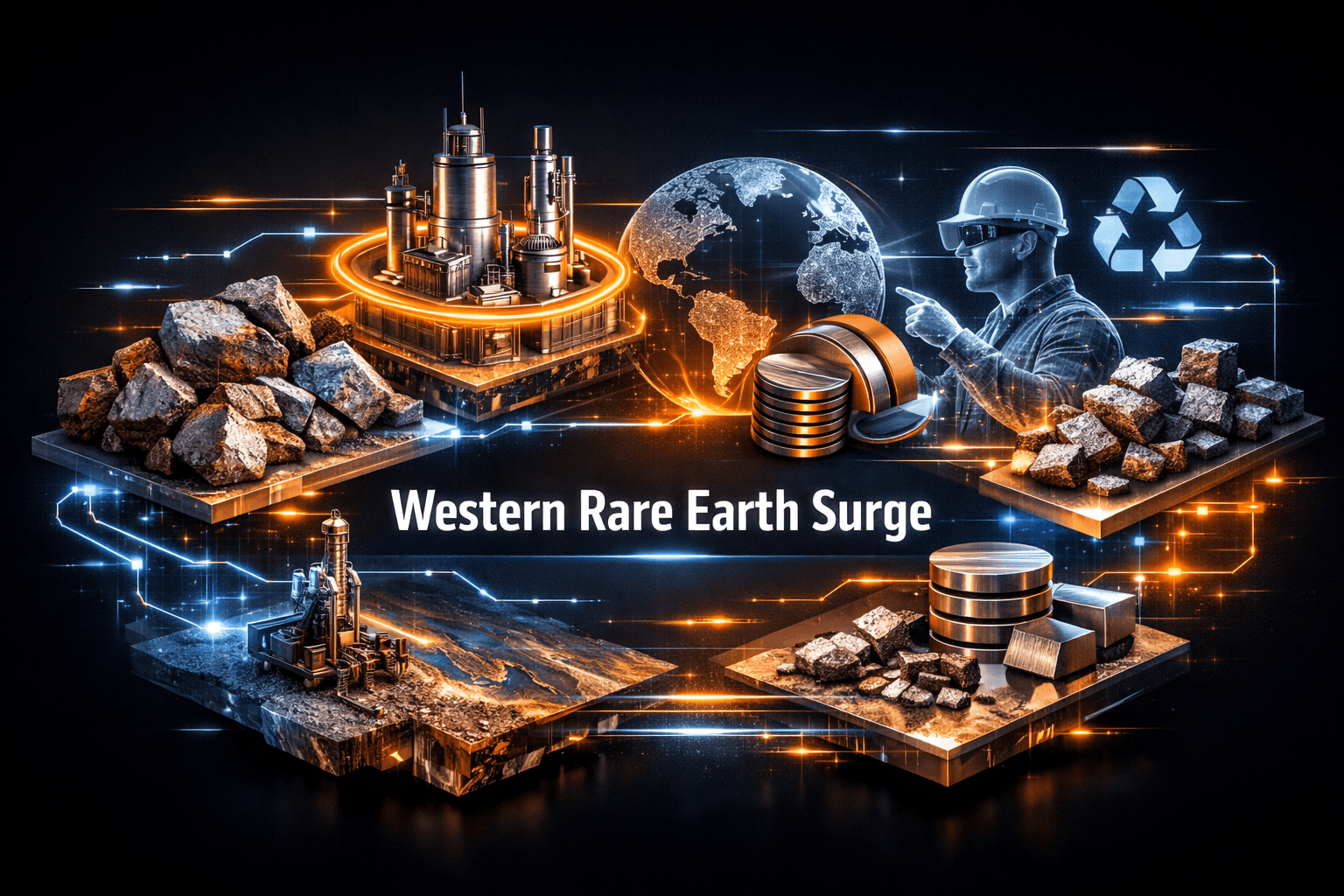
Energy Fuels' acquisition of Vacuumschmelze stands out as the day’s most consequential development, creating the first integrated Western mine to magnet pathway that rivals parts of China's rare earth ecosystem. This is a watershed moment for critical minerals supply chains and it matters because it moves policy talk toward tangible industrial capacity.
Across the sector you saw a mix of exploration wins, recycling and plastics circularity moves, and rising attention on workforce training. Together these items suggest momentum is building, but you'll want to watch permits, feasibility work, and geopolitics closely.
Market Highlights
Quick facts and snapshots from today’s top stories.
- Energy Fuels expands into magnet manufacturing with its Vacuumschmelze acquisition, creating a mine‑to‑magnet chain for the West.
- InvestorNews hosts a CMR special podcast on G7 critical minerals cooperation, highlighting limits to policy coordination and the role of industrial strategy.
- Defense Metals Corp. promotes its Wicheeda rare earth deposit and will host an InvestorTalk on June 24 at 4:05 PM EST, following a 2025 NI 43‑101 PFS that supports further work.
- Spartan Metals confirmed two tungsten skarn zones at its Eagle project in Nevada, boosting the company’s exploration credentials.
- Recycling and circular economy moves included PureCycle and IPL Schoeller developing PP tubs and lids with post‑consumer recycled content, and a local contract win for Garbage to Garden in Scarborough, Maine.
- Industry tech adoption is rising, as augmented reality use cases are being promoted to close mining’s workforce skills gap.
Key Developments
Energy Fuels and the Western magnet supply chain
InvestorNews frames Energy Fuels’ deal for Vacuumschmelze as the first time a Western company has assembled integrated mine to magnet capability at commercial scale. That integration matters because it reduces reliance on fragmented suppliers and onshore processing gaps, and it aligns with G7 industrial policy themes you’ve been hearing about.
For investors this raises questions about competitive positioning, potential new revenue streams, and how quickly operations can scale to meaningful volumes. Analysts note China will remain dominant for years, but the deal narrows strategic vulnerability.
Policy, geopolitics, and practical execution
The CMR podcast explored G7 cooperation limits and the tension between economic security and free‑market principles. The discussion shows policymakers are pivoting from announcements to implementation challenges, especially around financing, permitting, and African resource development.
Can governments and private firms align fast enough to support new processing and downstream capacity? The short answer is it's getting practical, but progress will be incremental and uneven.
Exploration wins and industry execution
Spartan Metals confirmed two tungsten skarn zones at its Eagle project in Nevada, a clear exploration milestone that validates target models. Tungsten remains strategically important for defense and industrial uses, so new domestic sources are getting attention.
Defense Metals highlighted its Wicheeda project and is pushing feasibility and permitting after a 2025 NI 43‑101 PFS. Those are multi‑year processes, but today's announcements keep the pipeline of potential Western supply alive.
What to Watch
Keep an eye on a few near‑term catalysts and risks that could move stocks and sentiment tomorrow and beyond.
- Defense Metals InvestorTalk on June 24 at 4:05 PM EST, where management will discuss timing and next steps for Wicheeda, you may get fresh details on studies and permits.
- Permitting and feasibility milestones for Energy Fuels' integrated operations, including timelines for converting capacity into commercial magnet output.
- Price and demand signals for rare earth magnets and tungsten, which will determine how quickly new supply is absorbed.
- G7 policy moves and any trade measures aimed at China or incentives for domestic processing, because these can change economics for Western projects.
- Workforce availability and tech adoption, notably AR training rollouts, which could shorten ramp timelines for new operations.
Bottom Line
- Energy Fuels' Vacuumschmelze deal is the big near‑term story, creating a more complete Western rare earths value chain and reducing strategic supply exposure.
- Exploration confirmations, like Spartan Metals' tungsten skarns, add to the narrative that critical minerals supply is diversifying outside China.
- Policy and industrial programs are moving from rhetoric to implementation, yet execution risk remains high and timelines are often multi‑year.
- Recycling, plastics circularity, and workforce tech such as AR are incremental positives that improve cost structures and skills resilience.
- Watch near‑term company presentations and permitting updates for the clearest signals on when capacity could reach market scale.
FAQ Section
Q: How significant is Energy Fuels' Vacuumschmelze acquisition for rare earths? A: It is significant because it creates integrated mine to magnet capability in the West, narrowing a key strategic gap, but China will likely remain the largest supplier for years.
Q: What should you look for from Defense Metals' upcoming InvestorTalk? A: Look for updates on feasibility work, permitting timelines, and any changes to project economics or funding plans that affect the Wicheeda project's path to development.
Q: Will new recycling and AR training initiatives move the needle for materials companies? A: These initiatives improve operational efficiency and skills transfer, and they help reduce supply pressure over time, but they are complementary to, not substitutes for, primary resource development.