The Big Picture
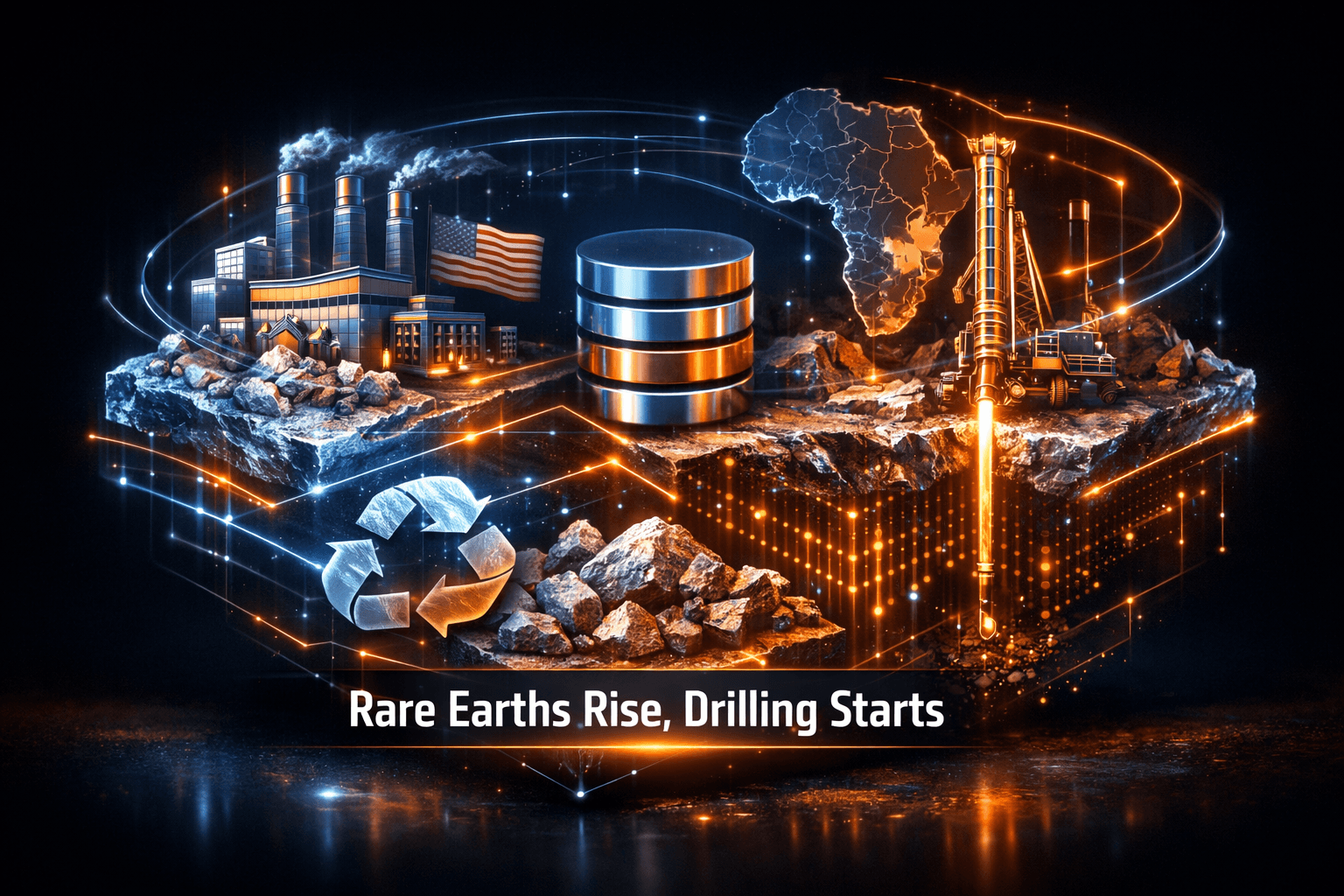
USA Rare Earth's announcement of a $1.2 billion magnet manufacturing and refined metals plant in South Carolina is the standout development this morning. That project, coupled with new exploration activity and growing attention to recycled ferrous materials, signals accelerating investment across critical minerals and metals supply chains.
Why does this matter to you as an investor? These moves are aimed at shortening supply chains for magnets, rare earths and specialty inputs for cleantech and healthcare, which could shift industry fundamentals over the next several years.
Market Highlights
Here are the quick facts and numbers you can act on or follow today.
- USA Rare Earth plans a $1.2 billion magnet manufacturing and refined metals facility in South Carolina, targeting domestic processing capacity and magnet production.
- Leviathan Metals has started a diamond core drilling programme of up to 10,000 metres at its Central Project in Botswana's Kalahari Copper Belt, advancing exploration activity.
- Recycling and secondary supply topics are in focus, with BIR Spring 2026 stressing recycled steel as a strategic driver and reports assessing polystyrene circularity in North America.
- Industry commentary and interviews highlight critical minerals for healthcare and broader rare earth industrial base rebuilding, with firms like Voyageur Pharmaceuticals noted for their role in barite and iodine supply, listed as $VM on the TSXV.
- Corporate moves include AMCS naming Eric S. Walsh as CEO, a governance change investors should track for operational impact in recycling tech services.
Key Developments
USA Rare Earth announces $1.2bn South Carolina plant
The planned USA Rare Earth facility targets magnet manufacturing and refined metals processing, a key link in domesticizing supply chains for EVs, wind turbines and defense applications. For you, this is a signal that public and private capital is aligning behind onshore processing, which could reduce dependence on foreign supply over time.
Leviathan Metals kicks off 10,000m drill campaign in Botswana
Leviathan's diamond core drilling at the Central Project in the Kalahari Copper Belt is a high‑ambition exploration step. Drilling progress and assay results will be primary near‑term catalysts, so you should monitor updates for mineralization, widths and grades that could affect project valuation.
Recycling and secondary supply gain momentum
Speakers at BIR Spring 2026 called recycled steel a strategic driver, and a new polystyrene circularity report maps infrastructure gaps and opportunities in North America. These items suggest rising regulatory and commercial emphasis on secondary feedstocks, which may influence margins and procurement strategies across steelmakers and recyclers.
What to Watch
Expect a steady flow of technical updates, permitting news and JV announcements that will move stocks and project valuations. How quickly will the USA Rare Earth project clear permits and secure offtakes? That timetable will matter to suppliers and downstream manufacturers.
For exploration plays, watch Leviathan's drill rig progress and the timing of assay releases. You should also follow corporate events and investor calls from firms like Appia and Voyageur, where management commentary can clarify timelines and commercialization plans.
Policy and financing are major risk variables. Federal and state incentives, export controls and trade policy can accelerate or delay projects. Keep an eye on capital markets too, since large construction budgets need funding. What could slow the momentum? Commodity price swings, permitting delays and technology qualification timelines for magnet makers are the main risks to monitor.
Bottom Line
- Major capital commitment from USA Rare Earth reinforces a policy and market push to rebuild domestic rare earth and magnet supply chains.
- Leviathan's 10,000m drill programme is a near‑term exploration catalyst; assay results will be key to re‑rating the project.
- Recycling is moving from niche to strategic, with recycled steel and polystyrene circularity attracting industry attention and potential regulatory support.
- Keep watching permitting, offtake agreements and financing timelines, since those will determine how quickly projects translate to production capacity.
- Analysts note the sector is playing the long game, and data suggests that selective exposure to domestic processing and critical minerals could matter for your portfolio positioning over time.
FAQ Section
Q: How significant is USA Rare Earth's $1.2bn plant for domestic supply chains? A: The project is a substantial step toward onshore magnet and refined metals capacity, reducing reliance on overseas processing for key clean energy components.
Q: What should you look for from Leviathan's drilling campaign? A: Monitor drilling progress, assay release timing, reported grades and intercept widths, as these will drive project valuation and potential partner interest.
Q: How does recycled steel momentum affect miners and scrap processors? A: Growing demand for recycled steel can tighten scrap supply, alter feedstock pricing, and create incentives for investment in recycling and scrap collection infrastructure.