The Big Picture
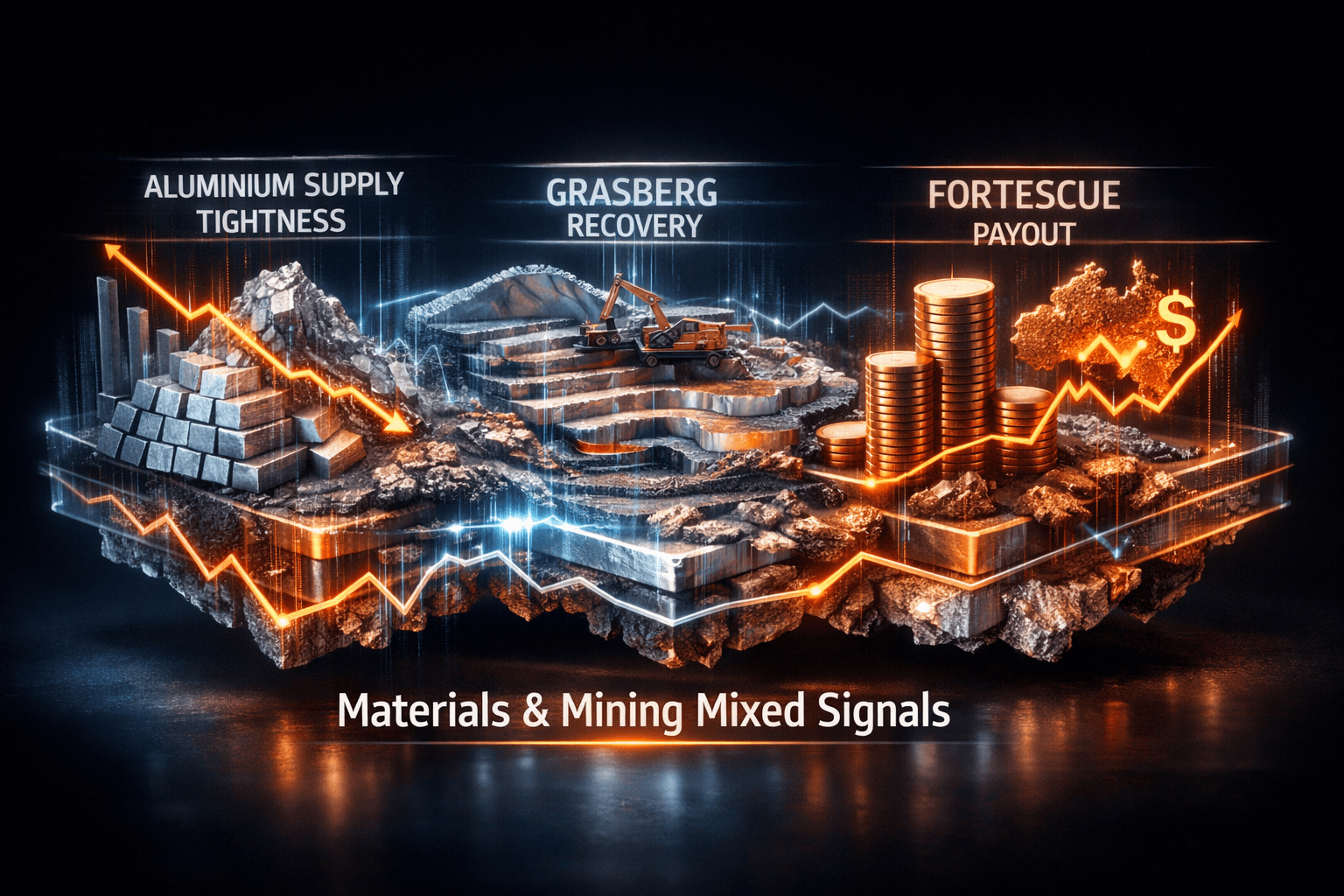
Markets in materials and mining opened today with mixed signals that you need to parse carefully. Global supply tightness in aluminium and Freeport-McMoRan's timeline to fully restore Grasberg output point to potential upward pressure on metal prices, while a large court-ordered payout to Fortescue and continued losses at some steelmakers underscore company-level risks.
For investors, that means short-term price volatility is likely, but the longer-term story about securing critical mineral supply chains and shifting geopolitics remains central. You’ll want to follow both macro supply drivers and company-specific headlines coming out of the CMI Summit today.
Market Highlights
Key market moves and facts for this morning, if you’re tracking the sector:
- Freeport-McMoRan, $FCX, said Grasberg should be back to full production by the end of 2027, a development that could add copper and gold supply over the medium term.
- Aluminium markets are tight after Gulf smelter shutdowns, with prices cited near $4,000 per tonne, a level that could support higher margins for producers and pressure fabricators.
- Fortescue, $FMG, was ordered to pay A$150m, about $108.4m, for cultural loss to the Yindjibarndi Ngurra Aboriginal Corporation, a material one-off cash impact for the company.
- Algoma Steel, $ASTL, posted another Q1 loss, highlighting ongoing challenges for regional steelmakers facing tariffs and weak demand in export markets.
Key Developments
Freeport's Grasberg recovery: supply ramp by 2027
$FCX told markets the Grasberg mine in Papua, Indonesia, should return to full output by the close of 2027. That timeline is a positive for copper and gold availability, but it’s long enough that near-term tightness could remain. For you, that means price moves ahead of the ramp could reflect supply risk rather than immediate relief.
Aluminium disruption drives tight market
Operational and logistics disruptions at Gulf smelters have pushed analysts to warn of an historic deficit in aluminium, with prices near $4,000 per tonne reported overnight. If disruptions persist, producers could see stronger pricing power, while downstream processors may face margin pressure. Which companies are best positioned to benefit from higher aluminium? That’s a key question for you to assess exposure and hedging strategies.
Company-level strains: Fortescue ruling and regional steel woes
The Federal Court of Australia ordered Fortescue, $FMG, to compensate the Yindjibarndi Ngurra Aboriginal Corporation A$150m for cultural loss, translating to roughly $108.4m. That’s a meaningful legal cost and governance signal, and while it’s a one-off, it can affect cash flow and investor sentiment.
On the steel side, Algoma Steel, $ASTL, reported another Q1 loss, and Outokumpu, $OUT1V, said its Americas operations were profitable despite lower shipments. The steel landscape remains bifurcated, with some recyclers and niche players holding profitability, and larger producers facing margin and tariff pressures. You’ll want to weigh company balance sheets and regional exposure when you evaluate names.
What to Watch
Here are the catalysts and risks that could move stocks and commodity prices through the week, and what you should monitor.
- CMI Summit presentations today and tomorrow: Keynotes from Sio Silica and U.S. policy speakers will highlight supply-chain priorities for critical minerals, and those policy signals can influence project approvals and investor sentiment.
- Operational updates from producers: Watch for production guidance or outage news from major aluminium and base metals producers, because persistent Gulf smelter issues would keep prices elevated.
- Legal and regulatory follow-ups: Any appeals or settlement details from the Fortescue ruling could change the financial impact. Keep an eye on capital allocation and dividend commentary from $FMG.
- Macro data and Chinese demand cues: Steel and aluminium pricing is sensitive to Chinese construction and manufacturing indicators, so you should monitor PMI and trade data for demand signals.
- Company earnings and quarterly updates: Smaller miners and recycling firms often report in the coming weeks, and those reports will reveal how price moves are flowing through to margins and cash generation.
Bottom Line
- Neutral picture today: supply tightness and production recovery sit alongside legal hits and company losses, so mixed signals are likely to produce selective opportunities and risks.
- Price support for aluminium looks real for now, with near $4,000 per tonne quotes and potential for further upside if Gulf disruptions continue.
- $FCX's Grasberg timeline offers medium-term supply clarity, but the market will price nearer-term scarcity until output is confirmed.
- $FMG faces a material one-off payout, which could influence near-term cash flow and investor sentiment, so watch corporate updates closely.
- Use the CMI Summit commentary to gauge policy momentum on critical minerals, because policy can materially affect project economics and capital flows.
FAQ Section
Q: How will aluminium tightness affect prices? A: Supply disruptions in Gulf smelters have pushed prices toward $4,000 per tonne, and if outages persist, prices could remain elevated until supply normalizes or demand softens.
Q: When will Grasberg return to full production? A: Freeport, $FCX, expects Grasberg to reach full output by the end of 2027, which should ease medium-term supply pressure but not near-term tightness.
Q: Does the Fortescue ruling change sector-wide risk? A: The A$150m payout to Yindjibarndi is a company-specific legal cost for $FMG, but it underscores social license risks that miners face and that you should monitor in project assessments.