The Big Picture
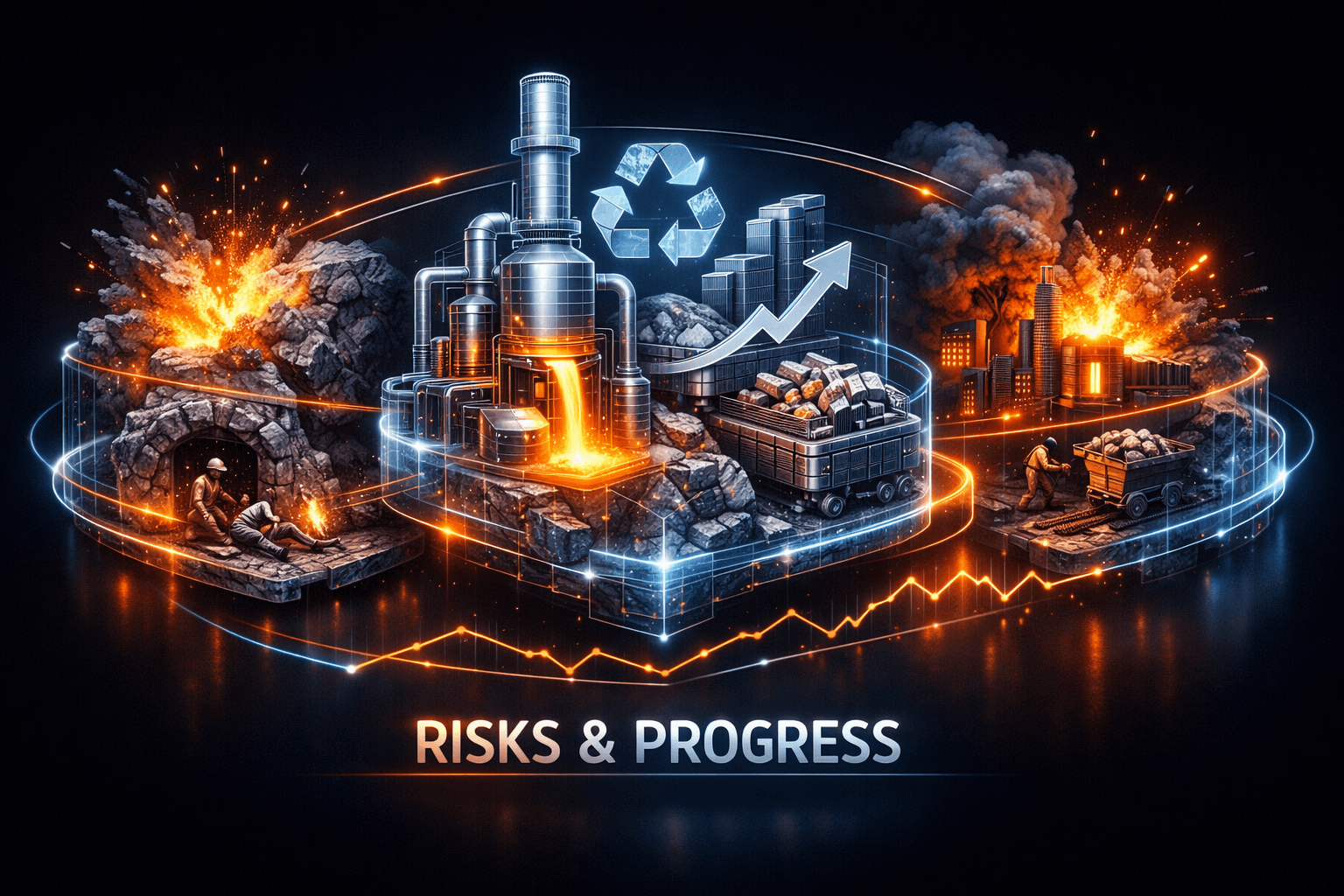
Today's Materials & Mining headlines delivered mixed signals, with advances in recycling technology and favourable project economics on one side, and two separate fatal industrial incidents on the other. That contrast matters because it touches both the sector's long-term transition to circular materials and the immediate operational and reputational risks that can hit producers and integrators.
If you follow miners or materials recyclers, you saw reasons for optimism about demand and project viability, but you also saw reminders that safety and supply-chain disruptions can change the near-term outlook quickly. What does that mean for your watch list tomorrow? It calls for selective attention to fundamentals and short-term risk management.
Market Highlights
Quick takeaways and facts to scan before you dig deeper.
- Recycling partnerships advanced: BlueAlp announced it will use KraussMaffei’s ZE BluePower twin-screw extruder in its chemical recycling flow, a technology tie-up focused on plastics processing.
- Certifications and commercialization: Nova’s Syndigo1 LLDPE film recycling facility earned new certifications enabling recycled resins for food- and nonfood-contact applications, supporting downstream uptake.
- Project economics confirmed: Zanaga Iron Ore Company reported positive costing outcomes for its planned DRI plant for the Zanaga Project in the Republic of Congo, validating earlier economic expectations.
- Safety incidents: The Colombian ANM confirmed nine fatalities after an explosion at La Ciscuda mine in Sutatausa, and Glencore reported two fatalities and five injuries after a blast and fire at its Kazzinc plant in eastern Kazakhstan.
- Industry recognition: The Glass Recycling Foundation recertified five material recovery facilities at Gold level, reflecting sustained operational quality in the U.S. recycling chain.
Key Developments
Plastics recycling technology gains traction
BlueAlp's partnership with KraussMaffei to adopt the ZE BluePower twin-screw extruder signals rising commercialisation activity in chemical recycling. The move should help BlueAlp scale processing and produce feedstocks acceptable to brand and conversion markets.
For you, that means recycled resin availability is improving, and processors that certify output for food-contact use, like Syndigo1 under Borouge/Nova, are likely to see stronger commercial interest. That's a gradual tailwind for firms tied to polymer circularity.
DRI economics bolster iron ore project prospects
Zanaga Iron Ore confirmed favourable costing for a direct reduced iron plant at its Republic of Congo project. The update reduces a key execution risk by reaffirming expected capital and operating dynamics for a DRI route.
Positive costing outcomes usually help project-level financing and off-take discussions. If you're watching junior developers or project partners, this report could accelerate next-stage permitting or investment activity, though timing remains project-specific.
Fatal incidents highlight operational and reputational risk
The sector faced somber news with nine confirmed deaths at the La Ciscuda mine and two deaths plus five injuries at the Kazzinc plant tied to Glencore operations. These are human tragedies and also potential triggers for regulatory scrutiny, operational suspensions, and community backlash.
Safety incidents can prompt inspections, fines, or temporary shutdowns, which may affect production and cash flow for days to months. Can improved recycling and project economics fully offset these operational risks? Not immediately, so you'll want to watch for follow-up reports and company disclosures.
What to Watch
Focus on catalysts, near-term risks, and signals that will matter to your exposure in materials and mining.
- Company disclosures and investigations: Expect operational updates and safety investigation findings from Carbonera Los Pinos and the Kazzinc plant operator, and official statements from Glencore, which is often quoted as $GLEN in listings.
- Project timeline moves: Look for financing, permitting, or partner announcements from Zanaga that would follow favourable DRI costing, which could shift project risk perception.
- Certification and off-take progress: Watch commercial uptake and buyer confirmations for recycled resins from Syndigo1 and any supply agreements involving BlueAlp outputs, which will determine revenue realization.
- Policy developments: Speeches and forums on critical minerals, including the CMI Summit keynote and talks on domestic tungsten supply, can influence grant and procurement flows for strategic minerals projects.
- Market sentiment and supply shocks: Short-term price moves in alloy metals or feedstock markets could result from plant outages or regulatory actions; be prepared for volatility if follow-on disruptions are reported.
Bottom Line
- Mixed signals dominate today: technical and commercial wins in recycling and DRI project validation were offset by fatal operational incidents.
- Positive project and certification news supports longer-term transition themes like circularity and lower-emissions steelmaking, which could benefit select companies over time.
- Safety-related shutdowns and investigations create near-term downside risks, including production interruptions and regulatory costs.
- Watch for company filings, investigation results, and concrete commercial agreements as the next set of market-moving developments.
- Stay selective and keep risk controls in place, particularly around names with exposure to the affected sites and processes.
FAQ Section
Q: How will recycling certifications affect resin markets? A: Certifications, such as food-contact approvals, typically expand buyer acceptance and can raise demand for recycled resin, improving commercial off-take but not instantly changing pricing dynamics.
Q: Will the DRI costing update make Zanaga a near-term producer? A: Positive costing reduces project risk and may speed financing, but moving to production still requires permitting, funding, and construction, so timelines remain medium-term.
Q: What should you watch after a mining or plant fatality? A: Track official investigation findings, company suspension notices, regulatory fines, and any production or export adjustments, since these determine the scale and duration of impacts.