The Big Picture
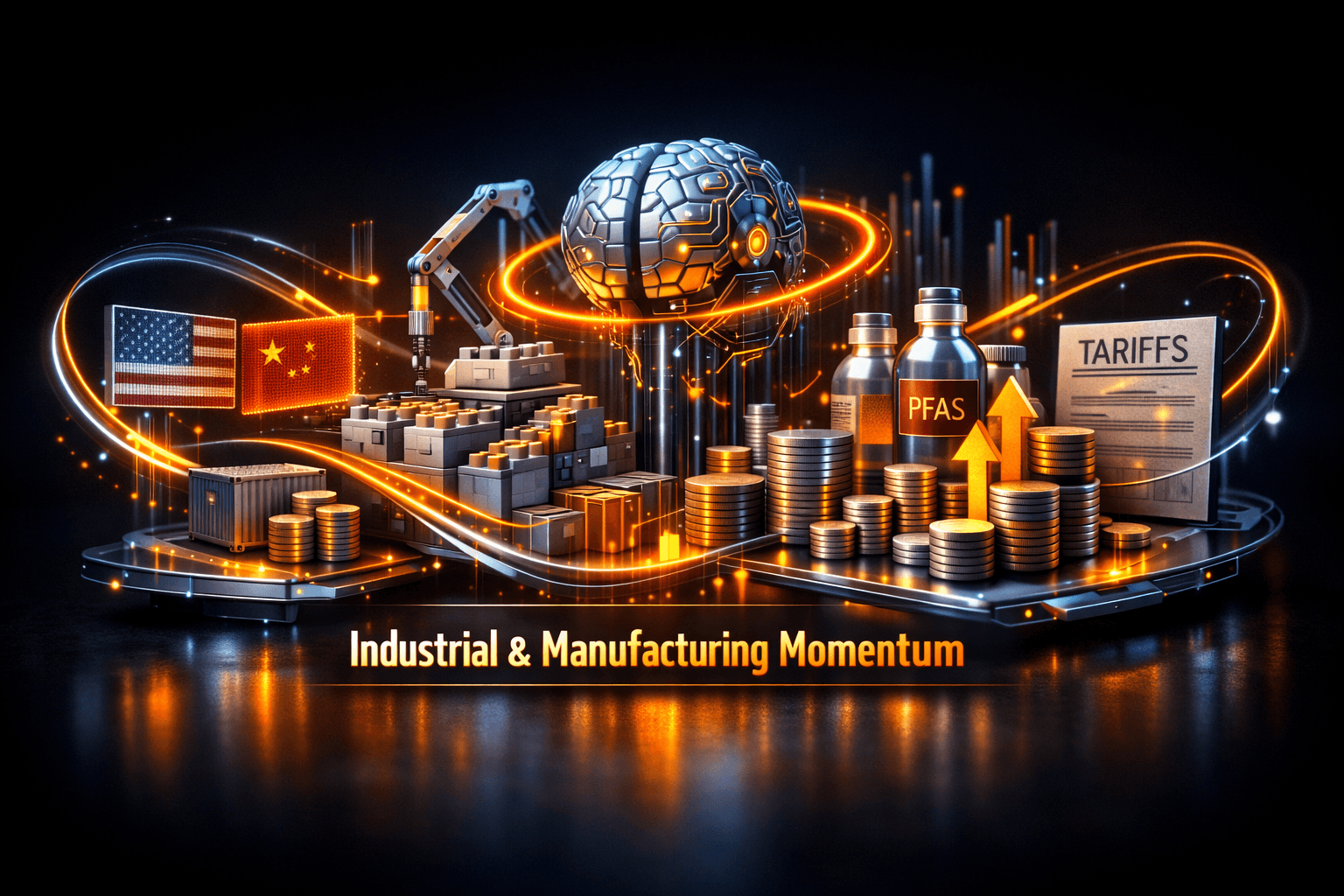
Industrial and manufacturing news today leaned positive, with policy and private capital combining to ease downside risks and support near-term cash flow. You saw a mix of trade stability, fresh investment and tech-driven productivity gains that together lift the sector's backdrop.
Those developments matter because they touch three central investor questions: will firms keep more cash, will production capacity grow where demand is, and can new tools boost margins? The answer from today's reporting is cautiously optimistic, and that should shape how you position for the next quarter.
Market Highlights
Several clear takeaways emerged across the coverage, spanning corporate cash flows, capital spending, trade policy and technology adoption.
- Lego announced a $400 million expansion of its Monterrey, Mexico plant, adding packing and warehousing and creating about 1,300 jobs.
- The U.S. and China agreed to extend their tariff truce by roughly two months, keeping the pact in place until Jan 10.
- The Atlanta Fed found many firms are retaining IEEPA tariff refunds, while a nontrivial portion is being shared with customers and employees.
- Amazon $AMZN is rolling out AI-driven supply chain agents for sellers, including inbound planning and aged inventory tools to support international growth.
- A federal judge blocked New Mexico's PFAS labeling mandate that was due to take effect Jan 1, 2027, providing regulatory relief to affected manufacturers and suppliers such as chemical producers and downstream users.
- Experts at Climate Week highlighted practical uses of AI in factories for predictive maintenance and critical minerals recovery, signaling a stronger ESG and efficiency focus.
Key Developments
Lego invests $400M in Mexico expansion
Lego's $400 million commitment to its Monterrey site will add packing and warehousing capacity and create about 1,300 jobs. For suppliers and local logistics providers this is a direct demand boost, and for global toy supply chains it reduces pressure on long lead times.
You should note that greenfield and expansion projects like this often indicate management confidence in long-term demand. The move could also shift regional sourcing and freight patterns over time.
Trade truce extended, easing tariff uncertainty
Treasury Secretary Scott Bessent said the U.S.-China pact will remain in effect until Jan 10, extending a year-old détente that lowered tariffs and paused other trade actions. The extension takes a layer of near-term policy risk off the table for manufacturers with China exposure.
What does that mean for you if you follow industrial stocks? It reduces the immediate likelihood of tariff-driven margin hits and gives companies more runway to plan production and sourcing for the holiday season and into early 2027.
Tariff refunds, AI and regulatory relief combine to support margins
The Atlanta Fed reported many firms are keeping IEEPA tariff refunds, which bolsters cash balances and could help near-term margins. At the same time Amazon's $AMZN AI agents and industry discussion at Climate Week highlight operational levers to cut costs and emissions.
The federal court decision blocking New Mexico's PFAS label mandate delays a compliance cost for manufacturers that would have started Jan 1, 2027. Together, these items are a silver lining that could leave corporate budgets in better shape heading into earnings season.
What to Watch
Keep an eye on several near-term catalysts that could change the sector's tone quickly. You should track earnings, policy timelines and tech rollouts closely.
- Earnings season. Watch industrial and materials quarterly reports for commentary on tariff refunds, margin trajectory and any timing for sharebacks to customers or wage increases.
- Trade developments. The truce runs until Jan 10. Monitor any follow-up negotiations or announcements that could extend the pause or alter tariff schedules.
- Regulatory rulings. The PFAS decision could be appealed. Check for further litigation or state-level actions that might resurface compliance costs for manufacturers and chemical suppliers such as $DD.
- AI adoption. Track Amazon's rollout and vendor uptake. If sellers and manufacturers adopt inbound planning and aged inventory agents at scale, logistics efficiency and working capital metrics could improve.
- Capital projects. Follow announcements of factory expansions or reshoring investments. New capacity in Mexico and elsewhere will shift supply chains and labor markets over the next 12 to 24 months.
Bottom Line
- Macro and micro signals were constructive today, with trade stability and fresh capital spending providing positive momentum for industrials.
- Tariff refunds are lifting corporate cash positions, while some companies are directing a portion of refunds to customers and employees, which could temper margin impacts from public scrutiny.
- AI is moving from pilot to production in supply chains, which may improve efficiency and working capital for firms that adopt the tools.
- The PFAS ruling delays a compliance cost for manufacturers, but you should watch for appeals and other state actions that could reintroduce regulatory risk.
- Overall, today's headlines suggest momentum building, but keep a selective approach and monitor earnings and policy developments for confirmation.
FAQ Section
Q: How will the U.S.-China truce extension affect manufacturers? A: The extension reduces near-term tariff uncertainty, giving firms more time to plan sourcing and inventory ahead of the peak selling season.
Q: Should I expect big margin changes from tariff refunds? A: Analysts note refunds strengthen cash positions, but companies are splitting outcomes between retaining cash and sharing benefits with customers and employees so effects will vary by firm.
Q: Can AI meaningfully lower factory emissions and costs? A: Data suggests AI-driven predictive maintenance and inventory agents can cut downtime and energy use, but scale and integration timelines differ across plants and vendors.