The Big Picture
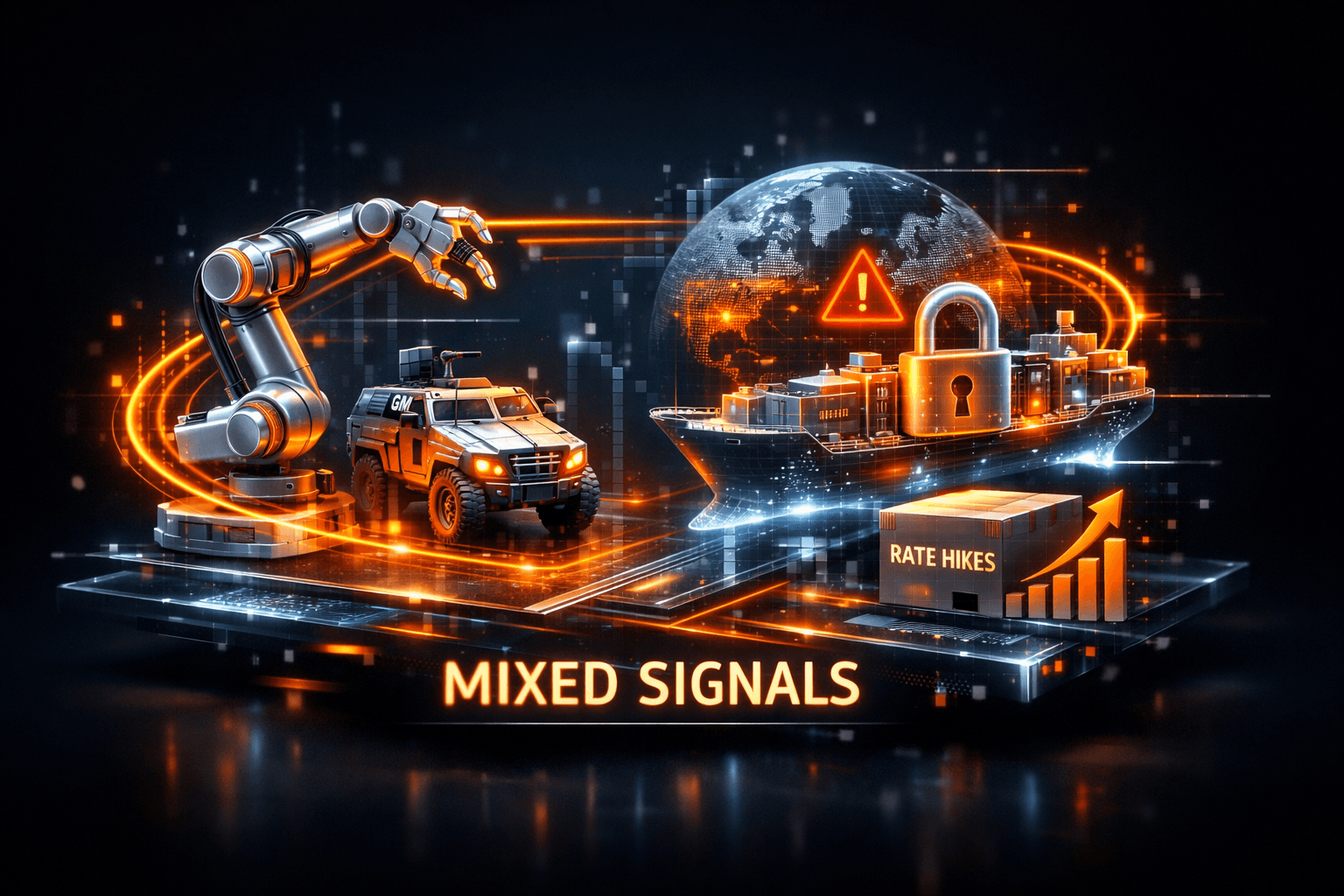
Today’s Industrial & Manufacturing headlines send mixed signals for investors. Breakthroughs in robotics and a rapid defense delivery show healthy industrial innovation and contract demand, while logistics pain points and regulatory friction keep risk on the table.
If you follow supply chains or factory automation, you’ll want to weigh faster product and contract execution against rising shipping costs and elevated maritime cyber risk. What should you watch first, growth or risk?
Market Highlights
Overnight and late Monday developments set the tone for trading today. Below are the top facts and numbers that matter to your portfolio or watchlist.
- Rail merger review continues after the Surface Transportation Board refused shippers’ calls to dismiss the proposed Union Pacific and Norfolk Southern combination, keeping the $UNP and $NSC transaction alive for now.
- Logistics costs will climb: FedEx announced a 5.9% standard U.S. rate increase effective Jan. 4, 2027, with additional surcharge adjustments, a move that will affect manufacturers and shippers differently by weight and service type, $FDX.
- Manufacturing innovation got a spotlight at IMTS: Agility unveiled what it calls the first cooperatively safe humanoid, and industry names including Universal Robots and Fanuc showed new automation gear, signaling ongoing capex demand in factory automation.
- Defense production accelerated, with General Motors’ defense unit delivering PAC-3 missile components to Lockheed Martin only 22 days after signing the agreement, highlighting rapid contract execution for $GM and defense primes including $LMT and $LHX.
- Security risks surfaced when the FBI and U.S. Coast Guard opened probes into suspected cyberattacks affecting ships entering U.S. waters, raising concerns about port operations and the broader supply chain.
Key Developments
STB Keeps UP-NS Merger Alive, Shippers Push Back
The Surface Transportation Board denied requests from trade groups representing chemical and fertilizer shippers to dismiss the proposed Union Pacific $UNP and Norfolk Southern $NSC merger. The decision preserves the review process and keeps consolidation on the table, a potential long term positive for rail margins but a source of concern for shippers worried about competition and pricing.
For you that means regulatory outcomes and any remedies the STB requires will be key. Will the board impose conditions that protect shippers, or will scale wins favor rail carriers? Expect more filings and stakeholder testimony ahead.
FedEx Rate Hike Raises Transport Cost Pressure
FedEx $FDX plans a 5.9% average rate increase for standard U.S. shipping beginning Jan. 4, 2027, plus surcharge changes that will vary by package, weight and distance. Carriers often point to rate moves as margin support, but the pass through raises input costs for industrial producers, retailers and chemical firms that ship goods frequently.
What might that mean for manufacturers? You could see higher freight expenses compress near term margins for lower-margin producers, and some customers may accelerate shipments to avoid future rate changes, creating short term volume spikes.
Robotics and Defense Drive Demand Signals
At IMTS in Chicago, Agility unveiled a cooperatively safe humanoid robot, while Universal Robots and Fanuc introduced new cobots and automation systems. These product launches suggest continued investment in factory automation and labor augmentation, which could benefit suppliers of robotics components and integrators.
Meanwhile, $GM’s quick delivery of PAC-3 components to Lockheed Martin after a September agreement illustrates how defense contracts can become a near-term revenue source for diversified manufacturers. Data suggests large primes and their subcontractors are moving faster on delivery timelines.
What to Watch
Today and this week you should track several catalysts that can move stocks in this sector. Keep your watchlist ready and consider how news may affect both suppliers and customers in the chain.
- STB filings and hearings on the $UNP/$NSC merger, including any proposed remedies or divestitures. A tougher regulatory stance could favor shippers; a smoother path could boost rail pricing power.
- Market reaction to the $FDX rate announcement, and any commentary from shippers and retail customers about pass through or mitigation strategies. Look for commentary in earnings calls and guidance updates.
- Follow IMTS coverage and product rollouts for order announcements from major manufacturers. Robotics order books and backlog commentary often lead to supplier wins or capex cycles.
- Updates from the FBI and Coast Guard on the suspected maritime cyberattacks, and any disruptions to port schedules. Port delays, reroutes or new security protocols can raise costs and inventory timing risk.
- State policy developments, including any renewed efforts around the CEQA exemption in California. Gov. Newsom’s veto preserved the advanced manufacturing exemption for now, a win for project developers and you if you follow West Coast factory investment.
Are you positioned for higher logistics costs and accelerating automation spending at the same time? Balancing exposure to suppliers and service providers could keep you ahead of the curve while you wait for clearer signals.
Bottom Line
- Neutral tone today, since innovation and defense demand are offset by logistics cost pressure and cyber risk.
- Watch regulatory developments around the $UNP/$NSC merger closely, they could reshape freight economics long term.
- Expect supply chain cost pressure from $FDX’s 5.9% rate hike to show up in margins for high freight intensity manufacturers.
- Robotics product launches at IMTS reinforce a multi year automation theme, supporting equipment suppliers and systems integrators.
- Monitor maritime cyber investigations and port operations for potential short term disruptions to inventory and lead times.
FAQ Section
Q: How will the $FDX rate increase affect manufacturers? A: The 5.9% standard U.S. rate hike will raise shipping costs for many manufacturers, with the impact varying by service, weight and distance, which may compress near term margins.
Q: Does the STB decision mean the rail merger will happen? A: The Surface Transportation Board’s refusal to dismiss the case keeps the merger review alive, but final outcomes depend on further filings, stakeholder testimony and any remedies the board may require.
Q: Should I be worried about the maritime cyberattacks? A: Investigations by the FBI and Coast Guard indicate a credible threat that could cause port or schedule disruptions, so it’s reasonable to monitor updates and contingency plans that affect your supply chain timing.