The Big Picture
The Industrial & Manufacturing sector closed the week with mixed signals, as policy and operational wins sat alongside near-term cost and demand challenges. You should note the contrast: lawmakers passed critical minerals legislation that supports longer-term supply chain resilience while several companies and data points signaled softer activity and higher logistics costs.
That mix means investors need to be selective, because some firms may benefit from the policy tailwinds while others face immediate pressure from rising shipping fees, flat production and cybersecurity risks.
Market Highlights
Markets were closed Saturday; the last trading day was Friday, September 18. Below are the key headlines that shaped sector sentiment heading into the long weekend.
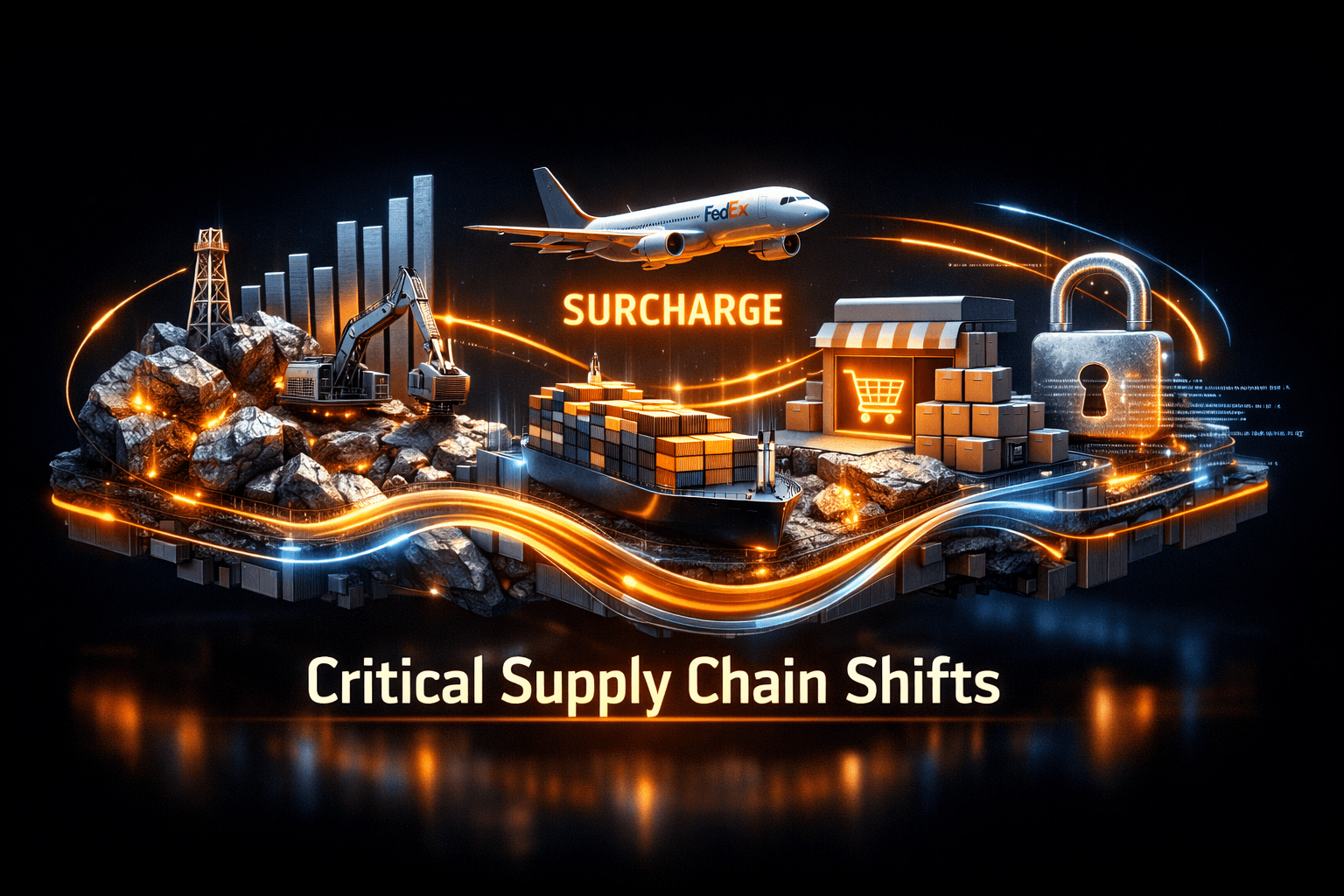
- Logistics: $FDX announced new demand surcharges on imports to the U.S. from Canada, Europe and other regions as carriers prepare for peak season, increasing landed costs for importers.
- Retail supply chains: Off-price retailer $TJX emphasized that its distribution model, which holds inventory in distribution centers rather than routing goods immediately to stores, should help it weather El Niño and supply swings.
- Last-mile strategy: $CHWY's COO outlined three operational priorities for last-mile advantage, stressing personalization and carrier collaboration amid competition from Amazon and Walmart.
- Manufacturing data: Industrial production was reported flat in August and headline manufacturing output dropped, while orders for metalworking machinery rose, suggesting selective investment within a softer demand environment.
- Policy: The U.S. House passed three bills on critical minerals, including updates related to batteries and waste site recovery, aligning with manufacturing industry priorities.
- Cybersecurity: A new sector report found patching improvements but persistent identity and remote-access misconfigurations, highlighting ongoing ransomware vulnerability.
Key Developments
FedEx imposes import surcharges
$FDX said it will levy demand surcharges on U.S. imports from Canada, Europe and other markets, and increase fees on China-to-U.S. volume as carriers prepare for peak season. For you, that means higher logistics costs for import-dependent manufacturers and retailers, and potential margin pressure if companies can't pass on the increases.
Retailers stress flexible distribution and last-mile tactics
$TJX told analysts its distribution model, which favors inventory holding at distribution centers, provides weather resilience and sourcing flexibility, a helpful sign for inventory management. Meanwhile $CHWY's COO highlighted personalization, close carrier collaboration and scalable delivery options as ways shippers can carve out last-mile advantages in a crowded field.
Mixed industrial data, policy wins, and security gaps
Manufacturing output eased in August while industrial production stayed flat, though capital goods and metalworking machinery orders showed pockets of spending. The House advanced three critical minerals bills that include battery-related updates and waste-site recovery provisions, which analysts say should support domestic supply chains over time. At the same time, cybersecurity reports point to persistent identity management weaknesses that could translate into operational risk if not addressed.
What to Watch
As you prepare for the week ahead, focus on four practical catalysts and risks that could move names in this sector when markets reopen Monday.
- Peak-season freight and margins, Monday through the quarter, as carriers implement surcharges. Watch quarterly commentary from major retailers and shippers for cost pass-through plans.
- Earnings and updates from large retail and logistics names, including $TJX, $FDX and $CHWY, where guidance on freight, inventory and last-mile costs will matter to your exposure.
- Implementation details and spending signals tied to the critical minerals bills. Investors should track agency rulemaking and private investment announcements that could follow legislative progress.
- Cybersecurity posture and incident reports. Given the noted identity and remote-access weaknesses, monitor vendor security disclosures and any reported breaches that could disrupt operations.
How should you position yourself given these competing themes? Consider focusing on balance sheets, exposure to import costs, and companies that show clear operational control of inventory and delivery. Are you comfortable with carriers raising fees and a potentially slower manufacturing cycle? If not, stress-test holdings for margin sensitivity and supply-chain concentration.
Bottom Line
- Neutral backdrop: Policy progress on critical minerals supports long-term industrial resilience while near-term headwinds from shipping fees and softer output create mixed outcomes.
- Cost pressure ahead: $FDX surcharges raise landed costs for importers and could weigh on margins for manufacturers and retailers that rely on global supply chains.
- Operational differentiation matters: Firms with flexible distribution and strong last-mile strategies, like $TJX and the practices highlighted by $CHWY, are better positioned to absorb shocks.
- Security remains a wildcard: Patching progress is welcome, but identity and remote-access gaps still pose meaningful operational risk for manufacturers.
- Stay selective: Data suggests pockets of capital spending even as overall output softens, so focus on companies with clear policy tailwinds or durable operational advantages.
FAQ Section
Q: How will FedEx's import surcharges affect manufacturer margins? A: Surcharges increase landed costs for import-dependent firms and could compress margins if they can't pass costs to customers; companies with strong procurement or domestic sourcing will be less exposed.
Q: Do the critical minerals bills change near-term demand for manufacturing stocks? A: The bills are a longer-term tailwind for domestic battery and minerals supply chains; you shouldn't expect immediate demand spikes but policy clarity can attract investment over quarters to years.
Q: What cybersecurity signs should I watch in manufacturing companies? A: Look for clear patch-management metrics, identity and access control improvements, third-party security audits, and transparent breach disclosures as indicators that operational risk is being addressed.