The Big Picture
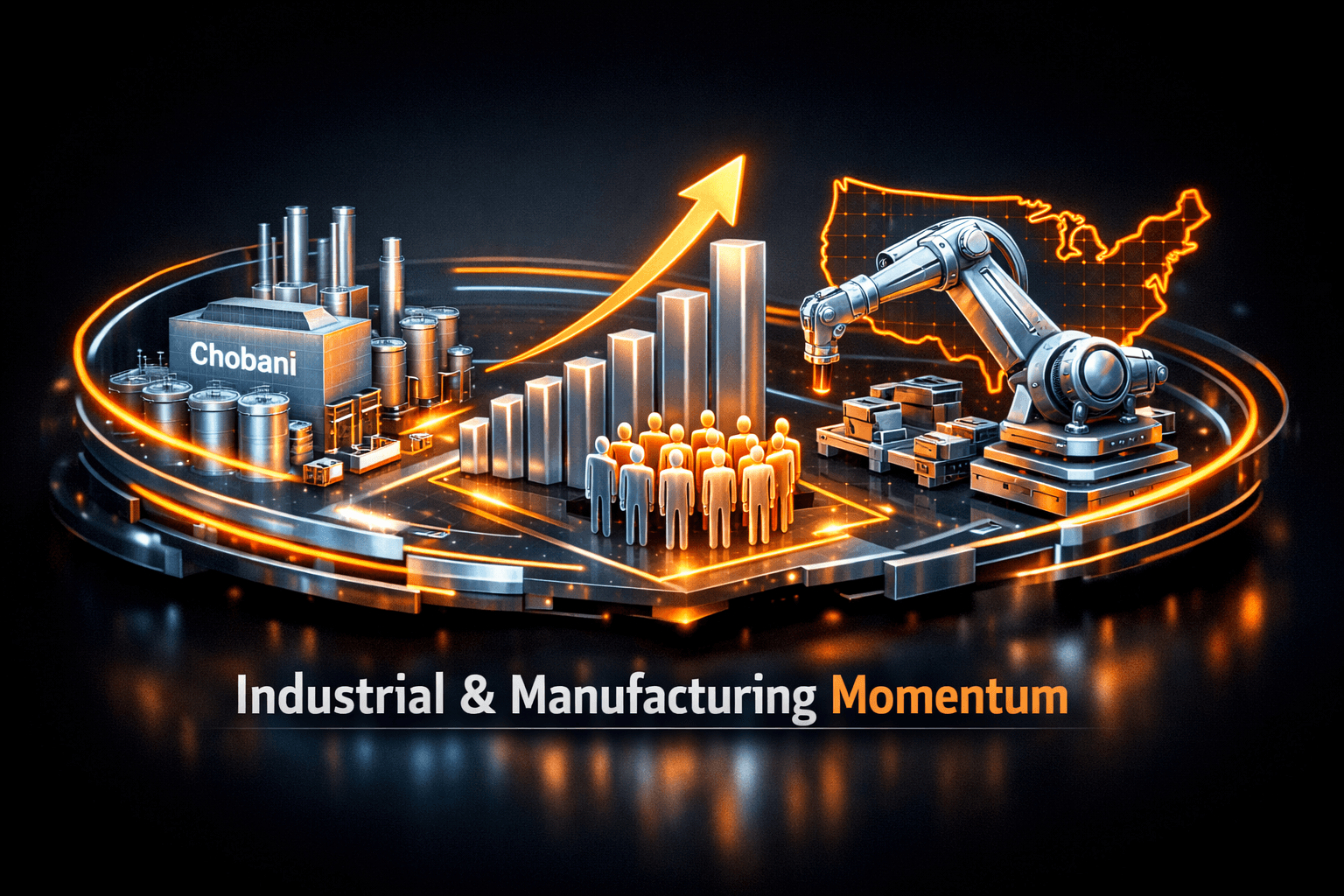
Chobani’s decision to buy and convert a former Keurig Dr Pepper facility for $1.2 billion is the day’s standout development, signaling fresh capacity investment in U.S. food manufacturing. Alongside a solid August jobs report that added 16,000 manufacturing roles, these items suggest a sector that’s expanding capacity and investing in productivity even as some OEMs weigh tariff and cost uncertainty.
These stories matter because you’re looking at both demand-side signals and supply-side responses. Companies are hiring and committing capital, and they're also automating and reshoring to tighten control over production. Heading into the long weekend markets were closed, but these developments set the tone for trading when markets reopen on Tuesday, Sep 8.
Market Highlights
Quick facts and figures to know as you review the sector.
- Chobani will spend $1.2 billion to buy and upgrade a Pennsylvania plant formerly owned by Keurig Dr Pepper, aiming to build a new hub for growth.
- U.S. manufacturing added 16,000 jobs in August, with machinery manufacturing gaining 6,100 jobs and motor vehicles and parts losing 4,500 jobs.
- Urban Outfitters’ rental business Nuuly, part of $URBN, is pursuing automated sortation and picking at its Kansas City area center to boost throughput and reduce manual labor.
- A Reshoring Initiative report finds 36% of manufacturers are actively reshoring while 31% say they have no reshoring plans, underscoring mixed capital allocation decisions amid tariff and cost uncertainty.
Key Developments
Chobani’s $1.2B bet on U.S. capacity
Chobani is buying the Pennsylvania facility from Keurig Dr Pepper and will convert it into a major manufacturing and distribution hub. The move is a sizable private-sector industrial investment and it could ease supply constraints for Chobani while supporting regional manufacturing jobs and supplier activity.
For you, that means more near-term construction and hiring where the plant is located and a longer-term increase in branded food manufacturing capacity. Analysts note that large consumer food players are prioritizing control of their supply chains, and this deal is an example of that trend.
Manufacturing jobs point to steady demand
The Bureau of Labor reports line up with industry surveys showing incremental hiring, not a boom but steady expansion. The headline was 16,000 jobs added in August, with machinery manufacturing posting the largest net gain at 6,100 positions while motor vehicles and parts shed about 4,500 roles.
That split matters because it signals pockets of strength in capital goods and continued pressure in automotive, where production cycles and inventory adjustments can still weigh. If you follow industrial equipment makers or suppliers, keep an eye on machinery demand as a leading indicator.
Automation, reshoring and capex choices
Urban Outfitters’ Nuuly is pushing further into fulfillment automation at a Kansas City area center, planning automated sortation and robotic picking to improve throughput. That’s a microcosm of a broader move where retailers and OEMs use automation to lower labor intensity and increase speed.
At the same time the Reshoring Initiative survey shows 36% of manufacturers are actively reshoring, even as 31% have no plans. Companies are balancing labor, logistics, and tariff risks. The net result is selective investment in U.S. capacity and automation to reduce supply chain exposure and improve control.
What to Watch
Here are the catalysts and risks you’ll want to track next week and beyond.
- Earnings and guidance from industrial equipment and parts suppliers, any signals on order backlogs and capex plans will be informative. Will manufacturers report rising bookings or caution?
- Labor metrics and regional hiring updates. The August gains hint at momentum, but monthly volatility is common. Watch payroll reports and manufacturing PMI updates for confirmation.
- Progress and timelines for Chobani’s plant conversion. Construction schedules and ramp plans will determine when capacity and revenue benefits flow through the supply chain.
- Automation rollouts at fulfillment centers, including Nuuly’s implementation timetable. Automation can improve margins but requires upfront spend and integration risk.
- Policy and tariff developments. The Reshoring Initiative data shows reshoring interest remains high, but uncertainty over tariffs and costs could slow some projects.
What should you watch first? Look for capital expenditure announcements and supplier contract updates that clarify which companies are following through on reshoring and automation commitments.
Bottom Line
- Chobani’s $1.2 billion plant purchase is a notable private capex commitment and a sign of confidence in U.S. manufacturing capacity expansion.
- August’s 16,000 manufacturing jobs added point to steady demand and selective hiring, especially in machinery manufacturing.
- Automation initiatives like Nuuly’s show companies are investing in productivity to cut labor reliance and speed fulfillment.
- Reshoring remains a key theme but it’s selective, as 36% of firms are reshoring while 31% have no plans, so expect uneven capital flows across subsectors.
- Heading into the next trading day, watch capex execution, supplier orders, and policy moves for clues about how durable this momentum is.
FAQ Section
Q: How will Chobani’s plant purchase affect suppliers and local labor markets? A: The purchase should boost local hiring during conversion and create ongoing demand for packaging, ingredients, and logistics services, though timelines will determine when impacts show up.
Q: Does adding 16,000 manufacturing jobs mean the sector is in a sustained recovery? A: The number signals steady demand but the gain is modest; you should look at order books, PMI, and subsequent payroll data for confirmation.
Q: Will reshoring and automation reduce supply chain risk quickly? A: Automation and reshoring can lower exposure over time but they require capital and lead time, so benefits are gradual rather than immediate.