The Big Picture
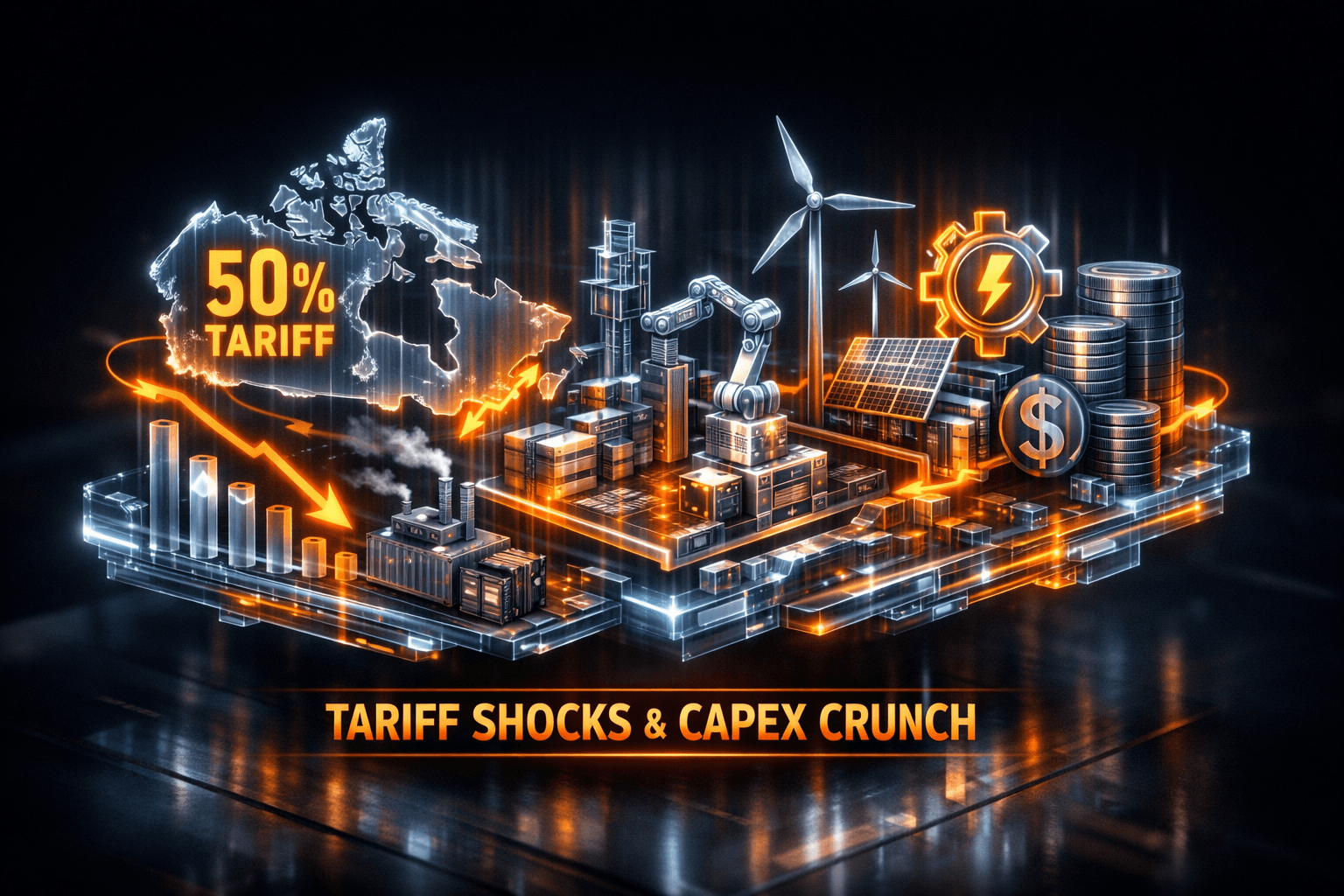
The Industrial and Manufacturing complex woke to a clash between policy shock and corporate resilience. A 50% tariff announced on a swath of Canadian autos, parts and steel is dominating headlines and could reshape North American supply chains, but several firms are pushing ahead with capacity investments and energy projects that aim to blunt higher input costs.
This matters to you because tariffs can quickly change margins and sourcing decisions for manufacturers and suppliers, while ongoing investments in capacity and energy efficiency signal where costs and competitiveness may shift over the next 12 to 24 months.
Market Highlights
Quick facts and the biggest numbers you'll want in front of you this morning.
- Policy shock: The U.S. announced a 50% tariff on many Canadian cars, trucks, auto parts and steel, set to take effect Jan 1, 2027, after talks stalled and Canada warned of reciprocal duties.
- Steel investment: $CLF, Cleveland-Cliffs, committed $1.0 billion to its Middletown blast furnace, reversing an earlier plan tied to low-emissions upgrades that environmental groups criticized.
- Ag processing growth: $ADM plans a $100 million oilseed crush expansion across four U.S. plants, and has identified six additional facilities that could add capacity.
- Packaging and energy: Major packaging players and consumer goods firms including $WRK and PepsiCo (PEP) are eyeing renewables and energy efficiency to curb rising energy costs.
- Retail supply signals: Target (TGT) reported in-stock gains ahead of back-to-school, pointing to improved logistics and prepositioning efforts that reduce lost sales risk.
Key Developments
Tariff shock: 50% levy on Canada impacts autos, steel and parts
The administration announced a sweeping 50% tariff on many Canadian vehicles, parts and steel imports, effective Jan 1, 2027. The move follows stalled negotiations and comes with immediate uncertainty for North American auto supply chains and steel buyers.
What does this mean for you as an investor? Higher input costs and disrupted cross-border logistics could pressure margins for automakers, parts suppliers and steel buyers, and may accelerate sourcing shifts away from Canada. Will manufacturers be able to pass these costs to end customers, or will margins get squeezed?
Cleveland-Cliffs doubles down on traditional capacity
$CLF said it will invest $1 billion to keep the Middletown blast furnace active, walking back a prior plan to replace coal-fired infrastructure with lower-emissions technology funded by federal tax credits. Environmental groups have criticized the decision, which raises regulatory and reputational questions.
For investors tracking emissions risk and transition spending, this is a reminder that corporate plans can pivot under market or logistical pressure. You should watch for potential regulatory scrutiny and whether Cleveland-Cliffs proposes alternative emissions offsets.
Capacity and cost controls: ADM expansion and packaging energy plays
$ADM plans a $100 million oilseed crush expansion at four U.S. plants and has flagged six more facilities for potential capacity increases. That points to demand for processing capacity in ag-related supply chains and could support ingredient prices or margin resilience for processors.
Meanwhile packaging companies and consumer goods firms including $WRK and $PEP are accelerating renewable energy and energy-efficiency projects to manage rising utility costs. These moves won’t pay off overnight, but they show a focus on durable cost control measures across the sector.
What to Watch
Here are the near-term catalysts and the key risks you should track today and over the coming months.
- Tariff timeline and trade talks: The Jan 1, 2027 effective date gives you time to monitor negotiations and any exemptions or phase-ins. Expect follow-up statements from automakers, parts suppliers and Canadian officials.
- Supply-chain retooling: Watch whether companies announce sourcing shifts, production pauses, or price increases to offset tariff effects. Procurement agreements and inventory strategies will be critical.
- Regulatory and ESG pushback: The Cleveland-Cliffs decision may spur regulatory questions and activist pressure. Track any state or federal responses and permits that could affect project timelines or costs.
- Energy projects and capex: Keep an eye on announcements of renewable PPAs, on-site generation and efficiency retrofits from packaging and consumer goods companies. These projects can meaningfully change operating costs over time.
- Earnings and guidance: As quarterly reports arrive, see which industrials cite tariff exposure, FX effects, or energy cost pressures. Guidance revisions will tell you how managements expect margins to respond.
Bottom Line
- Policy risk is front and center today, with a 50% tariff on many Canadian imports creating clear near-term disruption for autos, parts and steel buyers.
- At the same time, corporate capex and energy-efficiency initiatives from $CLF, $ADM, $WRK and $PEP show selective investment and cost discipline across the sector.
- You should expect volatile headlines and headline-sensitive moves in supplier and OEM stocks as markets price the tariff impact and potential Canadian retaliation.
- Monitor supply-chain announcements and regulatory filings closely, because they will reveal how quickly firms can re-source or pass on higher costs.
- The picture is a mixed bag, so a selective approach that focuses on balance sheet strength and companies with flexible sourcing looks prudent for now.
FAQ Section
Q: How will a 50% tariff on Canadian autos and steel affect U.S. manufacturers? A: Higher input costs and supply disruptions are likely, at least initially, which could pressure margins for OEMs and parts suppliers until sourcing or pricing adjusts.
Q: Does Cleveland-Cliffs' $1 billion Middletown investment change emissions expectations for the industry? A: The move delays a low-emissions conversion and may raise regulatory scrutiny, but it also preserves near-term capacity for steel buyers and downstream manufacturers.
Q: What can packaging and consumer goods firms do to counter rising energy costs? A: Many are pursuing renewables, on-site generation and efficiency retrofits to lower operating costs over time and reduce exposure to volatile energy prices.