The Big Picture
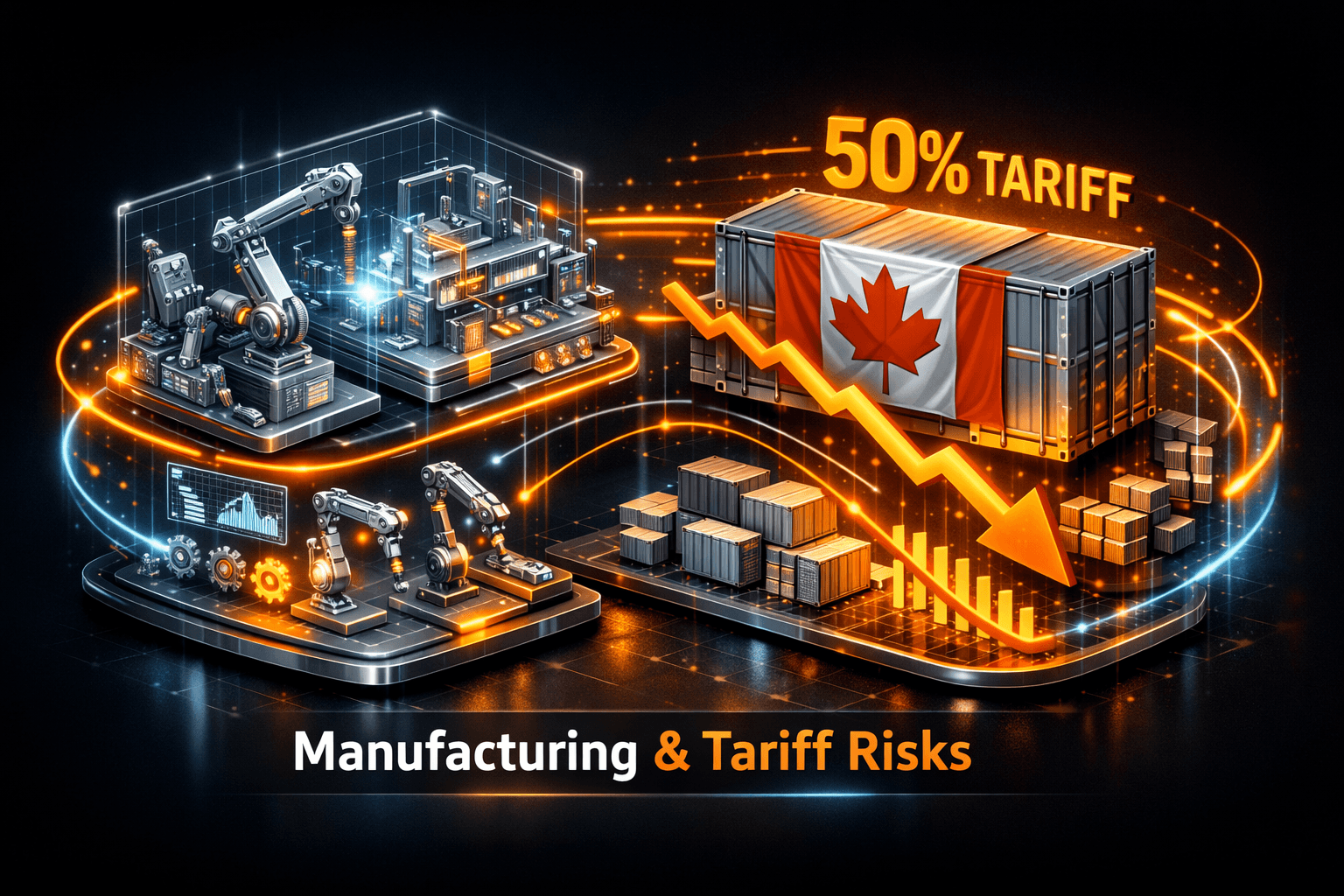
U.S. manufacturers are getting nudges to squeeze waste and energy costs out of operations, with digital twins, targeted measurement tools, and smarter pneumatic monitoring promising tangible margin gains. At the same time, a sweeping 50 percent tariff on many imports from Canada came into effect after talks stalled over the weekend, creating an immediate cost and disruption risk for cross-border supply chains.
That tension between productivity gains and policy-driven cost pressure is the central story you need to follow today, because it will shape profitability and pricing decisions across capital equipment, component suppliers, and logistics providers.
Market Highlights
Overnight headlines are steering pre-market moves in industrial names and logistics stocks. Here are the quick takes you can scan before the open.
- Rockwell Automation (ROK) Rockwell Automation, pre-market down 0.9%, about $255.30, as investors weigh automation investment demand against tariff risk.
- Emerson Electric (EMR) Emerson Electric, pre-market down 1.2%, near $79.40, tied to potential cost passthrough and supply-chain exposure to Canada.
- $ABB ABB Ltd, pre-market up 0.7%, around $45.10, on optimism for digital engineering and energy-efficiency solutions.
- United Parcel Service (UPS) United Parcel Service, pre-market down 1.6%, roughly $150.80, reflecting concerns over cross-border freight and rising duties.
- $XLI Industrials ETF, pre-market changed about -0.4%, near 116.50, showing mixed sentiment across subsectors.
Key Developments
Digital twins and design-to-build efficiency
Manufacturing Dive reports on partnerships such as Eplan and Rittal showing how digital twin workflows shrink the gap between design and production. Data suggests companies that close that gap reduce rework and accelerate time-to-revenue, which matters when margins are tight.
For you as an investor, that means firms that adopt digital engineering can lift throughput and improve capital efficiency, while laggards may face rising relative costs.
Fit-for-purpose measurement and machine monitoring
Two vendor-focused pieces stress the value of choosing the right industrial scale and installing smart monitoring on pneumatic systems to cut energy use and CO2 output. Fit-for-purpose scales reduce waste and rework, while pneumatic monitoring targets tangible energy savings.
These are incremental but scalable improvements. Analysts note that widespread adoption across mid-size manufacturers could slowly translate into higher margins and lower operating variability over several quarters.
Freight audit, supply data integrity and a new tariff shock
Supply Chain Dive highlights a shift from error-finding to error-preventing freight audit systems and pushes RFID and serialization as defenses against cargo theft. Those tools help reduce shrink and audit costs, and they improve end-to-end supply visibility.
Then there is the policy shock: the U.S. implemented a 50 percent tariff on many imports from Canada after talks stalled, with Canada pledging matched levies. That is an immediate headwind for manufacturers and shippers with cross-border parts flows. Can companies pass these costs to customers, or will margins take the hit? Your exposure depends on supply footprint and contract terms.
What to Watch
Look for company-specific commentary and early-quarter margin guidance tweaks from industrial names this week. Earnings season is a few weeks away, but corporate statements about supply-chain cost mitigation or tariff-related surcharges could arrive at any time.
- Cost disclosures and guidance updates from big automation and capital-equipment firms, particularly $ROK and $EMR, will signal how widespread tariff exposure is.
- Adoption indicators for digital twins and monitoring tech, such as new customer wins or partnership expansions, will show whether efficiency gains are accelerating.
- Logistics flow metrics and freight-rate data will reveal near-term cost pressure; monitor $UPS and freight-sensitive suppliers for volume or margin commentary.
- Regulatory or diplomatic developments on the tariff front, including any rapid exemptions or industry carve-outs, would change the risk picture fast.
If you hold industrial exposure, consider asking whether firms can re-source, ramp automation, or negotiate pricing to offset the tariff. How long will these adjustments take and at what cost?
Bottom Line
- Efficiency drives are constructive, with digital twins and smarter monitoring offering measurable gains in throughput and energy costs.
- Fit-for-purpose tools like proper industrial scales reduce waste and rework, improving operational predictability.
- The 50 percent tariff on many Canada imports is a material near-term headwind for cross-border supply chains and logistics margins.
- Expect mixed near-term market reaction, with selective opportunities for companies that can convert digital investments into faster rollouts and lower unit costs.
- Analysis and data in this briefing are for informational purposes only, analysts note this is not personalized investment advice and does not recommend buying, selling, or holding any security.
FAQ Section
Q: How will digital twins affect manufacturer margins? A: Digital twins can cut rework and shorten development cycles, data suggests that over time these improvements tend to boost gross margins and capital efficiency for adopters.
Q: Which companies are most at risk from the new Canada tariffs? A: Firms with significant cross-border parts flows or assembly in Canada, and logistics-heavy companies, face the most immediate exposure; watch corporate disclosures for specifics.
Q: Will RFID and serialization stop cargo theft? A: These tools improve traceability and deter theft, they reduce loss and fraud but work best when combined with process and enforcement improvements.