The Big Picture
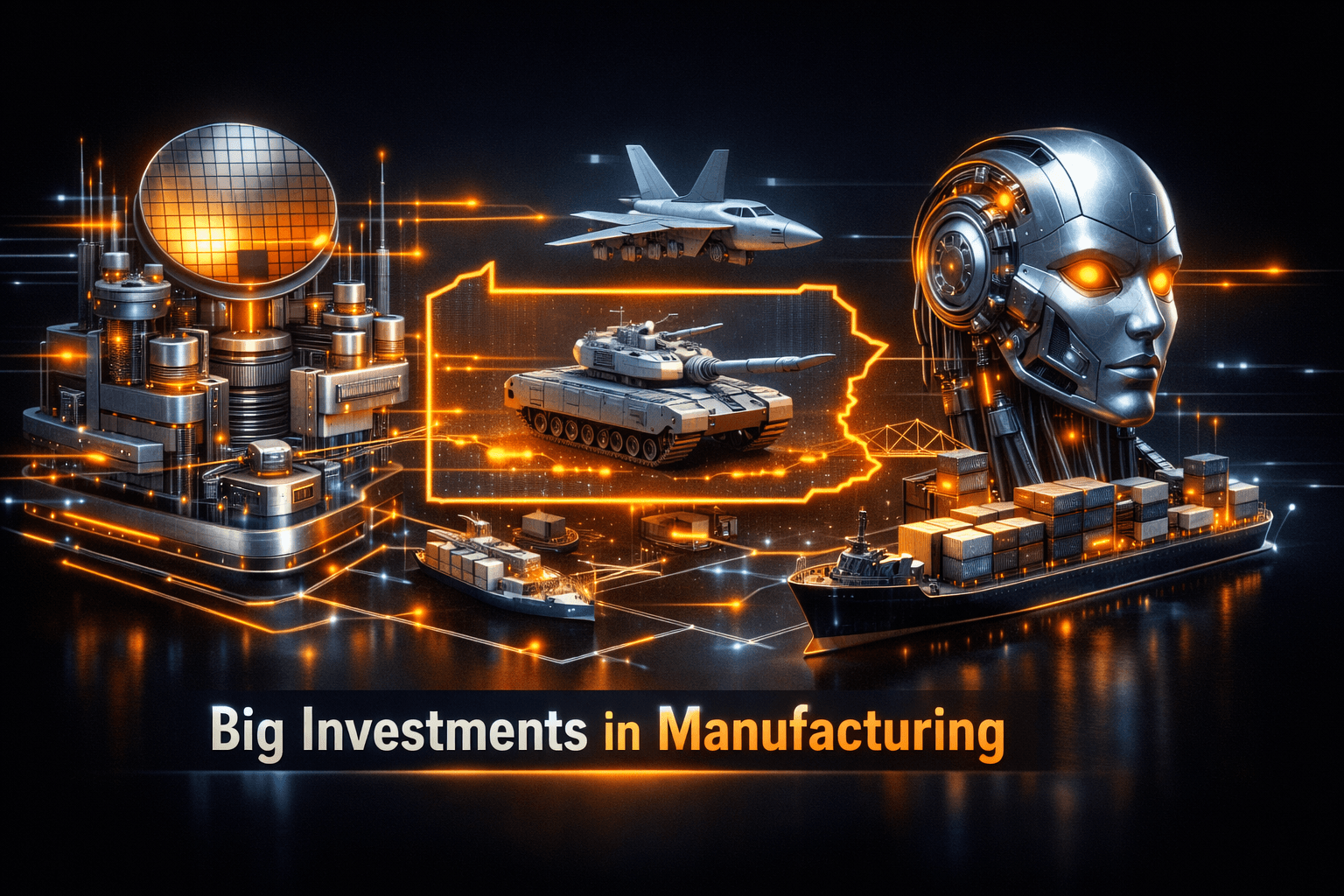
Two headline commitments on July 17 reshuffled the industrial landscape, even as markets were closed on Sunday. Taiwan Semiconductor Manufacturing Co.'s $100 billion plan for four advanced U.S. fabs and a coalition of more than 30 firms pledging $10 billion to Pennsylvania defense projects point to a major wave of capital spending in manufacturing and defense.
Those announcements matter because they accelerate onshore production of high-tech goods and defense materiel, and they should affect suppliers, construction firms, and regional labor markets. At the same time, port congestion, tariffs and geopolitical risk keep supply chains vulnerable, so you'll want to balance growth potential with those headwinds.
Market Highlights
Key facts and figures from the weekend that you should note as markets reopen on Monday, July 20.
- TSMC $TSM confirmed a $100 billion U.S. investment that will create four new advanced semiconductor fabs, bringing its U.S. total to 12 facilities, according to NIST and published reports.
- More than 30 companies committed roughly $10 billion to Pennsylvania for shipbuilding, munitions, AI and robotics, announced at the state Defense and Innovation Summit led by Sen. Dave McCormick.
- The Port of Los Angeles logged just over 1 million TEUs in June, but port head Gene Seroka warned that tariffs and the Iran conflict are prompting ocean carriers to change routing and capacity plans, creating a murky second half.
- Industry coverage this week included a measured take on AI and jobs, arguing that automation and AI will reshape roles rather than eliminate them outright, which has implications for workforce investment and training budgets.
Key Developments
TSMC's $100B U.S. push
TSMC's announcement on July 17 expands its U.S. footprint to 12 fabs, with four new advanced plants planned under the $100 billion umbrella. That level of capital intensity will support equipment makers, engineering contractors, and local supply chains for years to come.
For you, the takeaway is that semiconductor supply chains are getting more onshore redundancy, which reduces long term geopolitical supply risk and should benefit suppliers to $TSM and domestic chipmaking ecosystems.
Pennsylvania defense investment, public and private
The $10 billion commitment from more than 30 companies, highlighted at the state Defense and Innovation Summit, targets shipbuilding, munitions and technologies such as AI and robotics. Policymakers and industry leaders framed the move as a coordinated push to boost domestic defense production and workforce training.
This is a clear demand signal for defense contractors and specialized manufacturers, and it may increase procurement flows and subcontracting opportunities regionally. You may see that reflected in activity for firms tied to defense supply chains and local construction names.
Shipping pressures and the AI workforce debate
The Port of Los Angeles recorded strong throughput in June, but officials warned that tariffs and conflict in the Middle East are prompting ocean shippers to alter routes and abandon old practices. That raises the risk of episodic congestion and cost volatility in the second half.
At the same time, industry commentary on AI and employment is shifting from existential fear to pragmatic workforce planning. The consensus is moving toward retraining and augmentation strategies rather than wholesale displacement, which could change capital allocation within plants and among automation vendors.
What to Watch
Heading into the market week that begins Monday, July 20, here are the catalysts and risk factors you'll want to track closely. Will TSMC meet its construction timelines, and how quickly will subcontractors ramp? Regulatory approvals and permitting for new fabs will be a near term focus.
Keep an eye on defense procurement announcements at the federal level and state-level implementation in Pennsylvania. Those will determine how quickly the $10 billion commitment translates into contracts and hiring.
Monitor port and shipping updates for signs of re-routing, demurrage changes, or tariff developments that could affect margins for import dependent manufacturers. Finally, watch corporate spending on AI and automation, and the labor responses in plant-level hiring and training budgets.
Bottom Line
- Major capital investments from $TSM and a multi‑firm $10 billion defense pledge point to durable industrial spending, a shot in the arm for domestic manufacturing capacity.
- Supply chain and shipping risks remain a real near term headwind, and they could offset some benefits if congestion or tariffs spike.
- AI and automation are driving nuanced workforce planning rather than blanket job losses, which implies more spending on training and transitional hiring.
- Watch permitting, contractor awards, and port routing announcements for the earliest signs that these investments are changing revenue flows for suppliers and service providers.
- Analysts note the structural positives, but data suggests selectivity will matter as you evaluate exposure to construction, equipment, and logistics bottlenecks.
FAQ Section
Q: How will TSMC's $100B plan affect U.S. manufacturing jobs? A: The plan is likely to create construction, equipment and long term manufacturing jobs in regions hosting fabs, with additional indirect hiring across suppliers and services.
Q: Should you worry about shipping disruptions after the Port of Los Angeles warning? A: You should monitor routing and tariff developments closely, because episodic congestion or rerouting can raise costs and delay inputs for import reliant manufacturers.
Q: Does AI mean mass job losses in factories? A: Current reporting suggests more nuanced outcomes, with firms investing in augmentation and retraining, so workforce transformation is likely rather than outright elimination.