The Big Picture
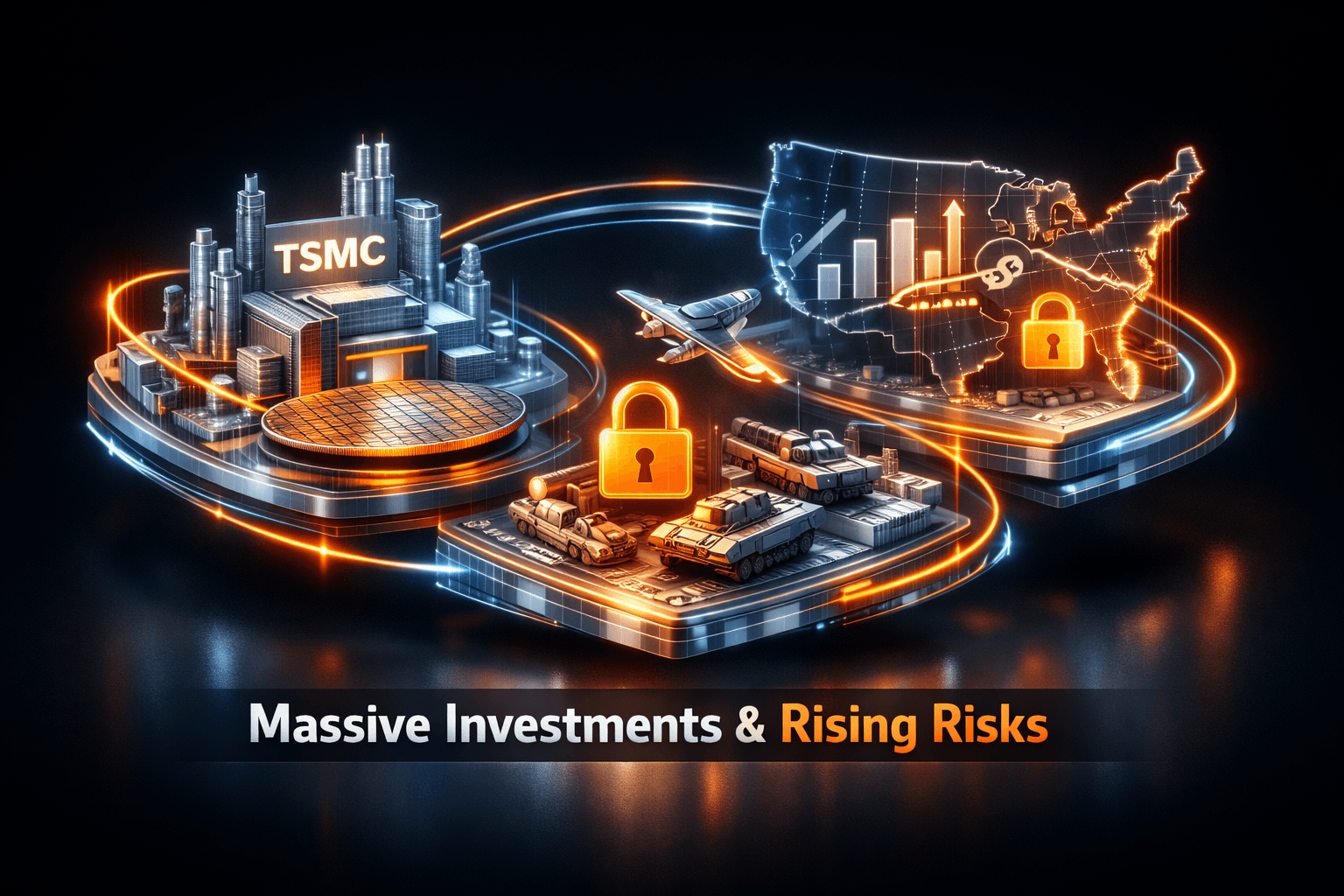
Two large-scale investment stories are reshaping the industrial landscape heading into the long weekend: TSMC announced another $100 billion in U.S. investment, and more than 30 companies committed about $10 billion to Pennsylvania's defense industry. These commitments point to sustained, multiyear demand for advanced manufacturing, semiconductors, and defense-related production capacity.
At the same time, supply-chain pressures from tariffs, Middle East tensions and structural shifts in ocean shipping are imposing near-term uncertainty. You should watch how companies translate these capital plans into hiring, local supply-chain growth and production milestones.
Market Highlights
Major headlines and quick facts to know as of Friday, July 17. Markets were closed Saturday, but these developments set the tone for next week.
- TSMC expands U.S. footprint: $100 billion in new investment will fund four advanced fabs, bringing its total U.S. sites to 12, according to the National Institute of Standards and Technology. Expect long lead times on capacity additions.
- Pennsylvania defense industry pledge: More than 30 companies committed roughly $10 billion for shipbuilding, munitions and AI and robotics R&D, announced at the state’s Defense and Innovation Summit.
- Port throughput and shipping risks: The Port of Los Angeles handled over 1 million TEUs in June, yet the port authority flagged a murky second half of the year given tariffs and Iran-related risks to ocean routes.
- Digital transformation gains: Industry panels highlighted that manufacturers who moved early on automation and always-on supply chains are beginning to see measurable benefits in uptime and responsiveness.
Key Developments
TSMC $100B U.S. Buildout
TSMC's new $100 billion commitment will add four advanced semiconductor facilities to its U.S. roster, taking the total to 12 American sites. That scale of investment underscores a multi-year effort to onshore advanced node capacity and to bolster domestic supply chains for chips used in industrial controls, vehicles and defense systems.
For you, that means potential supply resilience over the medium term, though new fabs take years to commission. Data suggests the investment will drive upstream demand for specialty chemicals, equipment and precision manufacturing services.
Pennsylvania Defense Investment Surge
State and private actors unveiled a roughly $10 billion collective commitment focused on shipbuilding, munitions and technologies like AI and robotics. The initiative is intended to expand production capacity and R&D, and to strengthen the defense industrial base in the Northeast.
Regional manufacturing vendors, tooling shops and workforce programs could see spillover demand. You may want to watch hiring announcements and contract awards that convert pledges into funded projects.
Tariffs, Geopolitics and Ocean Shipping Strain Flows
The Port of Los Angeles reported strong volume in June, surpassing 1 million TEUs, yet port leadership warned that tariffs and the Iran conflict are prompting ocean shippers to change longstanding routing and scheduling practices. Supply Chain Dive highlighted structural shifts that could raise transit costs and delay inbound components.
Commodities and plastics markets are already responding to tariff chatter, and manufacturers note that input-cost volatility could pressure near-term margins even as long-term investment ramps up.
What to Watch
Look for concrete milestones and governance signals that turn pledges into production. Will the TSMC fabs reach construction permits and equipment delivery schedules in the next 12 to 24 months? Will state-level defense contracts start flowing to local suppliers?
Also monitor shipping and tariff updates closely, because logistics costs can eat into the benefits of onshore investments. If shipping routes remain unstable, lead times could stay elevated despite domestic capacity growth.
Key near-term catalysts to track next week include any federal or state announcements detailing how the $10 billion in defense commitments will be allocated, construction timelines from TSMC on new U.S. fabs, and updates from major ports on routing changes or vessel redeployments.
Bottom Line
- Large-scale capex is the dominant theme, with TSMC's $100 billion and a $10 billion defense pledge signaling long-term manufacturing demand.
- Supply-chain headwinds from tariffs and geopolitics could amplify input-cost volatility in the near term, so keep an eye on freight and commodity price moves.
- Digital and automation leaders are starting to reap benefits, suggesting a two-track market where early adopters widen their competitive advantage.
- Watch execution, not headlines: conversion of pledges into contracts, permits and equipment deliveries will determine who benefits locally and sector-wide.
- Data suggests momentum is building for domestic capacity, but timelines remain long and risks remain for your expected delivery schedules.
FAQ Section
Q: How soon will TSMC's new U.S. fabs affect chip availability? A: New fabs typically take multiple years from groundbreaking to volume production, so benefits should appear gradually over a multiyear timeframe.
Q: Will the Pennsylvania defense pledge create immediate business for manufacturers? A: Some suppliers may see near-term work if contracts are awarded quickly, but much of the $10 billion is likely to fund multiyear projects and R&D pipelines.
Q: How should I follow shipping and tariff risks? A: Track port statements, major carrier route notices and commodity price moves, and watch for tariff policy updates from trade authorities, because those signals affect lead times and input costs.