The Big Picture
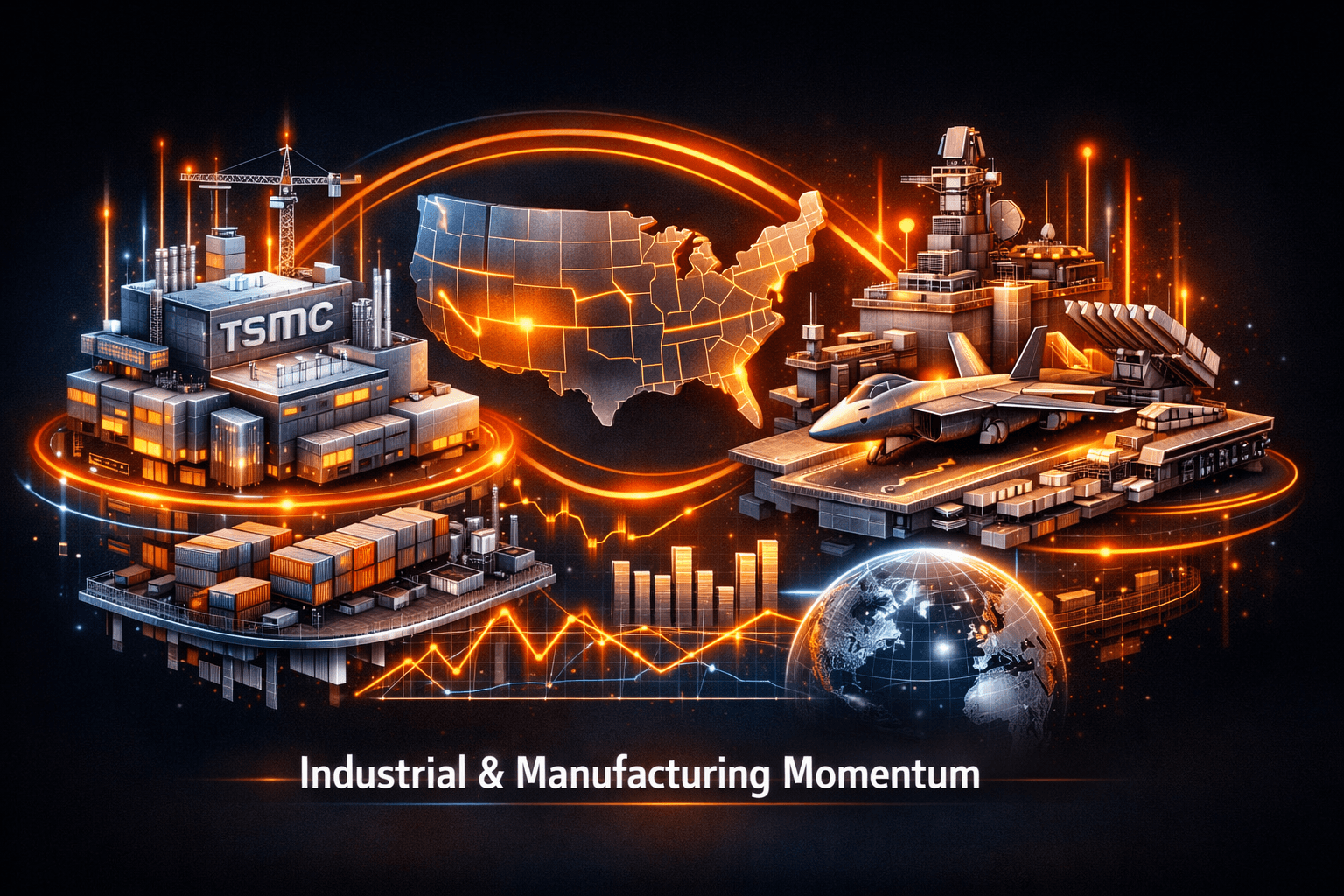
Major capital commitments are reshaping manufacturing geography and capacity, and that matters for you if you follow industrial supply chains or sector stocks. TSMC's fresh $100 billion pledge for four more U.S. fabs and a coordinated $10 billion defense-industry investment plan in Pennsylvania signal a wave of onshore spending that could lift suppliers, equipment makers, and regional economies.
At the same time, tariff volatility and geopolitical risks are forcing operational changes across ocean shipping and commodity markets. You should weigh long-term structural gains against near-term logistics disruptions as markets reopen on Monday, July 20.
Market Highlights
Markets were closed on Saturday, July 18. For price context, the last trading session was Friday, July 17, and markets resume Monday, July 20.
- TSMC ($TSM): Announced a further $100 billion U.S. investment to add four advanced semiconductor fabs, expanding its U.S. footprint to 12 facilities, a major win for semiconductor equipment makers and local supply chains.
- Pennsylvania defense initiative: More than 30 companies committed roughly $10 billion in investments for shipbuilding, munitions, AI and robotics, a boost for defense-oriented suppliers and local manufacturing hubs.
- Ports and shipping: The Port of Los Angeles logged over 1 million TEUs in June, yet port leadership warned ocean shippers face a murky second half due to tariffs and Middle East tensions, forcing carriers to rethink routing and scheduling.
Key Developments
TSMC’s $100B U.S. expansion
TSMC confirmed another $100 billion investment in the United States to build four additional advanced fabs, bringing its U.S. total to 12 facilities, according to the National Institute of Standards and Technology. For you, that means equipment vendors, specialty chemicals suppliers, and precision manufacturing firms may see demand pick up over multiple years as fab construction and ramping accelerates.
Analysts note the move strengthens onshore semiconductor capacity and supply-chain resilience. It also intensifies competition for skilled labor and local infrastructure, creating opportunities for regional contractors and training providers.
Pennsylvania’s $10B defense push
At the state’s Defense and Innovation Summit, Senator Dave McCormick said more than 30 companies committed around $10 billion toward shipbuilding, munitions, AI, and robotics projects in Pennsylvania. This coordinated investment targets both traditional defense manufacturing and advanced R&D, and it could channel procurement and subcontracting work to established defense contractors and local suppliers.
For your portfolio lens, analysts point to potential upside for defense supply chains and industrial businesses tied to military procurement cycles, though contract timing and award details will determine near-term impact.
Tariffs, geopolitics and port pressures
Los Angeles port leadership reported a strong June throughput but warned that tariffs and the Iran conflict are prompting ocean shippers to abandon long-standing practices. The result is more unpredictable routing, higher freight costs, and pressure on lead times, which feeds into commodity pricing and manufacturing schedules.
Supply Chain Dive and other analysts highlighted four ways tariffs and geopolitics are reshaping commodity markets, from metals to plastics. Meanwhile, manufacturers who invested earlier in automation and digital tools are starting to see benefits in resilience and responsiveness.
What to Watch
Look for follow-through on announced investments and policy signals early next week, you may want to track contract awards, state-level incentives, and permitting updates that will reveal timing and winners. Will the TSMC buildouts translate into concrete supplier contracts? Keep an eye on RFPs and local manufacturing orders.
Monitor port throughput metrics and shipping rates for signs of further disruption, because logistical costs can compress margins quickly. Also watch earnings and guidance from semiconductor suppliers and defense contractors for updated capital spending assumptions.
Other catalysts to watch include upcoming trade policy moves, any escalation or de-escalation in the Middle East that affects shipping lanes, and labor market reports that could influence construction timelines for large fabs and defense projects.
Bottom Line
- Major capital investments, led by $TSM's $100 billion U.S. expansion and a $10 billion Pennsylvania defense pledge, are bullish for long-term industrial demand and regional supply-chain growth.
- Tariffs and geopolitical tensions are a clear headwind for logistics and commodity markets, and they could pressure margins in the near term.
- Manufacturers that adopted digital and automation strategies early are seeing resilience benefits, offering a selective advantage you should monitor.
- Key near-term indicators to watch include contract awards, port throughput and shipping rates, and guidance from semiconductor and defense supply firms.
FAQ Section
Q: How will TSMC's investment affect U.S. manufacturing supply chains? A: The investment adds domestic wafer capacity and will likely spur demand for equipment, construction and specialized materials, strengthening onshore supplier networks over several years.
Q: Should I expect immediate improvements in shipping and commodity costs? A: Not necessarily, tariffs and geopolitical pressures can create short-term volatility. Data suggests logistics costs may remain elevated until routing and policy clarity improve.
Q: Are automation and AI replacing manufacturing jobs now? A: Current reporting suggests a more nuanced picture, with automation boosting productivity and shifting job tasks rather than wholesale displacement, at least in the near term.