The Big Picture
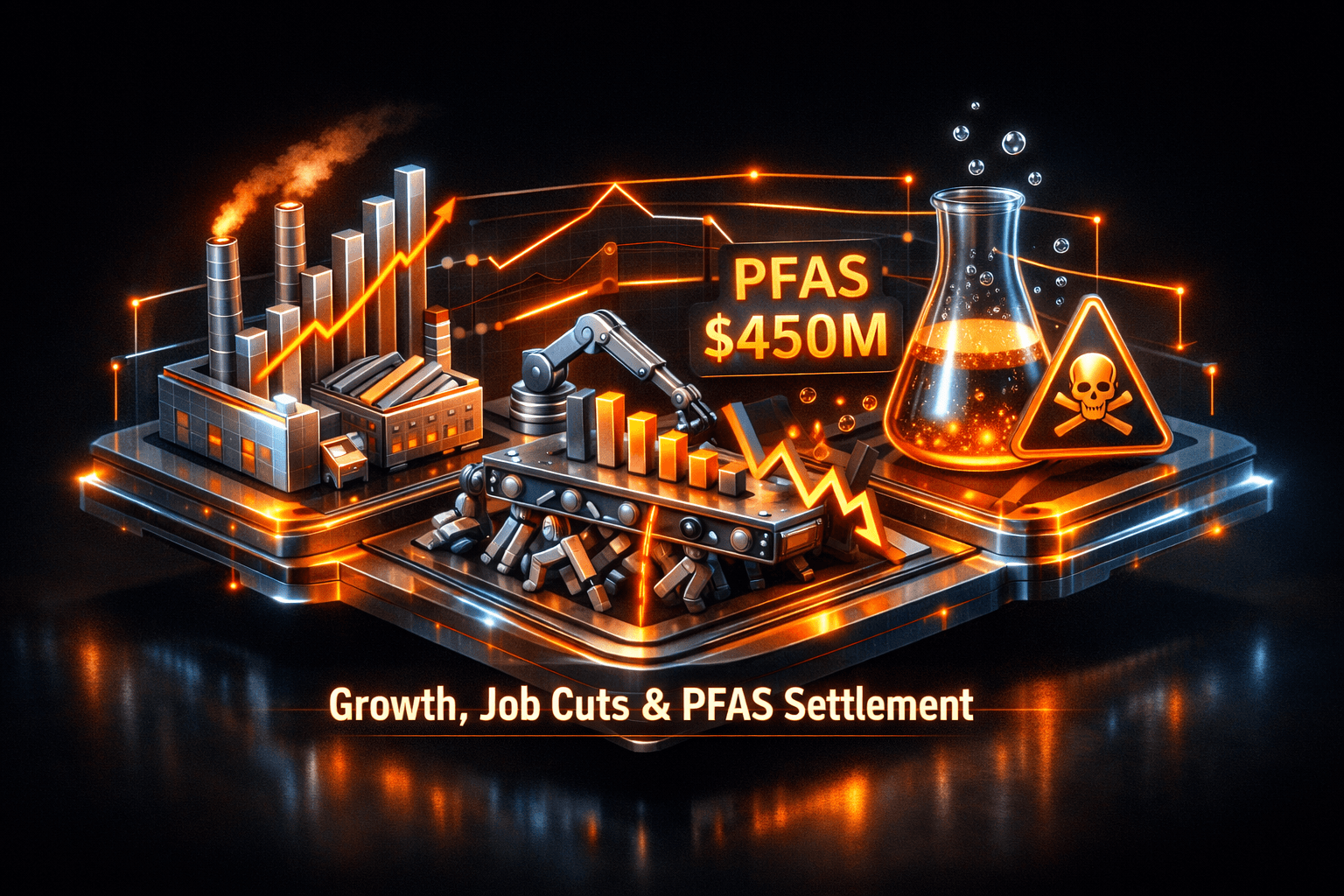
U.S. manufacturing is showing clear momentum, with S&P Global saying activity is at its fastest pace since 2021, while investment in automation and AI keeps accelerating. At the same time you need to weigh two big risks: widespread factory job cuts and a major environmental liability for one large chemical company.
That tension matters because it shapes margins, capital spending and political risk across the sector. You’ll want to focus on companies exposed to heavy regulation, on automation adopters that can lift productivity, and on logistics plays that benefit from recent infrastructure wins.
Market Highlights
Here are the key facts to start your trading day.
- Chemours, $CC, proposed a $450 million settlement with the US government over alleged PFAS releases near facilities in North Carolina, New Jersey and West Virginia.
- CSX, $CSX, completed a $495 million expansion of the 1.7-mile Howard Street Tunnel in Baltimore, allowing full clearance for double-stacked rail and expected to boost port efficiency.
- Qualcomm, $QCOM, agreed to acquire Modular for $3.9 billion to combine AI software with Qualcomm’s chips and data center access.
- JM Smucker, $SJM, is benefiting from lower green coffee costs and introduced temporary price reductions that could improve margins if input prices remain soft.
- IACMI plans to expand two DOD-funded workforce programs to 53 colleges and trade schools by 2030, signaling long-term skills investment in advanced manufacturing.
Key Developments
Chemours PFAS settlement and regulatory risk
Chemours has proposed a $450 million settlement to resolve EPA allegations that it released PFAS, or forever chemicals, into rivers near several facilities, sometimes without required permits. For shareholders and bondholders, this raises immediate legal and compliance risk and could pressure peers with legacy chemical operations, especially those with sizable remediation exposure.
Growth data versus job cuts
S&P Global reports manufacturing growth at the fastest rate since 2021, yet multiple outlets highlight substantial factory job cuts hitting levels seen during COVID and economic crises. That suggests firms are investing in productivity and automating roles even as demand rises. Are the layoffs a temporary reset or a structural shift toward fewer, higher-skilled jobs?
Automation, infrastructure and M&A accelerate the shift
Investment in robotics, AI and digital maintenance is picking up steam, with Plant Engineering urging leaders to move from planning to execution on digital maintenance upgrades. At the same time, CSX’s Baltimore tunnel completion should lower shipping friction while Qualcomm’s $3.9 billion Modular deal signals more consolidation in AI-enabled industrial tech. Taken together, these trends point to rising capital intensity and faster deployment of advanced systems.
What to Watch
Watch how these forces play out over the next few quarters, because they will influence capital allocation and margin trajectories.
- Regulatory and litigation updates on Chemours, $CC. Any court filings or EPA responses could change projected liabilities and create sector-wide compliance scrutiny.
- Follow automation and maintenance spending. You should track capital expenditure plans and guidance from large industrials and suppliers to see if digital maintenance spending accelerates from pilot to scale.
- Monitor freight and port volumes at Baltimore after the CSX tunnel upgrade, plus shippers’ commentary. Improved rail clearance can reduce inland costs, which might improve margins for exporters and import-reliant manufacturers.
- Keep an eye on labor metrics, unemployment for manufacturing, and job-cut announcements. Are companies replacing headcount with capex or rehiring for higher-skilled roles?
- Integration milestones for Qualcomm, $QCOM, and Modular. Watch for product roadmaps and new AI deployments that could drive demand for semiconductors and edge compute solutions.
Bottom Line
- Manufacturing momentum is real, but it’s occurring alongside painful job cuts, so you need to be selective and watch corporate spending signals.
- Major regulatory risk from the Chemours PFAS matter could have ripple effects for chemical peers and suppliers, especially around remediation costs and permitting.
- Infrastructure wins like CSX’s tunnel upgrade and expanded workforce programs funded by DOD should support logistics efficiency and talent pipelines over time.
- Automation and digital maintenance are moving from concept to execution, which may lift productivity yet raise near-term capital needs for many firms.
- Analysts note these mixed dynamics mean earnings and margin divergence will be common; data suggests you should follow company-level guidance and capex trends closely.
FAQ Section
Q: How will the Chemours PFAS settlement affect other chemical companies?
A: It may increase regulatory scrutiny and estimated remediation costs across the sector, prompting reviews of legacy sites and potential adjustments to reserve assumptions.
Q: Should you expect logistics costs to fall after the CSX tunnel expansion?
A: Improved rail clearance at Baltimore should reduce handling and transit friction for double-stacked freight, which could lower some inland transport costs for shippers over time.
Q: How soon will automation reduce the need for factory workers?
A: Automation is accelerating but adoption varies by subsector and plant; you’ll see faster change where labor costs are high and processes are repeatable, while other operations will require more time and skilled labor.