The Big Picture
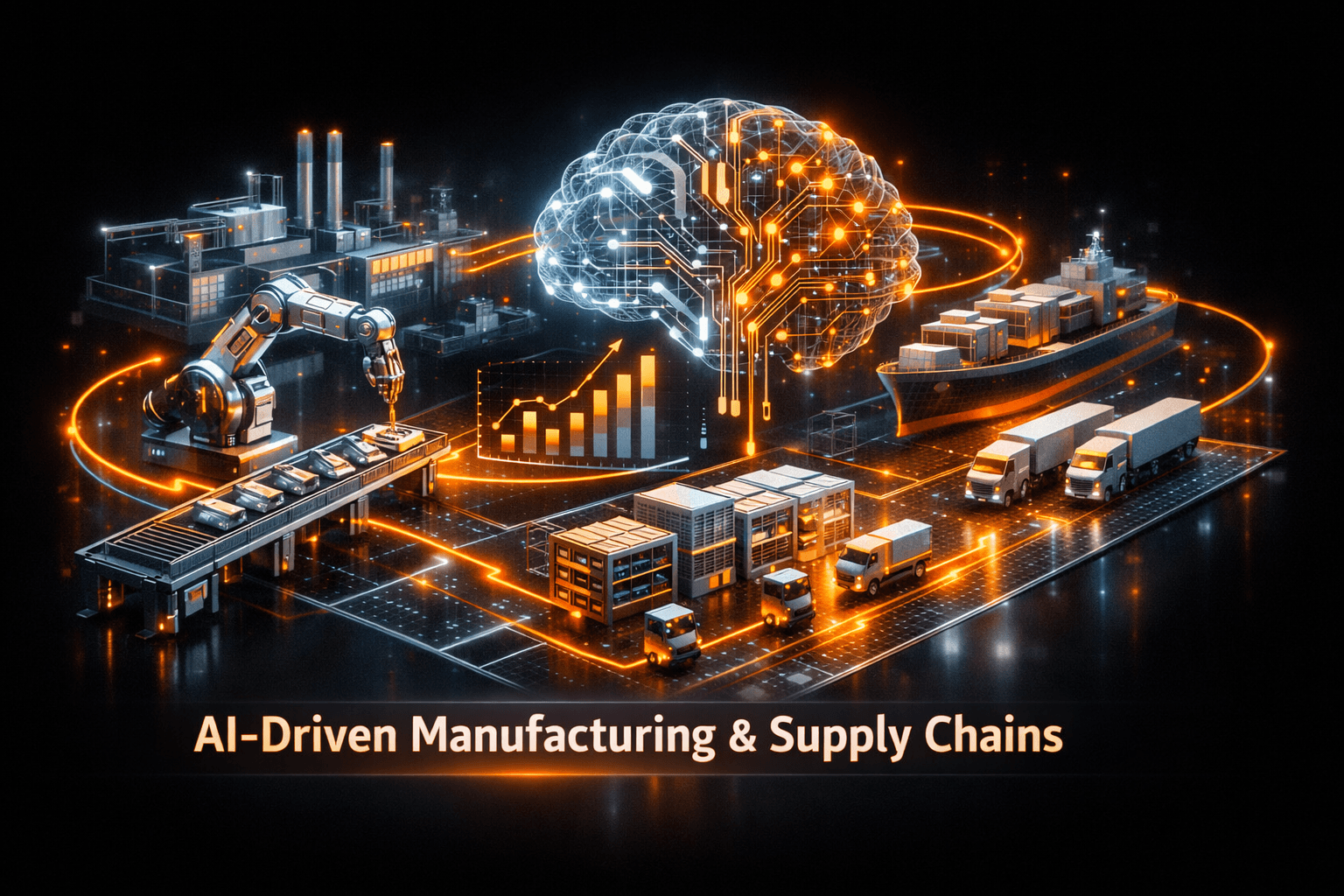
Today’s most impactful development is a twin push toward operational rigor and AI-driven resilience inside factories. Manufacturing Dive argues that lean thinking is now moving beyond assembly lines into every facility system, while Supply Chain Dive says AI-first supply chains are being built to adapt when disruption hits.
Why this matters to you as an investor is simple: incremental gains in facility efficiency and smarter, adaptive supply chains both translate into lower operating costs, fewer stockouts, and potentially stronger margins for manufacturers and their software and automation suppliers.
Market Highlights
Early reads from the sector show investor attention shifting to efficiency and resilience themes rather than cyclical volume alone. Companies that provide industrial automation, factory optimization and supply-chain AI tools are likely to be in focus this week.
- $CAT (Caterpillar) and $DE (Deere & Co) are names investors watch for capex sensitivity and end-market demand tied to factory efficiency improvements.
- $ROK (Rockwell Automation) and $GE (General Electric) are logical beneficiaries if manufacturers accelerate investments in shop-floor automation and facility systems optimization.
- $PLTR (Palantir) and $IBM (IBM) are referenced by market participants as examples of vendors supplying AI tools for supply-chain visibility and scenario planning.
Key Developments
Lean reaches beyond the production line
Manufacturing Dive published a sponsored feature this morning highlighting a shift in lean thinking. Leaders are applying lean rigor not only to cycle times and downtime, but to restrooms, break areas, cleaning workflows and product storage. Those smaller infrastructure and housekeeping processes can shave friction from day-to-day operations and support higher overall equipment effectiveness.
For investors, that means value can come from incremental, low-capex changes that improve labor productivity and utilization. You should note that these fixes often show up gradually in operating margin recovery rather than as a single headline event.
Built to bend, not break: AI-first supply chains
Supply Chain Dive ran a sponsored piece arguing disruption is inevitable and that AI-first supply chains can adapt when shocks occur. The article focuses on demand forecasting, dynamic buffer allocation, supplier risk scoring and scenario simulation as ways firms reduce the damage from shortages or logistics outages.
This trend points toward recurring demand for software, sensors and analytics platforms, and it reinforces the case for companies that help manufacturers move from reactive stocking to predictive operations. Can AI prevent the next supply-chain shock? It can reduce probability and impact, but it requires clean data and integration across partners to work well.
What to Watch
Upcoming macro prints and corporate updates will show whether these efficiency and AI themes are translating into measurable financial benefits. Focus on the following near-term catalysts and risks.
- Economic data: Watch U.S. durable goods orders and the ISM Manufacturing PMI for signs of demand strength or softness that could affect capital spending decisions.
- Quarterly reports: Earnings from large industrials and automation suppliers will offer insight into margin trends, capex intentions and adoption of factory optimization projects. If you own exposure, track any commentary on factory automation budgets and supply-chain tech spend.
- Execution risk: AI rollouts and lean programs require good data and change management. Implementation failures or longer payback periods would be headwinds for software vendors and integrators.
- Policy and rates: Interest rates affect capex timing. Higher financing costs could push some firms to delay larger automation investments even as they pursue low-cost facility fixes.
Bottom Line
- Lean principles moving into facility systems and AI-first supply chains together create a double tailwind for efficiency and resilience across manufacturing.
- Value is likely to show up as gradual margin improvement, lower working capital and fewer disruption-driven hits to revenue.
- Watch industrials and automation suppliers for commentary on implementation rates and budget timing, because capital expenditure cycles will determine near-term winners.
- Execution and integration risk remain, so be selective when assessing exposures to supply-chain AI vendors and systems integrators.
- Data suggests momentum building, but you should expect benefits to accumulate over quarters rather than overnight.
FAQ Section
Q: How quickly will lean facility changes boost a manufacturer’s margins? A: Many facility-level lean fixes are low cost and can improve operating efficiency within quarters, while larger process and automation projects typically pay off over multiple quarters.
Q: What does an AI-first supply chain mean for inventory levels? A: AI-first approaches aim to reduce both excess inventory and stockouts by improving forecasting accuracy and enabling dynamic buffer strategies tied to real-time signals.
Q: Which risks should you monitor when companies pitch AI and lean upgrades? A: Key risks include poor data quality, slow user adoption, integration complexity, and the broader macro environment that could delay capex spending.