The Big Picture
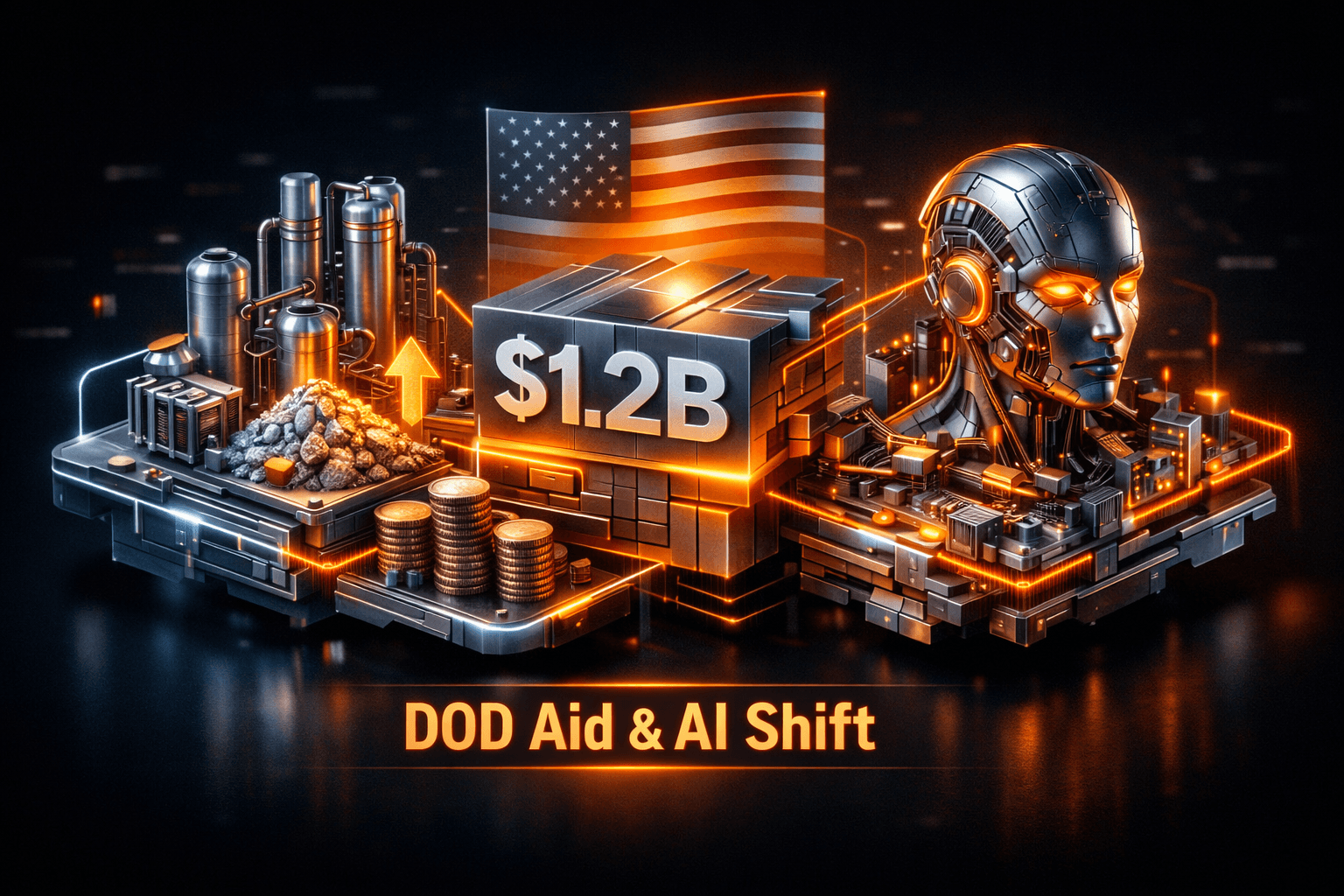
The Department of Defense announced a conditional $1.2 billion funding commitment today to support domestic rare-earth mineral processing, marking the largest single policy-driven industrial boost of the session. This federal backing underlines Washington's push to onshore critical-material supply chains, and it matters because rare-earths feed clean-energy, defense, and high-tech manufacturing ecosystems.
At the same time, industry conversations kept circling around artificial intelligence and supply chain design. Agentic AI is scaling inside factories, yet experts warn data and infrastructure gaps remain. That mix of public capital and private tech adoption points to accelerating structural change, and your portfolio should reflect the new priorities companies face when planning capacity and capital spending.
Market Highlights
Here are the day's quick facts and market signals to note. Use these to scan where attention is clustering and where you may want to dig deeper tomorrow.
- DOD conditional loans: $1.2 billion committed to Phoenix Tailings and Energy Fuels to scale domestic rare-earth processing, via the Office of Strategic Capital.
- AI adoption: Industry experts from IEEE, Iterate.ai, Altimetrik and Amtech Software report growing use of agentic AI in manufacturing, but they highlight persistent infrastructure and data integration gaps.
- Fulfillment move: Duluth Trading partnered with Amazon for wholesale fulfillment on Amazon's marketplace, aiming to leverage Prime shipping and free internal resources to focus on omnichannel growth.
- Lean operations: Analysts and consultants are urging firms to expand lean thinking beyond production lines into facility systems like break areas and cleaning workflows to drive incremental gains.
- Supply chain resilience: Sponsored reporting stresses an AI-first, adaptable supply chain model as the leading strategy to absorb future disruptions.
Key Developments
DOD conditional loans: domestic rare-earth scale-up
The DoD's Office of Strategic Capital committed $1.2 billion in conditional loans to Phoenix Tailings and Energy Fuels to accelerate rare-earth mineral processing in the U.S. This federal support targets a strategic supply bottleneck after years of reliance on overseas processing capacity.
For investors, the implication is clearer policy risk mitigation and potential demand for upstream equipment, contractors, and material-handling firms. Analysts note the conditional nature of the loans means milestones and performance will matter, so timelines and permit approvals are key triggers to watch.
Agentic AI grows inside plants, infrastructure lags
Experts from IEEE and leading industrial software firms report that agentic AI tools are moving from pilots to production in tasks like scheduling, predictive maintenance and dynamic routing. The technology promises faster decisions and tighter operations, and you can expect more vendors to push integrated solutions.
But the same experts warn that data silos, edge computing gaps and workforce skills limit near-term scale. That creates a selective opportunity, not a blanket gain. Companies that invest in data platforms and retraining are likely to move the needle first, and you'll want to track adoption metrics and proof points from early deployers.
Logistics and lean: tactical moves to free capital
Duluth Trading's decision to use Amazon for fulfillment illustrates a broader trend where retailers and manufacturers outsource logistics to refocus on core capabilities. The move should free cash and management bandwidth for digital investment and store operations, analysts say.
Meanwhile, lean practitioners are recommending that manufacturers extend continuous improvement into facility systems that often get overlooked. These are low-cost, high-frequency efficiency gains that can compound over time and improve margins without big capital outlays.
What to Watch
Expect attention tomorrow and in the coming weeks to cluster around a few clear catalysts. First, follow contract milestones and permitting timelines tied to the DOD loans. Will Phoenix Tailings and Energy Fuels meet the DoD's conditional milestones on schedule? That's the near-term question that affects capital deployment.
Second, watch vendor announcements and pilot-to-scale stories for agentic AI. Who posts measurable uptime improvements or margin gains? Who reports edge-compute rollouts and data harmonization wins? These will be the early signals of durable change.
Other risk factors to monitor include commodity price swings, regulatory permitting for processing plants, and broader macro demand for industrial equipment. Supply chain partnerships like Duluth's deal with Amazon may reshape fulfillment economics, so keep an eye on margin trends and inventory turns.
Bottom Line
- Federal support for domestic rare-earth processing is a major structural positive for the industrial base, but loan conditions and execution timelines will determine near-term impact.
- Agentic AI adoption is real and accelerating, yet infrastructure and skills gaps make benefits uneven across firms.
- Logistics partnerships and expanded lean practices are practical steps companies are taking to free capital and improve margins without heavy capex.
- Watch milestone updates from the DOD-backed projects and measurable outcomes from AI deployments as the next market-moving events.
- Analysts note that selective exposure to companies solving data and processing bottlenecks may matter more than exposure to broad sector themes.
FAQ Section
Q: What does the DOD funding mean for domestic manufacturing? A: It signals policy support to onshore critical-material processing, which can reduce supply-chain concentration and spur related industrial activity if project milestones are met.
Q: How fast will agentic AI change factory economics? A: Adoption is uneven. Data suggests pilot wins are appearing, but broader impact depends on investments in data infrastructure and workforce skills over the next 12 to 36 months.
Q: Should you expect immediate margin improvement from logistics outsourcing deals? A: Outsourcing fulfillment can free resources and improve customer experience, but margin effects vary by company and depend on contract terms and inventory management.