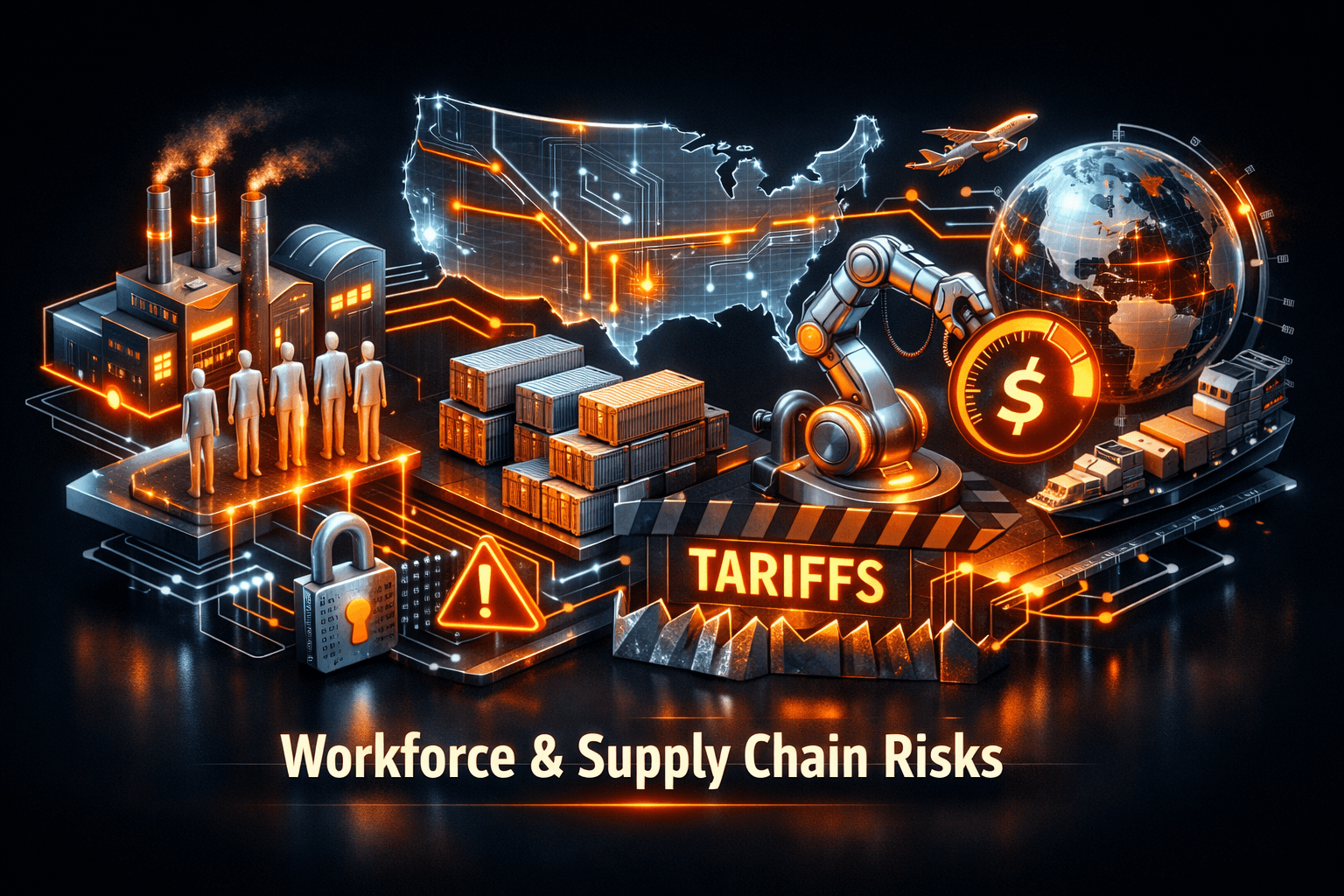
The Big Picture
Big public and private dollars are flowing into the industrial economy, but near-term friction remains for manufacturers. Google, the Department of Energy and lawmakers are launching initiatives that could ease long term capacity and supply constraints, yet a temporary court ruling on a 10% global tariff and frontloaded ocean cargo highlight immediate cost pressures for you to watch.
For investors, that mix matters because policy-driven capital and training could lift industrial resilience over quarters, while tariff and logistics shocks may pressure margins and inventories in the weeks ahead. Markets were closed on Saturday, so the last session referenced below is as of Friday, June 12.
Market Highlights
Quick snapshots from the major stories that moved headlines and could influence company plans and the supply chain.
- Google will invest $50 million to train more than 300,000 skilled trade workers, targeting a persistent labor gap in U.S. manufacturing and construction, according to Plant Engineering.
- A House and Senate bill would extend CHIPS-style support to space-based semiconductor manufacturing, aiming to boost microgravity chip projects already underway.
- Kenvue's short-haul electric truck pilot cut diesel usage by 44.7% in the Toronto area, underscoring fleet electrification savings and operational efficiency gains.
- Harley-Davidson is reshoring some engine production to Pennsylvania and Wisconsin, testing domestic capacity even as many plants face challenges to scale reshoring broadly.
- The federal appeals court temporarily allowed collection of the administration's 10% global tariff for certain parties while appeals proceed, keeping import duty risk alive for supply chains.
- Ocean shippers and forwarders report frontloading of cargo ahead of tariffs and fuel worries, a sign that shipping volumes and timing could shift near term.
- The U.S. Department of Energy announced multiple investments and partnerships to boost domestic critical minerals, supporting battery and semiconductor supply chains.
Key Developments
Workforce push, led by Google
Google's $50 million commitment targets training for over 300,000 skilled workers. That effort is meant to narrow a chronic labor shortfall that limits plant throughput and slows reshoring efforts.
For you, more trained technicians and machinists should ease hiring pressures over time, but the program will take months to scale before it materially affects production ramps and hiring costs.
Policy, tariffs and the supply chain
Lawmakers are circulating a bill to allow CHIPS-like funding for space-based chip manufacturing, signaling a willingness to broaden industrial subsidies into microgravity projects. The move aims to keep advanced semiconductor development onshore and competitive with China.
At the same time, a federal appeals court temporarily upheld collection of the administration's 10% global tariff for certain importers. Ocean shippers say customers are frontloading cargo ahead of tariff risk and fuel worries. Those dynamics suggest you could see short-term inventory buildups and higher landed costs for companies reliant on imports.
Operations: digital threads, EV pilots and reshoring tests
An EY and Aerospace Industries Association survey shows many aerospace and defense firms are struggling to implement digital threads at scale. The technology promises traceability and faster iterations but there is no silver bullet for integration, and slower adoption may limit efficiency gains you might expect this year.
Conversely, Kenvue's EV truck pilot produced a 44.7% diesel savings over short hauls, demonstrating tangible operational savings from fleet electrification. Harley-Davidson is also bringing some engine work back to U.S. plants, which could create near-term capital spending and hiring in targeted facilities even as broader reshoring remains challenging.
What to Watch
Here are the catalysts and risks that could move company fundamentals and sector sentiment next week and beyond.
- Legislative progress on the CHIPS-for-space proposal, which would change subsidy eligibility for microgravity manufacturing projects. Will the bill gain traction in committee?
- Developments in the tariff litigation and appeals, which could alter import cost assumptions for manufacturers. Watch court timelines and any potential injunctions.
- DOE announcements and funding rounds for critical minerals projects, which will influence domestic battery and semiconductor supply chains and capital allocation plans.
- Corporate pilots and adoption timelines for digital thread initiatives. Failure to scale could keep unit costs higher for aerospace and defense suppliers, while successful rollouts may improve margins over time.
- Shipping volume shifts and freight rates as companies frontload cargo. Inventory and working capital signals in quarterly reports will show how firms are managing tariff risk.
Bottom Line
- Public and private investment is building the foundation for longer term industrial resilience, but those benefits will arrive over months to years, not instantly.
- Tariffs and frontloaded shipping increase short-term cost and inventory volatility, so watch operating updates and margin commentary in upcoming reports.
- Workforce programs like Google's $50 million pledge address a critical bottleneck, yet training scale and placement timelines will determine real impact.
- Technology adoption is uneven, especially for digital threads in aerospace and defense, so be selective when assessing efficiency claims.
- DOE actions on critical minerals and CHIPS-style policy extensions are structural positives, but legislative and legal outcomes are key near-term variables.
FAQ
Q: How will the 10% global tariff affect manufacturers? A: The tariff raises import costs for affected goods and may prompt inventory frontloading, higher landed costs, and margin pressure until legal outcomes change the policy.
Q: Will Google’s $50 million training program fix the skilled labor shortage? A: The program is a meaningful step and targets 300,000 workers, but training and placement take time, so you should expect gradual improvement rather than immediate relief.
Q: Are space-based CHIPS subsidies likely to boost domestic semiconductor capacity? A: Expanding CHIPS support to microgravity projects would signal policy backing and could help niche R&D and manufacturing efforts, but scaling production and timelines remain uncertain.