The Big Picture
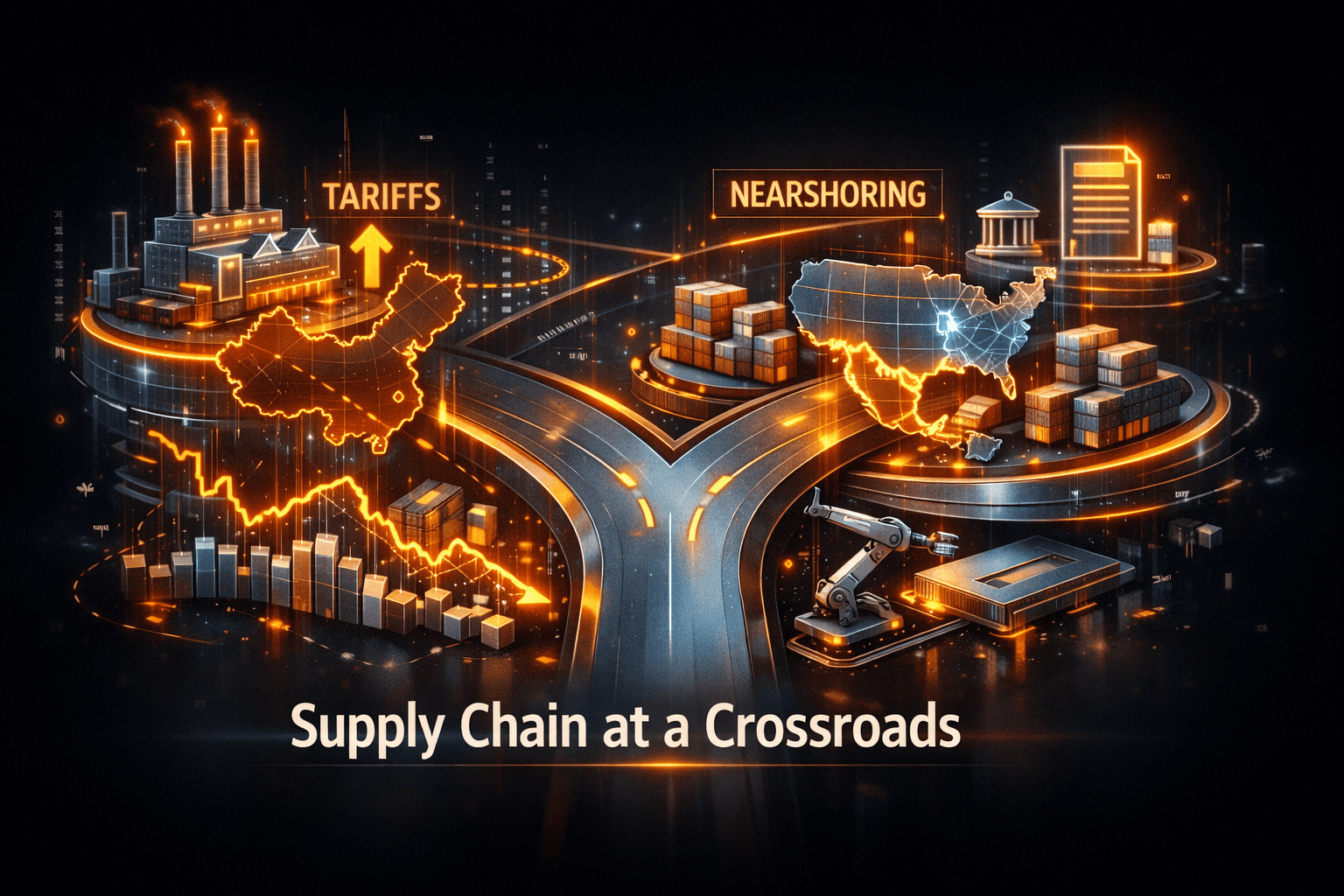
Today’s Industrial & Manufacturing news painted a mixed picture, with significant public and private investments aimed at strengthening domestic capacity and workforce development, while policy moves raised immediate cost and timing risks for supply chains. You saw big-dollar commitments for skills and minerals, as well as reshoring moves, but you also saw a court decision and shipping behavior that could squeeze margins and inventories in the near term.
That combination matters because it shapes both the long-term competitiveness of U.S. manufacturing and the short-term profit and logistics picture that you may be watching. Analysts note the interplay between strategic investment and trade policy will drive volatility and selective opportunity across the sector.
Market Highlights
Here are the top facts and company names to keep in mind from today’s reporting.
- Google parent $GOOGL committed $50 million to train more than 300,000 skilled trade workers, a direct push to close labor gaps that the plant floor relies on.
- Kenvue $KVUE reported a Fuel Transport EV pilot delivered a 44.7% reduction in diesel costs during short haul runs in the Toronto area, a tangible win on operating efficiency.
- Harley-Davidson $HOG is reshoring some engine production to U.S. plants in Pennsylvania and Wisconsin, highlighting supply chain realignment trends.
- A federal appeals court temporarily upheld the administration’s 10% global tariff, keeping duties in place while appeals proceed, a development that is already altering shipper behavior.
- Legislators are circulating a bill to allow CHIPS-era support for space-based semiconductor projects, signaling policy support for microgravity manufacturing initiatives.
Key Developments
Google funds workforce training
$GOOGL’s $50 million pledge to train over 300,000 skilled trade workers is one of the largest private moves targeting the manufacturing labor gap. For plant operators and suppliers this could ease hiring pressure over time, and for you it suggests labor availability risk may gradually abate in high-demand regions.
Tariffs, shipping, and short-term supply stress
The federal appeals court temporarily upheld a 10% global tariff on imports for now, and ocean shippers are frontloading cargo ahead of tariff deadlines and rising fuel costs. That frontloading can produce an early peak in shipments and create inventory timing mismatches for manufacturers and retailers. Are you prepared for sharper input cost swings and timing issues through the summer?
Reshoring, electrification, and domestic supply investments
Harley-Davidson $HOG is moving some engine production back to the U.S., showing reshoring is practical for certain products. Meanwhile Kenvue’s $KVUE EV truck pilot demonstrated nearly 45% diesel savings, indicating fleet electrification can cut operating costs quickly in short-haul routes.
The Department of Energy continues to fund projects aimed at domestic critical minerals supply, and a CHIPS-focused bill could expand incentives to space-based chip manufacturing. Taken together, this points to steady policy-driven support to shore up upstream inputs and advanced production capabilities.
What to Watch
Look for legislative and legal moves next week that could shift the cost and capacity landscape. You should track the appeals court schedule for the tariff case, and congressional movement on the CHIPS space manufacturing provision, because both could affect input pricing and capital flows.
Monitor DOE grant announcements and award timelines for critical minerals projects, as they will influence where investment dollars go and which suppliers gain competitive advantage. Also watch corporate pilot programs for EV fleets and reshoring outcomes, since real-world cost savings will determine whether these pilots scale up.
Finally, keep an eye on digital transformation adoption in aerospace and defense. A new EY and Aerospace Industries Association survey cautions that many firms are struggling to implement digital thread strategies at scale, so expect mixed results in productivity gains and integration timelines.
Bottom Line
- Public and private capital is flowing into workforce training, critical minerals, and advanced manufacturing, supporting long-term competitiveness.
- Near-term headwinds from tariffs and altered shipping schedules are creating cost and timing uncertainty that could pressure margins in coming quarters.
- Reshoring and electrification pilots are producing measurable savings, but scalability and supply chain readiness vary by subsector.
- Policy moves around CHIPS and DOE investments are catalysts to watch, they may redirect investment and change supplier dynamics over the next 12 to 24 months.
- Stay selective, because the day’s news points to pockets of momentum alongside persistent execution risks for digital and supply chain transformations.
FAQ Section
Q: How will the 10% tariff affect manufacturing costs? A: The tariff keeps import duties in place for now, which raises input costs for companies that rely on imported components and prompts shippers to accelerate shipments, increasing near-term volatility.
Q: Will Google’s $50 million training program solve the labor shortage? A: Google’s commitment is significant for scale and funding, it helps bridge the skilled trades gap but broader hiring and retention challenges mean the impact will be gradual, not immediate.
Q: Are reshoring and EV pilots likely to boost margins soon? A: Early pilots like the Kenvue $KVUE truck program show strong fuel cost reductions, and reshoring can reduce lead times, but you should watch for capital costs and workforce readiness before expecting widespread margin improvement.