The Big Picture
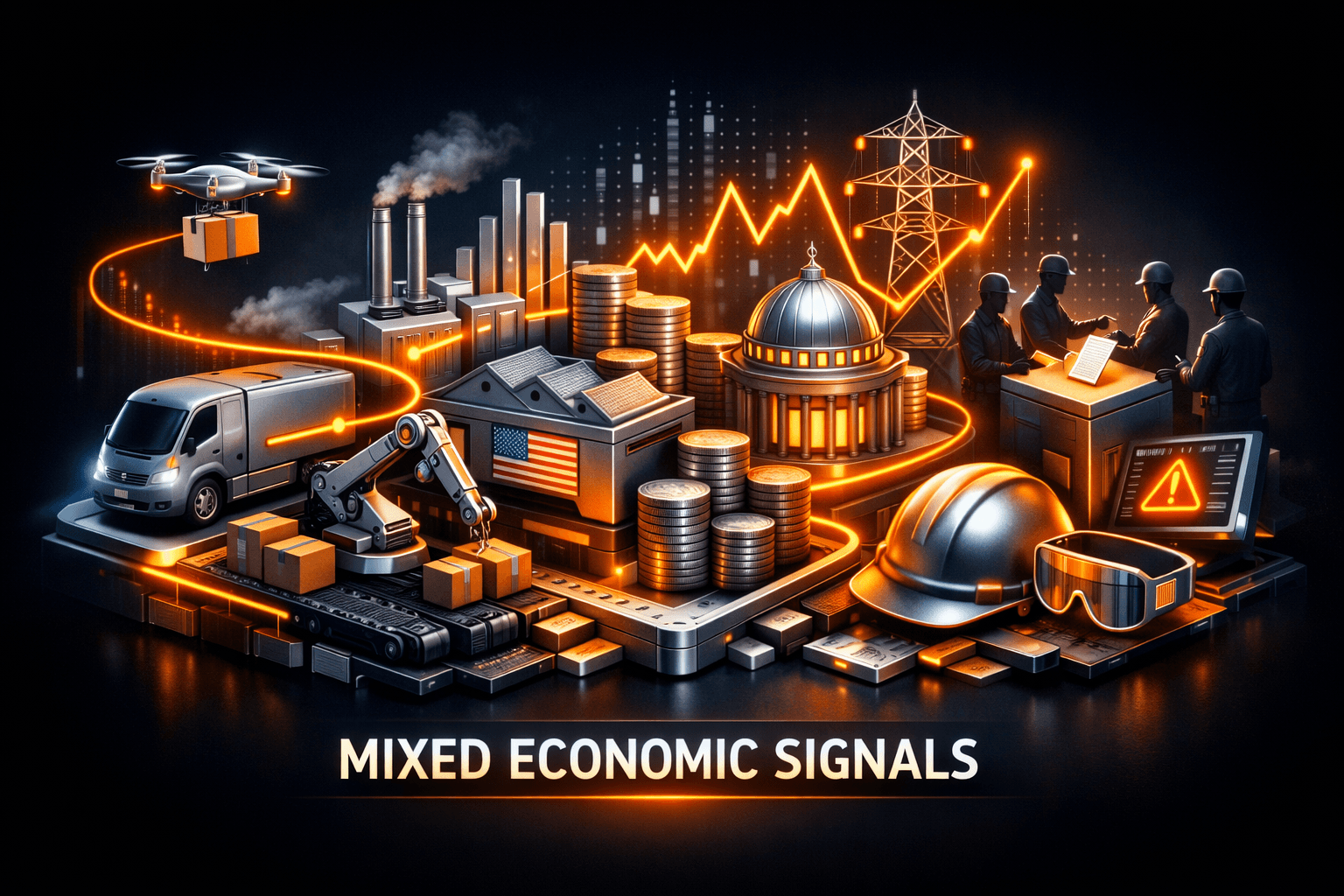
Industrial and manufacturing headlines today sent mixed signals for investors and operators alike. Momentum in automation and federal spending to shore up critical minerals met rising inflation and execution challenges, leaving the sector at an inflection point.
That matters because supply chains, energy costs and technology adoption are the levers that will determine margins and capacity this year. If you follow industrials, you need to make sense of both the upside from new investments and the downside from weaker consumer purchasing power.
Market Highlights
Key moves and numbers you should note from today.
- PepsiCo announced a multiyear expansion of autonomous truck use with Gatik to boost capacity in hard to staff routes, underscoring growing logistics automation, $PEP.
- The U.S. Energy Department unveiled millions in new investments and partnerships to develop domestic critical-minerals supply chains, aimed at reducing import risk for manufacturers.
- Inflation jumped 4.2 percent, driven by a war-related surge in energy prices, a development that is starting to erode real wages and consumer spending.
- Nearly 1,000 workers at a GM and Ford supplier will vote on a proposed contract from Dauch Corp, formerly American Axle, a vote that could end a strike and restore parts flow, $AXL, $GM, $F context.
- Industry forums flagged a technology adoption problem for U.S. manufacturers, and Plant Engineering urged modernized environmental, health and safety systems for real-time visibility.
Key Developments
Autonomous Logistics Gains Traction
PepsiCo said it will expand its multiyear autonomous trucking deal with Gatik to increase capacity on routes that are hard to staff. The move highlights how major CPGs are deploying automation not just for cost but to plug labor and capacity gaps.
For you that follows supply chains, this suggests the logistics industry will see more pilot-to-scale shifts. Lower-cost routing and higher utilization could help margin pressure, but adoption will vary by geography and regulation.
Federal Funding Targets Critical Minerals
The Department of Energy announced millions in partnerships and grants aimed at building a domestic critical-minerals ecosystem. Projects target processing, recycling and reducing reliance on foreign suppliers for components used in batteries and advanced manufacturing.
Analysts note these are long lead-time wins for industrials, because capital and permitting cycles stretch for years. Still, the funding signals policy support that could benefit miners, materials processors and companies in electric vehicle and renewable supply chains.
Labor, Inflation and the Tech Gap
Nearly 1,000 workers represented by UAW Local 2093 are set to vote on a proposed contract from Dauch Corp that could end a strike affecting $GM and $F suppliers. A resolution would ease near-term production risk for automakers and parts networks.
At the same time inflation rose 4.2 percent, led by higher energy prices, and industry voices at NYC Tech Week warned U.S. manufacturers are lagging on digital transformation. How will higher input costs and slow tech uptake influence your exposure to this sector?
What to Watch
Here are the catalysts and risks to track into tomorrow and the coming weeks.
- Labor vote outcome: Watch the Dauch Corp vote this weekend for implications on parts supply to automakers and short-term plant utilization.
- Inflation and energy trajectory: A 4.2 percent print tied to geopolitical energy shocks is a macro headwind for demand. Monitor oil and gas price moves and any Fed commentary that could affect rates and industrial capex.
- DOE program rollouts: Track follow-on awards and specific project recipients, which will clarify which suppliers and materials firms benefit from federal funding.
- Technology adoption signals: Look for earnings commentary and capex plans detailing investments in factory automation, digital twins and EHS modernization. Are manufacturers moving fast enough on digital upgrades?
- Regulatory and regional permitting updates: Critical-minerals projects face long permitting windows, so regulatory milestones will be as important as funding announcements.
Bottom Line
- Automation and federal support are clear positives for long-term capacity and supply resilience, data suggests expansion of autonomous logistics and critical-minerals funding.
- Inflation at 4.2 percent tied to energy costs is a near-term headwind for consumer demand and input margins, so momentum is uneven across the sector.
- Labor outcomes at suppliers could quickly change near-term production risk, so keep an eye on the Dauch Corp vote this weekend.
- Technology adoption gaps and the need to modernize EHS systems mean execution risk remains high for many manufacturers, so selectivity matters.
- For you following industrials, expect a sector split between companies that can execute digital and supply-chain upgrades and those that face persistent margin pressure.
FAQ Section
Q: How will PepsiCo's autonomous trucking deal affect supply chains? A: It should raise capacity and reliability on hard-to-staff routes, and it signals wider adoption of autonomous logistics among large CPGs.
Q: What does the DOE funding mean for manufacturers? A: The investments aim to reduce import dependency on critical minerals and support domestic processing, but benefits will accrue over multiyear timelines as projects scale.
Q: Should I worry about the 4.2 percent inflation print? A: Higher inflation, driven by energy, reduces real wages and consumer demand, so it's a headwind for industrials. Monitor energy prices and policy responses for how this evolves.