The Big Picture
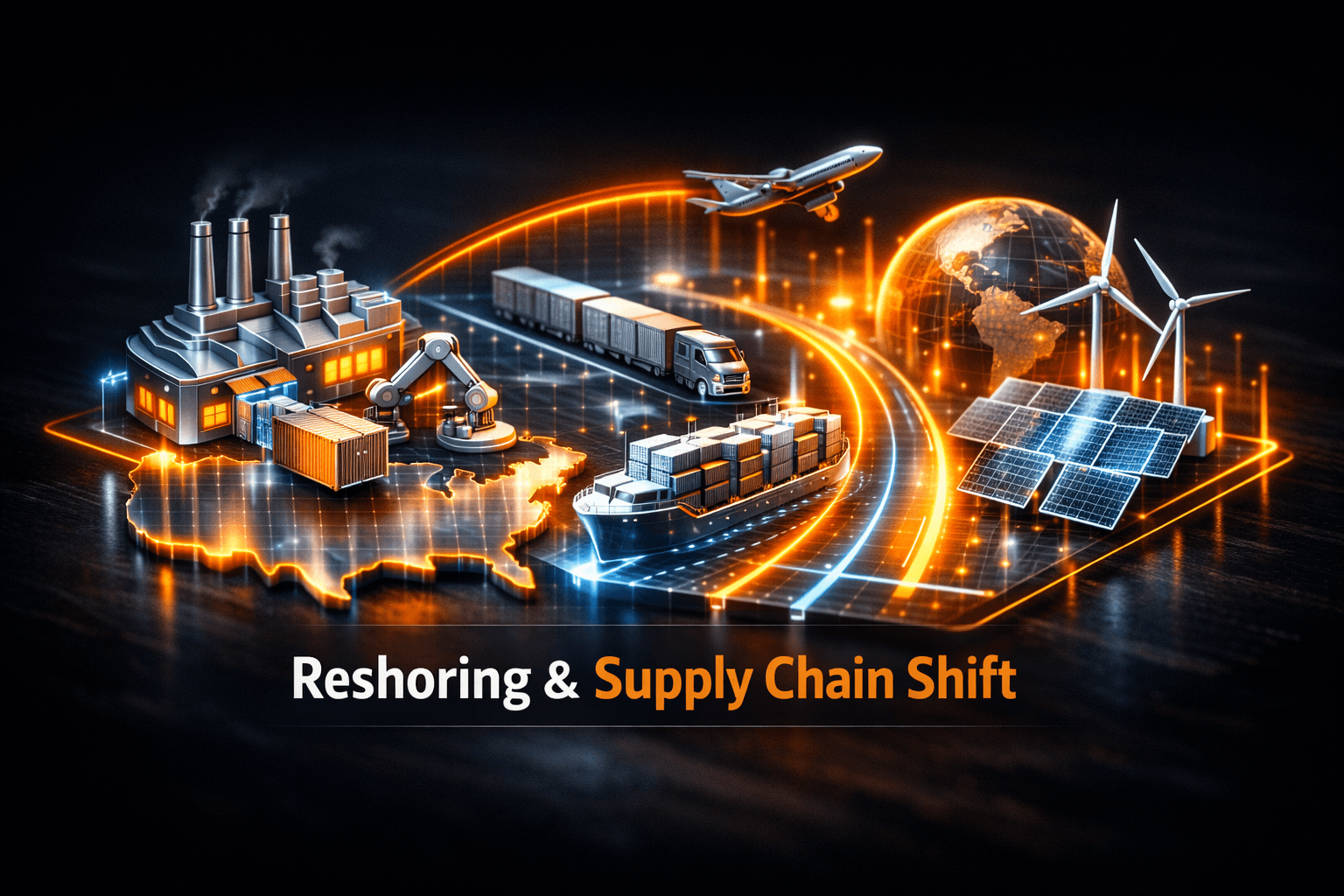
Industry players spent Wednesday turning plans into practice, and that matters for you because operational changes now can influence costs, margins and supply resilience down the line. From reshoring engine production to expanded freight offerings and a new green truck corridor, firms are prioritizing control over transportation and manufacturing footprints.
Those moves come as manufacturers and plant operators face pressure to adopt digital tools and modern safety systems, so today’s headlines show both the push to invest and the gaps that still need closing for long-term efficiency gains.
Market Highlights
Market responses were mixed but leaned positive on announcements that reduce logistics risk and bring production onshore. Here are the quick facts to note.
- $HOG, Harley-Davidson was the standout on the reshoring story, with shares moving up after the company said it will bring Revolution Max engine production and related model manufacturing back to Pennsylvania and Wisconsin.
- $AMZN, Amazon expanded its LTL freight offerings for shippers, broadening how customers can move less-than-truckload freight to third-party sites through its network, keeping freight and logistics names in focus.
- $BURL, Burlington’s supply chain team said the retailer is increasing ocean contract use and packing density to combat elevated freight costs, a clear cost-control initiative for a major retailer.
Key Developments
Burlington doubles down on ocean capacity
Burlington Stores announced it is relying more on ocean contracts and increasing how much product it packs and loads for inbound and outbound shipments. That strategy aims to blunt elevated freight costs by locking capacity and improving container utilization, which could ease margin pressure for the retailer.
For you, the takeaway is that retailers are still actively managing supply chains to control costs, and decisions about transport modes and packing can have measurable effects on margins over multiple quarters.
Amazon expands LTL, intensifying logistics competition
Amazon said shippers can now use its network to deliver less-than-truckload freight to third-party sites, an expansion of its freight services announced Wednesday. The move broadens Amazon’s role as a logistics provider beyond e-commerce fulfillment.
That development raises questions for legacy freight carriers and third-party logistics providers, and it could change pricing dynamics or service expectations for customers who ship smaller loads. How you move freight may be changing, and companies are positioning to capture that demand.
Reshoring and green infrastructure bolster resilience
Harley-Davidson will reshore production of the Revolution Max engine and associated models to U.S. facilities in Pennsylvania and Wisconsin as part of a recovery and growth plan. Reshoring aims to shorten supply chains and improve control over production quality.
Meanwhile, the Port of Long Beach and partners unveiled plans for a 150-mile Green Truck Corridor to link Long Beach with California’s Central Valley. The route will involve private partners and freight operators and focuses on cleaner truck operations for a major trade lane.
Both stories point to a theme: companies and ports are investing to make supply chains faster, cleaner, and less vulnerable to overseas disruption.
Industry faces technology and safety gaps
Speakers at NYC Tech Week and recent Plant Engineering pieces highlighted that U.S. manufacturers still struggle with digital adoption and modernizing environmental, health and safety operations. Experts said firms need connected, real-time visibility across assets and incident response workflows to meet regulatory and operational demands.
Designing for automation increases speed, but it also makes operations more fragile without the right resilience planning. Are your operations ready for a deeper wave of automation? Companies that close these gaps will likely capture efficiency gains sooner.
What to Watch
Expect these catalysts and risks to dominate near-term headlines and investor attention.
- Follow quarterly updates from major retailers and manufacturers; look for commentary on freight costs, inventory turns, and reshoring timelines that could affect margins.
- Track further rollouts from $AMZN on logistics services, and watch how traditional carriers and 3PLs respond on pricing and network partnerships.
- Monitor implementation details for the Green Truck Corridor, including funding, timeline and participating fleets, since regulatory support and scale will determine environmental impact and logistics adoption.
- Watch industry conferences and Tech Week follow-ups for signals on adoption of automation, AI and EHS systems, plus any government incentives that could accelerate digital investments.
- Be aware of tariff-related supply chain shifts, as firms like Razor are reallocating costs and redesigning sourcing to deal with trade policy headwinds.
Bottom Line
- Companies are taking concrete steps to control freight costs and shorten supply chains, which could help margins over several quarters.
- Logistics expansion by $AMZN increases competition, and shippers should expect evolving service options and pricing dynamics.
- Reshoring by manufacturers like $HOG signals a broader move toward onshore production for strategic models and components.
- Technology and EHS modernization remain critical gaps, so firms that invest in connected operations may gain a competitive edge.
- For your portfolio considerations, analysts note these trends are about operational improvement rather than immediate profit shocks, so watch for updates tied to earnings and implementation timelines.
FAQ Section
Q: How will reshoring engine production affect costs and timelines? A: Reshoring can raise near-term capital and labor costs, while improving control and reducing transit risk over time, data suggests implementation will take several quarters to realize efficiency gains.
Q: Will Amazon’s LTL expansion hurt traditional carriers? A: The expansion increases competition and could pressure margins for some carriers, but traditional 3PLs may respond with differentiated services and partnerships to retain customers.
Q: What should manufacturers prioritize to prepare for automation and EHS demands? A: Experts advise investing in connected visibility across assets, robust incident response workflows, and phased automation designs that include redundancy to maintain resilience.