The Big Picture
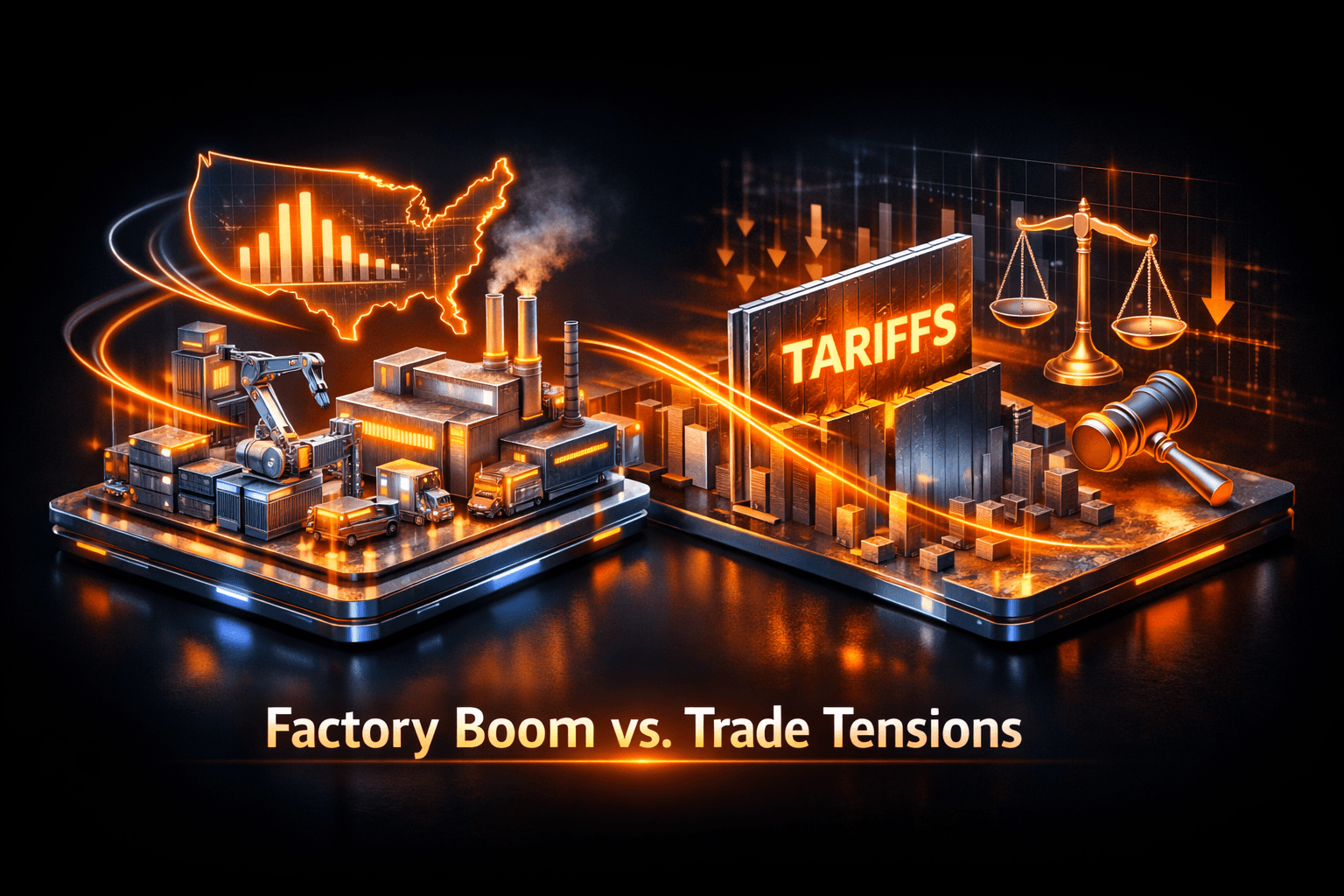
Overnight headlines underline a sector at a crossroads, with sizable capital commitments running up against fresh policy and legal risks. Large-scale investments and technology partnerships signal durable momentum for reshoring and defense-related manufacturing, even as proposed tariffs and court rulings inject uncertainty into supply chains and broker practices.
This matters because you may see both growth catalysts and volatility play out in the same names this week, as project timelines, government support and regulatory shifts interact with markets and contracts.
Market Highlights
Quick facts you should know heading into today:
- USA Rare Earth, $USARE, announced a planned $1.2 billion magnet factory in South Carolina, backed by CHIPS Act support and government equity participation, with the project expected to create about 490 jobs.
- Rheinmetall and Harbinger are partnering on R&D in robotics and uncrewed ground vehicles, while Rheinmetall is investing $41 million across six U.S. manufacturing sites to expand capacity and fortify supply chains, a boost for defense-related suppliers and tooling firms.
- Federal trade moves could be consequential, with the administration weighing new tariffs of 10% or 12.5% on goods from roughly 60 trading partners, and the DOJ appealing a court order about tariff refunds, creating legal and cashflow uncertainty for importers.
- Regulatory and legal shifts extend to logistics, after a Supreme Court decision raised the stakes for brokers by allowing third parties to be sued for negligent hiring, a development that affects freight and customs intermediaries.
- A McKinsey Global Institute report stressed the need to transform the U.S. industrial base to fully scale manufacturing in sectors such as semiconductors, textiles, metals and machinery, highlighting long-term structural work needed across the supply chain.
Key Developments
Big-ticket manufacturing investments, backed by government
USA Rare Earth's $1.2 billion magnet factory signals continued momentum for domestic critical minerals and component manufacturing, especially where CHIPS Act funding applies. The U.S. becoming a major shareholder under the funding deal ties public policy more directly to project execution, which may smooth permitting and financing but also adds political oversight you should watch.
Rheinmetall's move to inject $41 million into U.S. plants and to partner with Harbinger on robotics and uncrewed ground vehicles points to renewed defense industrial activity, and it could lift suppliers of metalwork, controls and automation systems.
Tariff proposals and legal friction raise short-term risk
The administration's proposal for new tariffs, potentially 10% or 12.5% across many trading partners, is an immediate headwind for firms reliant on cross-border inputs. Higher levies, even with certain product exemptions, can compress margins and force firms to reshuffle sources, or pass costs to customers.
Compounding the trade uncertainty, the DOJ appealed a Court of International Trade ruling related to tariff refunds, leaving importers and brokers in a legal gray area about retroactive liabilities and cash recovery. That could affect working capital for manufacturers that import materials.
Supply chain governance and structural reform
The Supreme Court's decision on negligent hiring exposes freight brokers and logistics firms to higher litigation risk, potentially increasing compliance costs and insurance premiums. For you, that raises questions about indirect exposure through supply chain partners and contractual protections.
McKinsey's assessment that the U.S. needs a transformed industrial base highlights longer-term gaps, from talent to capital intensity and supplier ecosystems. Reshoring and scale-up will likely be uneven across subsectors, so selectivity matters.
What to Watch
Here are the near-term catalysts and risk areas to track, and how they could affect names you follow.
- Implementation timelines and milestones for the $USARE magnet plant, including permits and construction contracts, because delays could push out revenue and job creation schedules you expect to matter for local suppliers.
- Details on Rheinmetall's capital spend and the Harbinger partnership, such as which U.S. facilities get upgrades and how much business flows to domestic automation and component vendors.
- Progress on the tariff proposal, public comments and final scope. A change from draft to final rule, or targeted exemptions, could materially alter cost structures for import-heavy manufacturers.
- Outcome of the DOJ appeal about tariff refunds and any parallel litigation tied to broker liability, since court outcomes will affect insurance, compliance spend and potential retroactive cash flows for importers.
- McKinsey follow-ups and federal policy signals on industrial strategy, which could steer grant and tax incentives that matter for capital-intensive projects. What parts of the supply chain will policy prioritize, and how quickly will funding flow?
Bottom Line
- Major investments and CHIPS-backed projects point to a multi-year push to rebuild U.S. manufacturing capacity, which creates growth pathways for domestic suppliers and automation firms.
- At the same time, proposed tariffs and ongoing litigation introduce policy-driven volatility, affecting input costs and working capital for importers.
- Legal exposure for brokers and logistics providers raises operational and insurance costs across the supply chain, a detail you should factor into risk assessments.
- McKinsey's report underscores that reshoring will take structural change, so you should expect uneven winners and losers across subsectors.
- Watch policy details, project execution milestones and court rulings closely, because they will determine whether headline investments translate into durable earnings improvements.
FAQ Section
Q: How will CHIPS Act funding affect manufacturing projects? A: CHIPS funding can lower financing costs, speed approvals and increase federal oversight, which helps project viability but can add reporting requirements.
Q: Could new tariffs hit consumer goods makers more than heavy industry? A: Tariffs tend to affect firms with complex import exposures across inputs, while heavy industry may face higher input costs; exact impacts depend on product classifications and exemptions.
Q: What should you watch to assess execution risk on big factory builds? A: Track permit approvals, construction timelines, contractor awards and any changes in public funding commitments, since those factors drive when projects start producing revenue.