The Big Picture
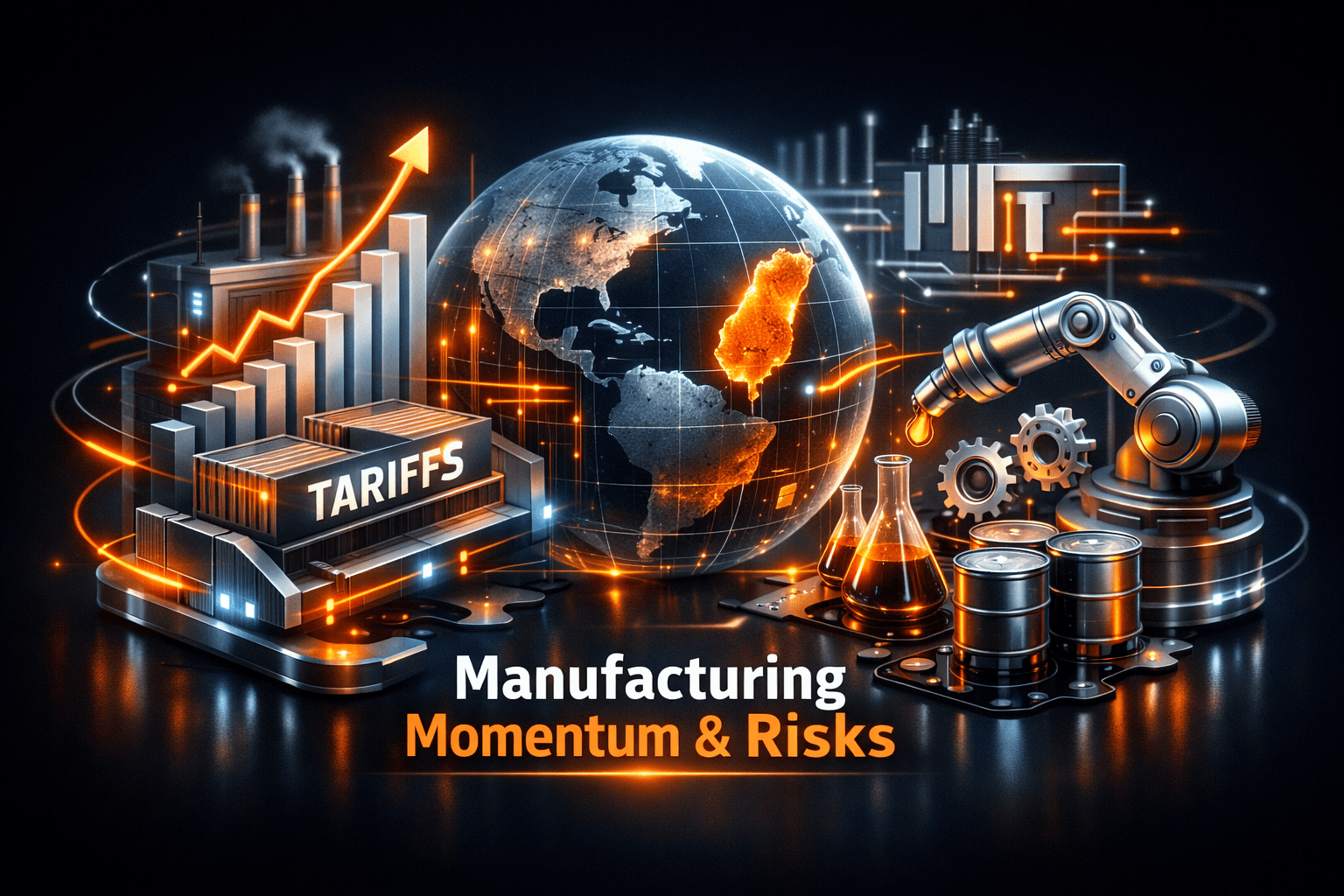
US manufacturing momentum picked up overnight, with the ISM manufacturing index expanding to its highest level since May 2022. That broader strength, paired with fresh investment and innovation signals from academia and industry, suggests the sector's recovery is gaining traction.
At the same time a narrowly focused 15 percent tariff on select Taiwan-made auto, wood and aircraft parts introduces a clear cost consideration for suppliers. Investors and operators alike should weigh the improving macro backdrop against localized policy headwinds and everyday operational risks you can control, like lubrication and uptime.
Market Highlights
Quick facts and market context to start your trading day.
- Manufacturing momentum: ISM's manufacturing survey shows expansion at the strongest pace since May 2022, signaling improving demand and activity for factories nationwide.
- Tariffs set at 15 percent: The US finalized Section 232 tariffs at 15 percent on certain auto parts, wood products and aircraft parts from Taiwan, a targeted move that could affect parts suppliers and OEM margins.
- Labor uncertainty eased: Canada Post employees ratified contracts, removing a major source of disruption for cross-border parcel flows.
- Innovation and durability: MIT's Initiative for New Manufacturing marked its one-year milestone with pilot programs and factory engagement, while Plant Engineering announced its 2026 Product of the Year winners in its 38th year of the awards.
- Retail logistics: $ULTA moved to expand same-day delivery options by adding Uber Eats alongside existing Instacart and DoorDash partnerships, a sign that last-mile demand remains strong.
Key Developments
Manufacturing PMI at highest level since May 2022
The ISM manufacturing gauge rose to its strongest reading since May 2022, a key signal that production and order activity are accelerating. Analysts note firms are still cautious, but the data suggests they're holding back less, which should support equipment makers and industrial suppliers over coming quarters.
US imposes 15 percent tariffs on select Taiwan parts
The White House finalized a targeted 15 percent tariff on certain auto parts, aircraft components and wood products from Taiwan under a Section 232 framework. The action is narrowly focused, but it could push some input costs higher for North American automakers and aerospace suppliers. Watch connections to component suppliers and companies like $GM, $F and aerospace contractors such as $BA who often have complex global supply chains.
Innovation, workforce and resilience: MIT, Plant Engineering, Canada Post
MIT's Initiative for New Manufacturing marked year one by funding research, touring factories and piloting workforce programs. The work aims to close skills gaps and accelerate industrial tech adoption, which could improve productivity long term. Meanwhile, Plant Engineering's Product of the Year awards highlighted technologies aimed at maximizing uptime and reliability. Operational guidance also matters day to day, as a Plant Engineering piece reminded readers that misreading lubricant labels and viscosity can trigger costly downtime and compliance headaches.
Finally, the ratification of contracts at Canada Post reduces a looming logistics risk that affected parcel revenue and customer trust. With labor uncertainty eased, freight flows across North America should be steadier, which matters to companies dependent on just in time parts and retail deliveries.
What to Watch
Here are the catalysts and risks you'll want to monitor today and in the near term.
- Tariff follow-through and corporate responses. Check supplier announcements, sourcing shifts and margin commentary from parts makers and OEMs. How quickly can supply chains adapt and what cost pass through might you expect?
- Company-level updates. Watch industrial and aerospace quarterly reports and guidance for revisions tied to order books and input costs. Earnings seasons will reveal how much tariffs and freight dynamics are showing up in margins.
- Operational risk signals. Look for reports on downtime, maintenance spending and inventory levels. The Plant Engineering reminder on lubricant labeling is a practical operational flag, because small maintenance errors can cascade into lost production and higher costs.
- Workforce and talent programs. Track MIT's pilots and similar initiatives that could ease skilled labor constraints and support automation adoption, a longer term productivity positive.
- Retail and last-mile demand. Partnerships like $ULTA's addition of Uber Eats show last-mile delivery is expanding beyond traditional logistics firms. That trend affects parcel volumes and profitability for $UPS and $FDX as well as newer entrants.
Bottom Line
- Manufacturing strength is broadening, with ISM data pointing to improved activity and order conditions.
- The 15 percent Taiwan tariffs are a targeted headwind, likely to raise costs for specific parts suppliers and their OEM customers.
- Innovation and workforce initiatives, led by MIT and recognized product winners, support longer term productivity gains and reliability improvements.
- Operational details matter more than ever, because small issues like lubricant mislabeling can create disproportionate downtime and compliance costs.
- Logistics risk eased with Canada Post contract ratification, but watch freight and last-mile dynamics as retailers expand same-day options.
FAQ Section
Q: How will the 15 percent tariff on Taiwan parts affect manufacturers? A: The tariff is narrowly focused under Section 232, so it will primarily raise input costs for specific auto and aircraft component lines. Companies with diversified sourcing or domestic suppliers will feel less impact, while highly Taiwan-dependent suppliers may see margin pressure or pass through costs.
Q: What does the ISM manufacturing expansion mean for your exposure to industrial stocks? A: A stronger ISM reading signals improving demand and order activity, which can support revenue and utilization for industrial equipment and suppliers. That said, you should watch corporate guidance and margin commentary to see how demand translates to earnings.
Q: Why does lubricant labeling matter to plant operations? A: Misreading labels or using incorrect viscosity in the field can cause premature wear, unexpected downtime and environmental compliance issues. In other words, small maintenance mistakes can lead to outsized operational and financial consequences.