The Big Picture
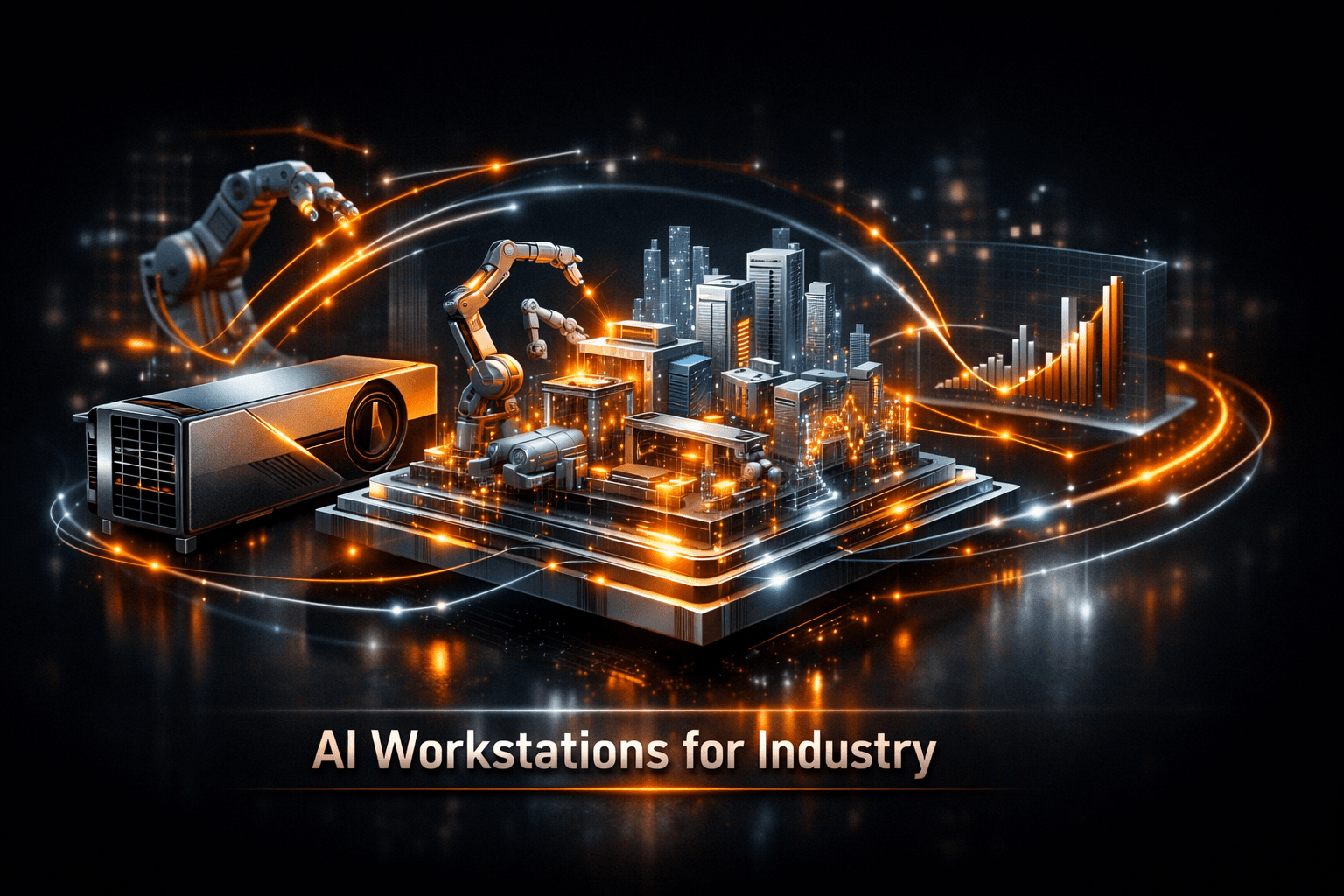
NVIDIA's new RTX PRO 4500 Blackwell Workstation Edition, announced June 1, is being positioned as a catalyst for faster AI adoption in manufacturing workflows. The workstation is aimed at generative AI, simulation and digital twin workloads that can accelerate product design and plant optimization.
That matters because manufacturing leaders from equipment makers to automation software firms are increasingly betting on AI to compress design cycles and improve throughput. If you're watching industrial names, today's upgrade is a signal that demand for high-performance compute in factories may be moving from pilot projects to production deployments.
Market Highlights
Quick facts and immediate takeaways you can use to frame your view as markets open.
- Product: NVIDIA RTX PRO 4500 Blackwell Workstation Edition, announced June 1, 2026.
- Use cases: Targeted at AI model development, real-time simulation and digital twins for manufacturing operations.
- Sector links: Hardware demand could help semiconductor supplier $NVDA, industrial automation firms such as $ROK, and large equipment makers like $GE and $ABB as factories upgrade compute.
You should note the announcement is framed as a manufacturing upgrade case study. Will that translate into immediate corporate procurement cycles or longer term capex plans?
Key Developments
NVIDIA RTX PRO 4500 Blackwell Launch
NVIDIA is marketing the Blackwell-based RTX PRO 4500 to engineers and plant operators who run complex simulations and digital twin workloads. The vendor message emphasizes faster model iteration and tighter integration with engineering toolchains.
For investors, that positions $NVDA not just as a gaming or data center play, but as a supplier to industrial customers strengthening on-premises and edge compute stacks.
AI and Digital Twins Move Toward Production
The story frames digital twins and generative AI as immediate productivity tools, not just R and D experiments. Real-time simulation can reduce downtime and speed design cycles, which could influence how manufacturers allocate IT and automation budgets.
If factories are going to run more compute at the edge, vendors that integrate hardware and industrial software stand to benefit. Could this push OEMs to refresh control rooms and engineering workstations sooner rather than later?
Implications for Industrial Hardware and Software Vendors
Hardware suppliers may see incremental demand for high-performance workstations. Software vendors that provide digital twin platforms and CAE tooling could gain by certifying solutions on Blackwell hardware, creating cross-sell opportunities.
Analysts note this could move the needle on multi-year digital transformation roadmaps, particularly where latency, security and on-premises control are priorities for manufacturers.
What to Watch
Here are the near-term catalysts and risk factors that could shape how this announcement translates into market momentum. Keep a selective approach and track specific signals to inform your view.
- Adoption signals: Look for early customer announcements or pilot-to-production stories from manufacturers and automation partners. You want evidence that pilots are converting to procurement.
- Vendor responses: Monitor press releases and certification updates from industrial software firms and workstation OEMs. Certifications on Blackwell hardware will be an important short-term indicator.
- Earnings and guidance: Upcoming earnings from $NVDA, $ROK, $GE and $ABB could include references to industrial AI spending or edge compute demand. Those are potential catalysts for sector moves.
- Supply chain and pricing: Semiconductor supply, component lead times and pricing for high-end workstations will affect adoption timing. Watch supply commentary closely.
- Regulatory and security considerations: On-premises solutions may appeal where data sovereignty or operational security is a priority, but they can also raise integration costs you should monitor.
Bottom Line
- NVIDIA's RTX PRO 4500 Blackwell launch is a positive signal for AI-driven capital spending in manufacturing, and it broadens $NVDA's industrial narrative.
- Demand for digital twin and simulation workloads could lift workstation OEMs and industrial software partners as pilots scale to production.
- Watch for customer deployments, certification announcements and earnings commentary to gauge real adoption versus marketing momentum.
- Monitor supply chain constraints and integration costs that could delay upgrades for some manufacturers.
FAQ Section
Q: What makes the RTX PRO 4500 relevant for manufacturing? A: It is engineered to accelerate AI model training and real-time simulation tasks, which are core to digital twins and faster product development.
Q: Which companies could benefit from this upgrade? A: Hardware suppliers such as $NVDA, workstation OEMs, industrial automation firms like $ROK and equipment makers including $GE and $ABB may see incremental demand if manufacturers scale deployments.
Q: How will you know if this becomes a durable trend? A: Look for customer purchase announcements, partner certifications and earnings commentary that shift from concept to concrete procurement plans.