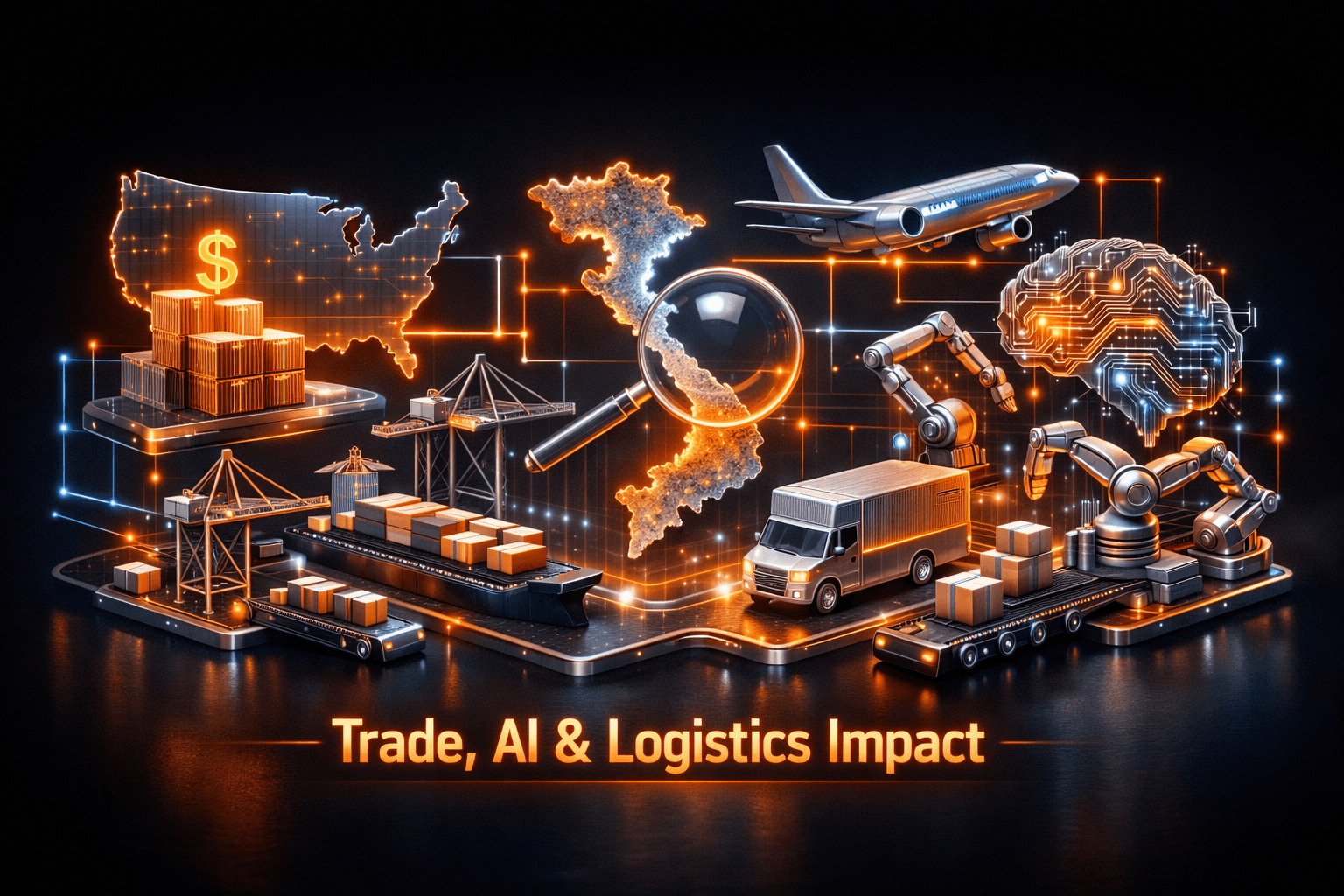
The Big Picture
The industrial and manufacturing complex faces a split narrative this weekend: new U.S. trade actions raise near-term cost and supply risks, while private-sector investment and AI partnerships point to longer-term productivity gains. You should be aware that markets were closed on Sunday, and the latest policy actions were reported after trading on Friday, May 29.
The U.S. Trade Representative opened a Section 301 probe of Vietnam and finalized 15% tariffs on certain Taiwan imports, moves that could raise input costs for manufacturers. At the same time, firms from UPS to Fanuc and major automakers are committing capital and technology to strengthen logistics and automation, which may blunt some of the policy pain over time.
Market Highlights
Quick facts and numbers to scan before you dig deeper.
- USTR opens Section 301 probe of Vietnam, examining intellectual property acts, policies and practices, a process often used before tariff actions.
- U.S. sets 15% tariffs on select Taiwan-origin goods, focused on auto parts, wood products and aircraft parts under a Section 232 framework.
- UPS announces a $50 million investment to expand time-definite heavy air freight services to and from Mexico and hire specialists in automotive and industrial logistics, ticker $UPS.
- Physical AI and industrial robotics see fresh momentum: CreateMe says physical AI is production-ready for specific tasks, and partnerships among $FANUY, $GOOGL, $NVDA and $STLA were reported to advance digital twins and robotics collaboration.
- Vinyl record production continued growth, with U.S. vinyl sales hitting $1 billion in 2025, a niche but resilient manufacturing market.
Key Developments
U.S. trade actions: Vietnam probe and Taiwan tariffs
The USTR’s Section 301 probe of Vietnam signals heightened trade scrutiny, as officials will evaluate intellectual property regimes and policy practices. Separately, the U.S. finalized a 15% tariff on certain Taiwan-made auto parts, aircraft components and wood items under a January Section 232 framework.
What does this mean for you? Expect potential cost pressure for manufacturers reliant on those supply lines and increased incentive for sourcing reviews or tariff mitigation strategies. Companies with complex cross-border supply chains may disclose risk assessments in upcoming filings or calls.
Logistics ramp-up: UPS targets heavy freight and auto supply chains
$UPS committed $50 million to expand time-definite heavy air freight services linking Mexico and the U.S. and to hire experts focused on automotive and industrial customers. The move aims to speed parts flow for time-sensitive segments and reduce downtime risk for manufacturers.
For readers tracking supply chain resilience, this is a practical reminder that carriers are investing to capture higher-value freight and to help manufacturers manage nearshoring or near-market inventory strategies.
Automation and physical AI gain traction
Manufacturing headlines show a clear technology push. CreateMe’s CEO said physical AI is mature enough for defined robotic tasks in soft-materials production. Meanwhile, Fanuc and Google advances, Kawasaki’s new Silicon Valley center, and partnerships tying $STLA with $ACN and $NVDA around digital twins all point to accelerating adoption of automated, data-driven manufacturing systems.
These developments suggest productivity upside across discrete manufacturing, and they may gradually offset wage and tariff-driven cost increases. Still, adoption timelines and capital intensity will vary by company and subsector.
What to Watch
Here are the catalysts and risks that could move headlines and company disclosures next.
- USTR timeline and scope: Watch for formal findings, potential tariff proposals or remedial actions from the Vietnam probe. A Section 301 process can take months and may include public comment periods.
- Tariff implementation and knock-on effects: Track which HS codes are affected by the 15% Taiwan tariffs and whether importers pursue tariff exclusions, re-routing, or sourcing shifts. Will suppliers accelerate local content or dual-sourcing? That's a key question.
- Quarterly reports and earnings calls: Companies with exposure to affected supply chains may update guidance when Q2 earnings season kicks in. You should look for margin commentary and capex plans tied to automation.
- Execution on logistics initiatives: Monitor $UPS announcements about lanes, capacity and customer wins, and watch carriers' margin impact as they invest in heavy-freight services.
- Adoption metrics for physical AI and robotics: Proof points like pilot-to-scale conversions, order backlogs at robotics suppliers, and software partnerships will signal how fast productivity gains materialize.
Bottom Line
- Trade policy is a near-term source of uncertainty, with the Vietnam probe and 15% Taiwan tariffs likely to raise costs for exposed manufacturers.
- Logistics and carrier investment, exemplified by $UPS’s $50M plan, aim to reduce lead times and support nearshoring, which could ease some supply pressures.
- Industrial AI and robotics partnerships point to structural productivity gains, but adoption will be uneven and capital intensive.
- Expect companies to respond with sourcing changes, tariff mitigation, or accelerated automation investments; you should watch corporate disclosures for specific exposure and plans.
FAQ Section
Q: How soon could tariffs or findings from the Vietnam probe affect manufacturers? A: Section 301 probes can take months and may include public comment and tariff or remedy proposals, so effects may show gradually; some firms could see immediate cost impacts if provisional measures are enacted.
Q: Will UPS’s investment meaningfully reduce supply-chain delays? A: The $50 million plan targets time-definite heavy freight lanes and specialist hires, which can improve reliability for automotive and industrial customers, but capacity and pricing dynamics will determine how quickly benefits reach shippers.
Q: Is physical AI ready to replace human labor across factories? A: Data suggests physical AI is production-ready for constrained tasks and repeated operations, but widespread replacement depends on cost, safety certifications, and integration timelines, so expect selective adoption first.