The Big Picture
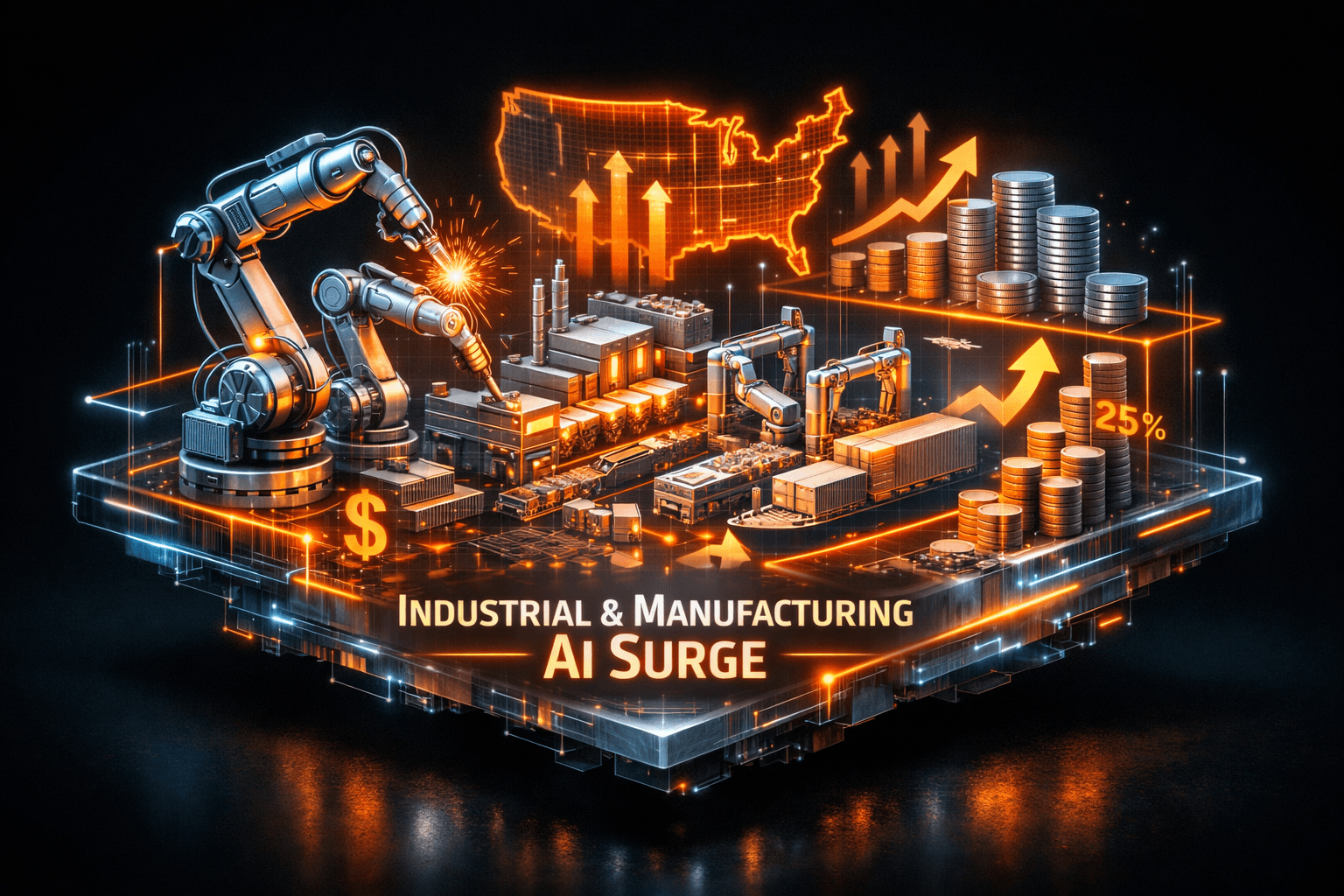
Industrial robotics and physical AI took center stage today, as practical deployments and strategic deals signaled a faster shift from lab pilots to factory floors. You don’t have to be a robotics specialist to see why this matters, because these moves promise productivity gains and new service opportunities across manufacturing supply chains.
At the same time, progress on tariff refunds and steady niche growth in vinyl records show pockets of cash relief and consumer resilience. For you as an investor, the picture suggests selective upside, but also reminds you to watch execution and regulatory timelines.
Market Highlights
Quick facts and the companies in the headlines today.
- Physical AI shows early production wins, CreateMe reports systems controlling robots for limited tasks in soft materials manufacturing.
- Major partnerships advancing AI in factories include Fanuc and Alphabet $GOOGL collaboration, Stellantis $STLA teaming with Accenture $ACN and Nvidia $NVDA on digital twins, and Kawasaki opening a Silicon Valley center.
- Tariff developments: e.l.f. $ELF expects $58.5 million in tariff refunds after facing about a 55% tariff rate in the last fiscal year.
- Rail merger process: Union Pacific $UNP and Norfolk Southern $NSC revised merger application is under active consideration with the Surface Transportation Board asking for supplemental materials by July 27.
- Automation gap persists: a Plant Engineering review finds 80% of manufacturers remain not automated, even as 98% explore AI or related technologies.
Key Developments
Physical AI moves from lab to line
CreateMe’s CEO Cam Myers said physical AI is ready for wider adoption in defined applications, with systems now controlling robots for limited tasks in textile and soft materials production. That’s an important milestone because you’ll see faster ROI when AI handles repeatable, constrained operations rather than open-ended tasks.
For manufacturers this suggests incremental automation plays will lead adoption, and vendors with focused solutions could get a foot in the door before full automation becomes viable.
Big partnerships accelerate industrial robotics
Fanuc’s expanded work with Alphabet $GOOGL and Kawasaki’s new Silicon Valley center highlight cross-border collaboration on physical AI tools and developer ecosystems. Stellantis $STLA’s plan with Accenture $ACN and Nvidia $NVDA to build digital twins shows automakers are stacking software on top of traditional manufacturing assets.
These alliances increase scale and technical depth, which may speed deployment and lower integration risk, but you’ll want to monitor vendor execution and platform interoperability.
Tariff refunds start reshaping costs and reporting
Regulatory action on tariff refunds is gaining momentum and creating tricky accounting decisions for CFOs, Supply Chain Dive reports. Faster-than-expected refund activity is easing operational fears, but companies still face choices on how to recognize refunds in financial statements and taxes.
e.l.f. $ELF expects $58.5 million in refunds and plans to use that to support price cuts. That’s a concrete example of how cash flow from refunds can translate into consumer price changes and margin management.
Rail merger advances, scrutiny continues
The Union Pacific $UNP and Norfolk Southern $NSC revised merger application has moved forward to active review, with the Surface Transportation Board asking for supplemental information by July 27. Regulatory momentum could reshape freight costs and network efficiencies if the deal ultimately clears.
But the timeline and outcome remain uncertain, so you should treat related stocks as sensitive to regulatory updates and comment cycles.
What to Watch
Focus on near-term catalysts and risks that will shape sector direction.
- July 27: STB supplemental filing deadline for the UP/NS merger, a key regulatory milestone that could influence rail pricing and consolidation dynamics.
- Tariff refund rollouts and accounting updates: watch company disclosures on how refunds are recorded and whether cash gets returned to consumers or used to shore up margins.
- Physical AI pilots scaling: monitor announcements from system integrators and early adopter manufacturers for deployment metrics and cycle-time improvements.
- Automation adoption gap: track capital expenditure plans and ROI case studies, because 80% of manufacturers still aren’t automated despite widespread AI interest.
- Partnership execution: look for proofs of concept and customer wins from $GOOGL, $NVDA, $ACN, and robotics suppliers, since partnerships don’t guarantee commercial traction.
How quickly will manufacturers convert AI interest into capital projects? And will tariff refunds shift pricing power or merely smooth margins? Those are the questions you’ll want answers to over the coming quarters.
Bottom Line
- Physical AI and robotics deals are moving from pilots to practical use cases, suggesting selective growth opportunities in automation-related firms.
- Tariff refund progress is creating near-term cash flow and pricing implications, illustrated by e.l.f.’s $58.5 million plan for price cuts.
- A large automation gap remains, so broad sector upside may be phased and selective rather than immediate.
- Regulatory timelines, especially the July 27 STB deadline for the UP/NS merger, will create event-driven volatility you should monitor.
- Partnerships among legacy manufacturers, tech giants, and system integrators increase scale but depend on execution and interoperability.
FAQ
Q: How soon will physical AI affect factory productivity? A: Early adopters report gains in constrained tasks now, but broad impact depends on integration speed and repeatable use cases, so expect gradual improvements over 12 to 36 months.
Q: Will tariff refunds like e.l.f.’s $58.5M change consumer prices? A: Refunds can fund price cuts or margin restoration, and the effect varies by company policy and competitive pressure, so watch company disclosures for specifics.
Q: Does the UP/NS merger timeline signal immediate rail consolidation? A: The revised application advancing is a step forward, but regulatory review and supplemental filings mean outcomes could still change, so treat the process as ongoing.