The Big Picture
The industrial and manufacturing sector posted mixed signals today as big capital projects and automation talk bumped up against new logistics costs and regulatory headwinds. You saw concrete investment commitments alongside operational and supply risks, and that split is likely to shape trading and strategy into tomorrow.
For investors the main takeaway is clear, but it raises questions: do you favor names tied to domestic capacity and automation, or those sensitive to shipping costs and critical minerals rules? The answer will depend on your timeframe and risk tolerance.
Market Highlights
Here are the quick market moves and notable corporate mentions that mattered today.
- Apple suppliers and sustainability: Coverage noted progress on green energy but slower emissions cuts tied to $AAPL's supply chain. That leaves supplier reputations in focus.
- UPS adds fees: $UPS announced a temporary surge fee of $0.23 per pound on seven services for cross border shipments to and from the U.S. The fee is effective until further notice and raises shipping cost pressure for manufacturers and importers.
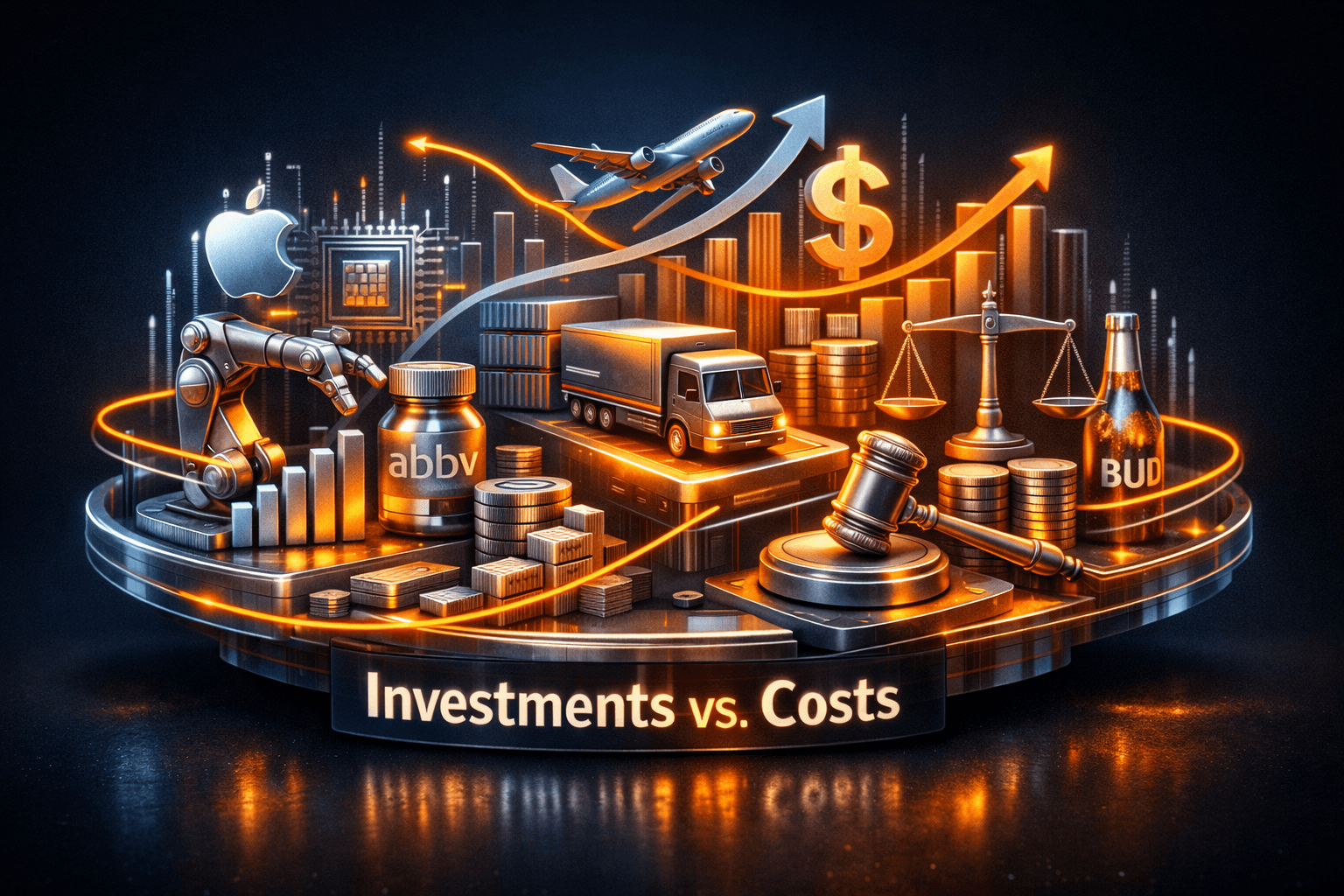
- Major investments: $ABBV chose Durham County North Carolina for a $1.4 billion manufacturing campus on 185 acres. Anheuser-Busch doubled planned U.S. manufacturing investment to $600 million under its Brewing Future program, supporting facility upgrades and workforce commitments at $BUD related sites.
Key Developments
Apple suppliers lift green energy but stall on emissions cuts
Reporting shows suppliers to $AAPL have increased procurement of green power, and Apple has cut manufacturing emissions year on year since 2021. Yet emissions reductions appear to be leveling off for some suppliers, which raises governance and operational questions for the entire electronics supply chain.
For you that means environmental progress is real, but operational constraints could delay full ESG targets. Analysts note this may keep supplier stocks and contract awards under closer scrutiny.
UPS surge fee tightens margins for shippers and manufacturers
$UPS implemented a $0.23 per-pound temporary surcharge across seven services for imports and exports involving the U.S. That will lift logistics costs for many manufacturers and could pressure margins for companies with thin pricing power.
Will firms absorb those extra costs or pass them to customers? Watch near-term guidance from major OEMs and consumer goods producers as they report quarterly results.
CapEx and workforce commitments underscore domestic manufacturing focus
$ABBV's $1.4 billion campus and the $600 million increase from Anheuser-Busch show continued appetite for domestic capacity and resilient supply chains. The AbbVie site targets small-volume parenteral production, which speaks to specialty manufacturing demand.
Those investments create a silver lining for regional suppliers and labor markets, and they may influence supplier selection and logistics patterns that impact other industrial names.
Regulatory scrutiny on critical minerals and labor steps in supply chains
At a House subcommittee hearing stakeholders said the Toxic Substances Control Act and Resource Conservation and Recovery Act are complicating critical minerals flows needed for advanced manufacturing. Legislative fixes are being urged to ease bottlenecks.
Meanwhile, Ahold Delhaize USA joined the Responsible Labor Initiative to tackle labor risks in food and beverage supply chains, signaling rising buyer-level scrutiny of worker practices.
Automation and AI as resilience multipliers
Plant Engineering highlighted growing adoption of AI-enabled knowledge management and automation to bridge capability gaps in volatile demand environments. That trend suggests capital will shift toward digital upgrades and flexible lines.
If you're tracking modernization themes, automation adoption is an investment catalyst but also means winners will be those delivering quick, measurable productivity gains.
What to Watch
Here are the forward-looking items and risks you'll want to monitor into tomorrow and the next quarter.
- UPS surcharge impact, short term, on margins and volumes. Monitor guidance from large manufacturers and retailers for any cost-pass through statements.
- Legislative and regulatory developments tied to critical minerals. Congressional responses or EPA clarifications could ease or intensify supply constraints.
- Progress updates from $ABBV and $BUD projects. Watch for construction timelines, hiring plans, and supplier sourcing that signal wider regional opportunity.
- Emissions and ESG disclosures from $AAPL suppliers. Look for metrics on scope 3 reductions and capital spending earmarked for emissions control.
- Automation pilots and ROI metrics. Expect providers of industrial AI and automation to report pilot wins that could translate into orderbooks later this year.
How should you position your watchlist? Consider companies with pricing power or those investing in domestic capacity and automation. Also keep an eye on firms with heavy import exposure that could be squeezed by higher freight fees.
Bottom Line
- Sector sentiment is mixed, with significant capital spending and automation momentum offset by logistics fees and regulatory supply risks.
- Domestic manufacturing projects at $ABBV and $BUD improve regional capacity and could shift supplier networks over time.
- $UPS's $0.23 per-pound surcharge raises immediate cost pressure for shippers and import-dependent manufacturers.
- Regulatory uncertainty on critical minerals remains a structural risk for advanced manufacturing supply chains.
- Emissions progress among $AAPL suppliers shows gains on green power, but stalled emissions cuts mean ESG metrics will remain a focus for buyers and shareholders.
FAQ Section
Q: Will UPS's $0.23 per-pound fee materially change manufacturer margins? A: The fee increases near-term shipping costs, especially for high-weight imports and exports, and analysts expect firms to disclose cost-management plans or price adjustments in upcoming reports.
Q: Does AbbVie's $1.4 billion campus signal more domestic manufacturing investment broadly? A: Large capex commitments like $ABBV's and $BUD's suggest a trend toward strengthening U.S. production, but broader industry follow through will depend on incentives, labor availability, and supply chain economics.
Q: How quickly can automation and AI reduce operational risk? A: Automation pilots can improve resilience within quarters to a year, but measurable wide scale ROI tends to take longer as systems integrate with legacy operations and workforces adapt.