The Big Picture
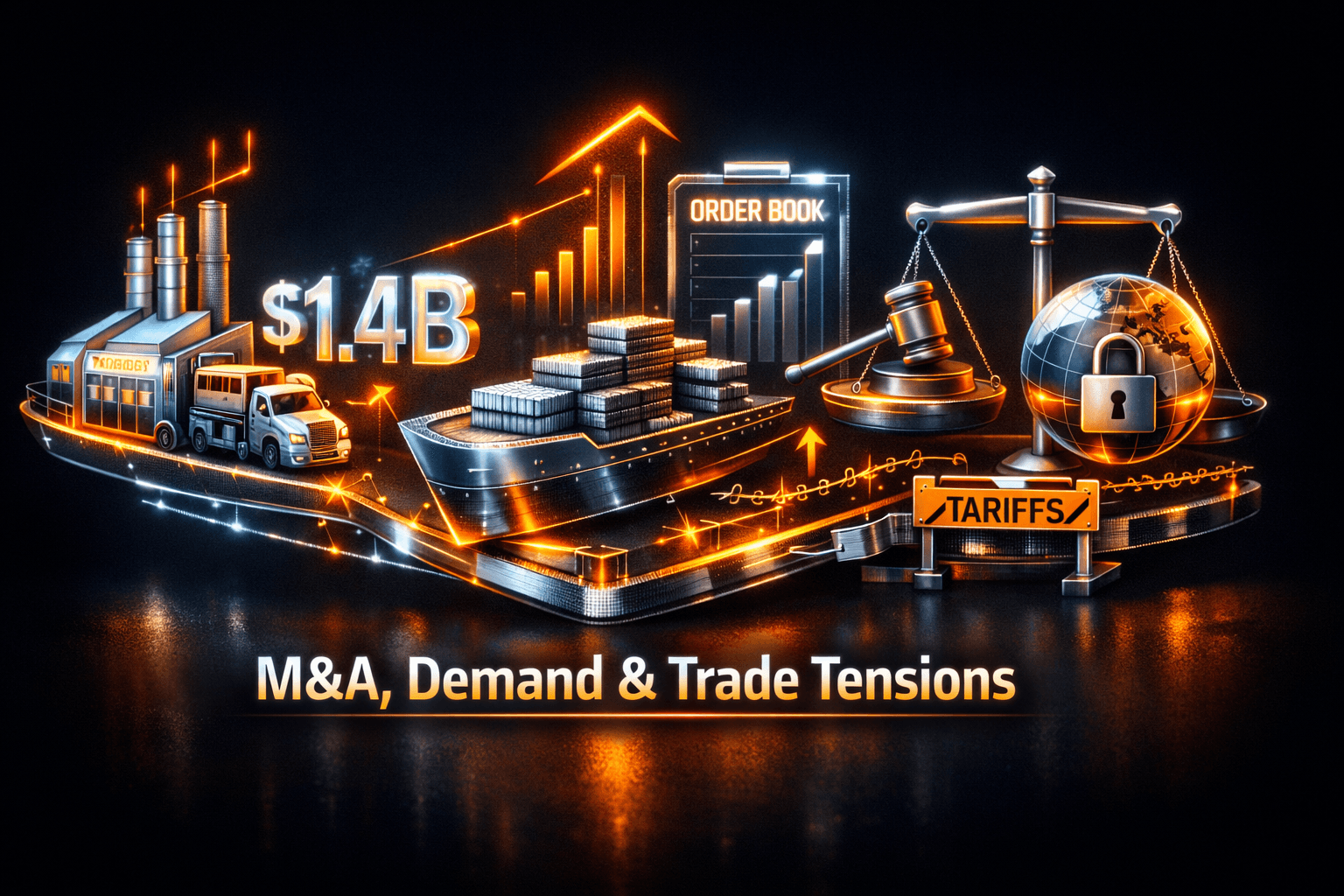
Today brought a split picture for the Industrial & Manufacturing sector, where consolidation and demand strength met rising regulatory and trade friction. A $1.4 billion strategic acquisition and upbeat commentary from a major steelmaker point to momentum, while state and international policy moves raise fresh compliance questions for supply chains.
Why does this matter to you as a retail investor? These developments affect margins, capital allocation and the pace of automation across factories and logistics hubs, so your exposure to machinery, materials and logistics names may face both upside catalysts and near-term headwinds.
Market Highlights
Key facts and numbers from today's headlines you can act on and track into tomorrow.
- Brady Corporation agreed to buy Honeywell's productivity solutions unit for $1.4 billion, a deal focused on barcode scanners, mobile computers and printers, expanding Brady's footprint in warehouse tech. $BRC and $HON were central to the story.
- Cleveland-Cliffs reported higher first quarter earnings and said its order book is full as steel prices rise, signaling sustained demand in flat-rolled steel markets. $CLF commented on trade talks with Posco and plans to embed AI into operations.
- Regulatory and logistics updates: a California Senate bill could add advanced manufacturing compliance costs, the EU's proposed safety and emissions rules may complicate a U.S.-EU tariff deal affecting big truck imports, and USPS will start phased package dimension reporting on July 12 with initial noncompliance leniency.
- Amazon will temporarily close and renovate a Florida fulfillment center, with reopening expected in mid-to-late 2028 and more than 1,000 jobs tied to the site, underlining ongoing logistics network investment. $AMZN is the notable name here.
Key Developments
Brady buys Honeywell productivity unit for $1.4B
Brady's acquisition of Honeywell's productivity solutions arm expands Brady's portfolio in barcode scanners, mobile computers and warehouse printing. The deal moves industry assets from a diversified industrial giant to a specialist, which could accelerate product integration and go-to-market focus for Brady.
For you, that means watch for potential margin improvement and cross-selling opportunities, but also for integration costs and any undisclosed site-level implications since Honeywell hasn't released details on locations or employee counts.
Cleveland-Cliffs reports stronger quarter, order book full
$CLF said first quarter earnings rose and that the order book is full as steel prices strengthened. Management also noted ongoing trade discussions with Posco and an intention to embed AI into operations to raise efficiency and control costs.
This signals demand resilience in steel-intensive end markets such as construction and autos. You should note that commodity price swings and trade negotiations will still influence margins and working capital dynamics.
Regulatory, trade and logistics frictions tighten the backdrop
Regulation and trade headlines added tension today. The California Manufacturing & Technology Association warned that a pending state bill could increase compliance costs and operational requirements for advanced manufacturing. At the same time, U.S. automakers told officials that proposed EU safety and emissions rules may conflict with a pending tariff deal, placing cross-border truck trade in doubt.
Operationally, USPS announced a phased approach for new package dimension reporting starting July 12, with noncompliance fees deferred initially. Separately, Amazon's planned long closure and renovation of a Florida fulfillment center highlights the tradeoff between short-term disruption and long-term capacity upgrades. Taken together, these items show that you and industry managers will need to factor regulatory timing into planning and supply chain decisions.
What to Watch
Look ahead to these catalysts and risks that could move stocks and sector sentiment tomorrow and in the weeks ahead.
- Earnings and guidance: Watch for follow-up commentary from steelmakers and large industrials about pricing, order books and AI-driven cost reductions. Data suggests margins will hinge on raw material moves and trade outcomes.
- Regulatory milestones: Monitor the California legislature for bill progress and any amendments that change compliance scope or timelines. Also track EU rulemaking weeks for clarity on the truck import provisions tied to the tariff deal.
- Integration and site details: Investors will want specifics on the Honeywell unit transfer, including which sites are included and any workforce impacts. Disclosure there could affect short-term execution risk for $BRC and operational continuity for customers.
- Logistics policy and operations: The USPS phased rollout on July 12 means shippers and third-party logistics providers will be testing systems and reporting. Ask yourself if your supply chain exposures are prepared for new data requirements and potential fee regimes later this year.
Bottom Line
- Sector momentum and consolidation are evident, led by the $1.4 billion Brady acquisition, which reallocates warehouse and logistics tech assets to a specialist operator.
- Demand signals remain mixed, with Cleveland-Cliffs pointing to a full order book even as trade talks and global rules inject uncertainty for manufacturers and automakers.
- Regulatory and reporting changes at the state, international and postal levels are the near-term risk factors that could raise costs or disrupt flows for many firms.
- AI and automation continue to be long-term positive catalysts as companies embed intelligence into operational technology, but integration and capital costs will vary across firms.
- Stay selective and watch upcoming disclosures, regulatory votes and earnings commentary for clearer directional cues before changing exposure.
FAQ Section
Q: How will the Brady acquisition affect Honeywell and Brady? A: Honeywell is divesting a productivity unit to focus elsewhere while Brady gains scale in warehouse hardware and software, which could drive revenue mix changes and require integration work.
Q: Will the California bill or EU rules immediately impact company finances? A: Not immediately, but both can increase compliance costs and planning uncertainty, so firms may disclose potential impacts in upcoming filings or guidance updates.
Q: What should you monitor for supply chain disruptions? A: Track the USPS July 12 reporting start, Amazon's Florida facility timeline, and any tariff or safety rule outcomes that affect cross-border truck flows, since these items can change logistics lead times and costs.