The Big Picture
Today’s top industrial news centers on investment and efficiency gains that could ease supply-chain frictions and boost capital availability. A major federal tariff refund program, faster package visibility from UPS, and a new semiconductor R&D hub at Texas A&M are the big levers moving the sector this week.
Each development speaks to different parts of the industrial economy, from logistics and materials to advanced manufacturing. For you, the practical question is how faster cash flows and better visibility may change sourcing, inventory and capital allocation decisions across industrial manufacturers and suppliers.
Market Highlights
Quick facts and numbers to start your day.
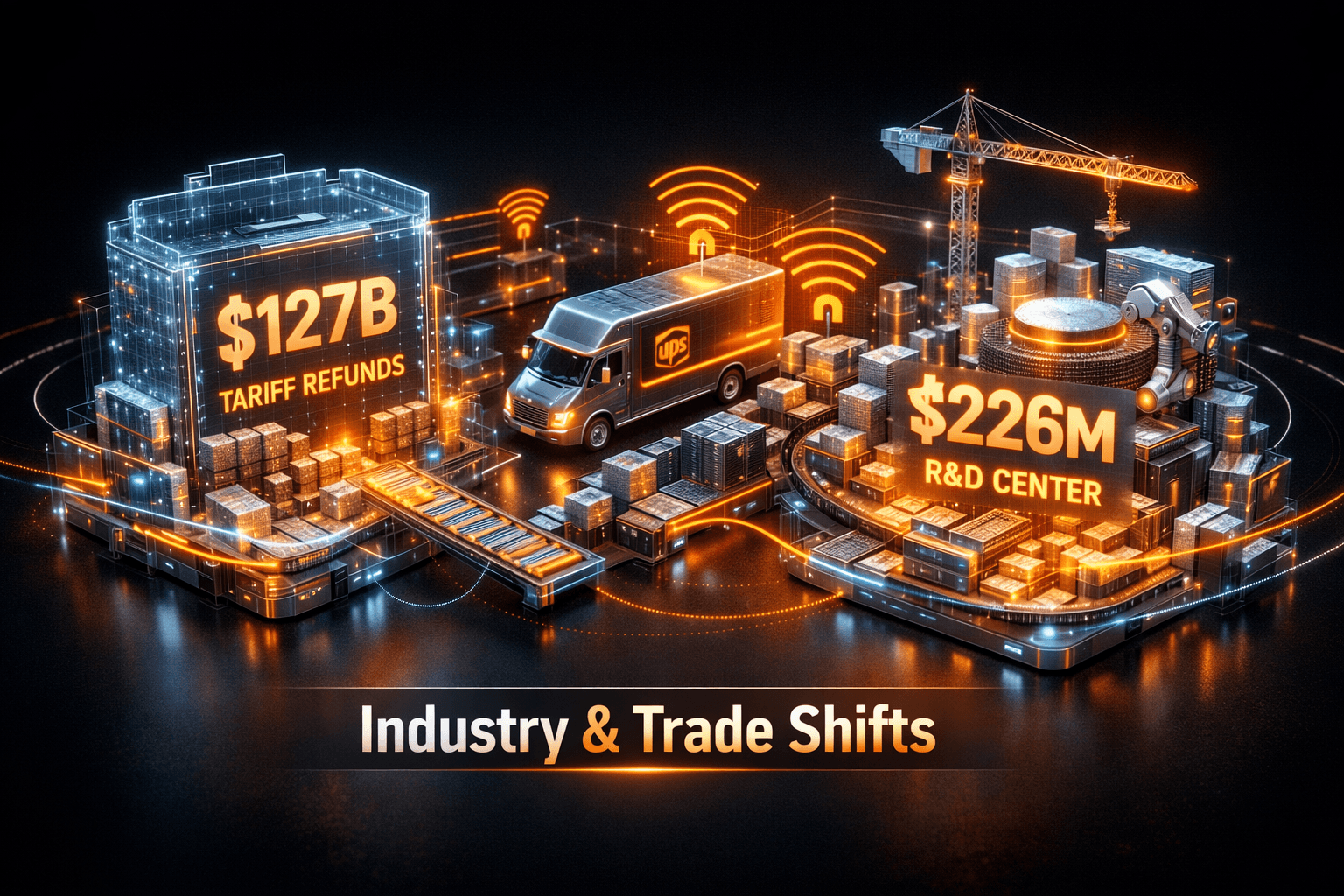
- Customs and Border Protection will launch an electronic tariff refund portal on April 20 at 8 a.m. EDT, to manage returns tied to an estimated $127 billion in tariffs, the agency said.
- UPS, $UPS, is expanding RFID sensors at U.S. hubs and rolling out label printers for customers as it aims to connect nearly all packages to RFID tracking and reduce manual scans.
- Dow, $DOW, will elevate Chief Operating Officer Karen Carter to CEO this summer, citing her 30 plus years at the company and leadership of the packaging and specialty plastics unit.
- Texas A&M broke ground on a $226 million Semiconductor Institute, funded under state CHIPS initiatives, aimed at bolstering R&D and workforce pipelines for chip manufacturing.
- Sportsman’s Warehouse, $SPWH, is shifting spring inventory to arrive later, a timing change meant to improve product turnover and warehouse productivity.
Key Developments
CBP Tariff Refund Portal to Free Billions in Working Capital
The Department of Homeland Security and Customs and Border Protection plan to bring an online portal live April 20 to process electronic tariff refund requests tied to roughly $127 billion in duties. That is a sizeable pool of funds that could return to importers and their supply-chain partners if claims are approved.
For you that means potential near-term relief in procurement costs and working capital for companies heavily exposed to past tariff flows. Analysts note the portal could speed reimbursements and reduce manual paperwork, improving cash conversion in distribution and manufacturing networks.
UPS Pushes RFID to Reduce Manual Touches
$UPS is accelerating RFID adoption at U.S. hubs and supplying label printers to shippers, aiming to connect almost every package to radio frequency tracking. Executives say the move will trim manual scans and improve real-time visibility for shippers and receivers.
That matters because greater parcel visibility often translates into fewer missing shipments, lower dispute costs, and tighter inventory control at warehouses. If the rollout scales as planned, logistics-dependent manufacturers and distributors may see operational efficiencies that support margin improvement.
Talent, Leadership and Chip R&D Signal Medium-Term Strength
Dow’s promotion of COO Karen Carter to CEO this summer underscores continuity in leadership at a legacy materials giant. Her background in packaging and specialty plastics suggests a continued focus on higher-value segments of the business.
Meanwhile Texas A&M’s $226 million Semiconductor Institute marks more public and private investment in domestic chip R&D. Data suggests these facilities will help firms access talent and prototyping resources, which is key if you follow companies exposed to advanced electronics and capital equipment supply chains.
What to Watch
Here are the catalysts and risk areas to monitor over the coming days and weeks.
- CBP portal uptake and processing speed, starting April 20, will be critical. Watch for early reports on approval rates and timing, since slow processing could blunt the expected liquidity boost.
- UPS RFID pilot performance metrics, including scan error rates and on-time improvements. Faster package-level data could reduce safety stock needs. How quickly will shippers adopt the label printers?
- Dow’s formal CEO transition timeline and any strategic guidance changes when Karen Carter takes the helm this summer. Management shifts often come with reshaped capital allocation priorities.
- Progress at Texas A&M, notably partnerships with private firms and planned equipment on site. That will determine how soon the institute impacts local supply chains and workforce availability.
- OSHA’s proposed change to remove a 2036 deadline for fixed ladder upgrades. Employers may get more time to comply, which reduces near-term capital pressure but keeps safety compliance on watchlists.
- Retail inventory timing moves, like $SPWH delaying spring arrivals, could presage broader seasonal cadence shifts. If more retailers stagger deliveries, it could ease peak logistics constraints.
Bottom Line
- CBP’s April 20 portal could release meaningful working capital for importers, which may ripple through manufacturers and distributors.
- UPS’s RFID expansion is a material operational upgrade, and early adoption metrics will tell you how quickly logistics costs might decline.
- Leadership continuity at $DOW paired with public and academic chip R&D spending points to steady investment in materials and advanced manufacturing.
- Regulatory changes and safety guidance remain important, since they affect compliance timelines and capital spending in manufacturing and warehousing.
- Watch execution, not just headlines. Data on refund processing times, RFID performance, and R&D partnerships will determine which companies translate these developments into better financial results.
FAQ Section
Q: What does the CBP tariff refund portal mean for supply chains? A: The portal aims to accelerate electronic returns for about $127 billion in tariffs, which could free up working capital and reduce administrative drag for importers and their suppliers.
Q: How will UPS’s RFID rollout affect manufacturers and retailers? A: Broader RFID use should improve package-level visibility, cut manual scans, and reduce exceptions, which can lower logistics costs and support tighter inventory management.
Q: Should I expect immediate impacts from Texas A&M’s semiconductor institute? A: The $226 million facility boosts long-term R&D and talent supply, but measurable effects on manufacturing and supply chains will emerge over quarters as partnerships and equipment come online.