The Big Picture
A mix of policy friction and industry investment set the tone for the Industrial & Manufacturing sector heading into the long weekend. You should note that federal tariff and supply-chain developments are creating short-term pain for importers and some producers, even as automation deals, logistics expansion and permitting reform aim to ease constraints over time.
Markets were closed on Saturday, April 11, so price moves referenced here are stated as of Friday, April 10. The stories below matter because they affect cash flow, capacity planning and capital allocation across manufacturing supply chains, and they help you separate cyclical weakness from structural investment opportunities.
Market Highlights
Key headlines and quick facts to keep on your radar as you review your exposure and watch for Monday's open.
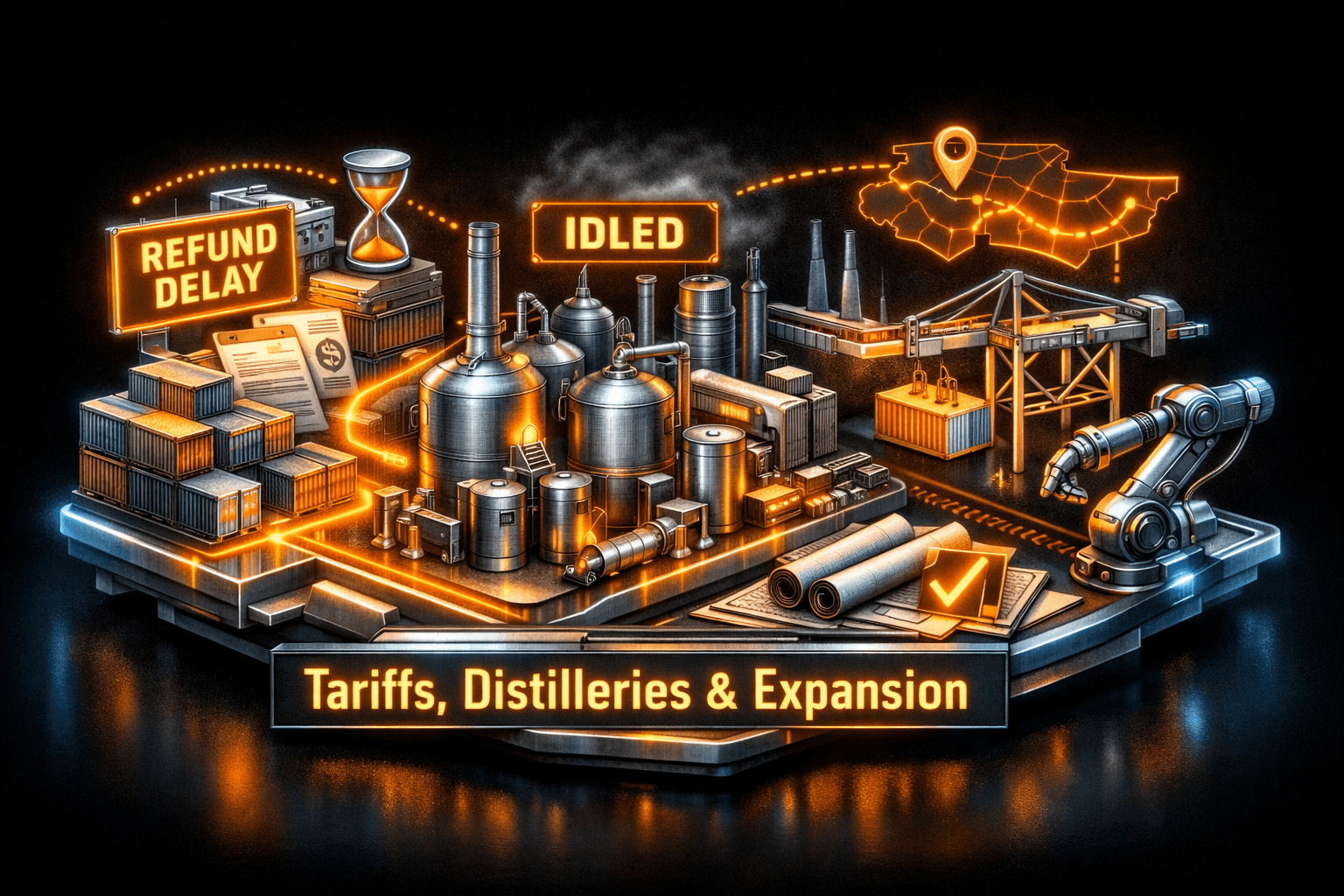
- CBP tariff refund timeline extended, now 60 to 90 days versus the earlier 45-day estimate, a delay that will affect importers' working capital and cash flow.
- $MGPI announced it will idle two Kentucky whiskey distilleries, a response to structural oversupply and tariff-related pressures that reduce near-term production.
- Agile Robots completed an acquisition to expand into North America and broaden its physical AI strategy, aiming to accelerate commercial robotics deployments in manufacturing.
- The administration's FY 2027 budget proposes trimming EPA funding while adding $14 million specifically for permitting reform to speed infrastructure projects important to manufacturers.
- Georgia Ports Authority plans a new inland port to serve about 330 producers across sectors including poultry, heavy equipment and forest products, a logistics boost for regional manufacturers.
Key Developments
CBP extends tariff refund timing to 60-90 days
The U.S. Customs and Border Protection told importers the tariff refund process will now take between 60 and 90 days to issue returns, longer than the previously stated up-to-45-day timeline. For you and other companies that rely on timely refunds, that means slower reimbursements and tighter short-term cash flow, especially for firms carrying heavy import duties on intermediate goods.
Agile Robots acquisition accelerates North America push
Agile Robots said its latest acquisition lets the company enter new sectors and expand in North America, reinforcing a physical AI play that integrates perception, motion and task planning. If you're tracking automation adoption, this deal signals growing private-sector momentum for robotics in assembly, warehouse and logistics tasks, which could lift productivity over the medium term.
MGP idles two distilleries amid oversupply, tariff headwinds
$MGPI will pause production at two Kentucky whiskey facilities, citing a structurally oversupplied market and demand headwinds linked to tariffs and declining alcohol consumption. This move highlights how trade costs and changing end-market behavior can force capacity adjustments, and it may presage similar cutbacks in other discretionary goods subsectors if demand remains weak.
Permitting reform funding pitched amid EPA cuts
The FY 2027 budget proposal would cut overall EPA spending while requesting $14 million to streamline environmental permitting for infrastructure projects. That tradeoff matters because permitting delays are a major cost and timing issue for manufacturers expanding facilities or investing in new logistics links. Will reform materially speed projects? The answer depends on legislative follow-through and agency implementation.
Georgia inland port targets 330 manufacturers
The Georgia Ports Authority is moving forward with an inland port aimed at serving 330 producers in industries such as poultry, heavy equipment and forest products. You should view this as a concrete logistics improvement that can reduce truck miles, lower transport costs and ease capacity constraints for regional manufacturers over time.
Plant Engineering issue focuses on maintenance, AI and safety
The March/April 2026 Plant Engineering issue highlights lubrication, maintenance, AI, automation and fall protection, a reminder that operational excellence and safety remain core drivers of productivity. Articles like these signal where practitioners are focusing investment and training dollars, which affects vendor demand and capital spending patterns.
What to Watch
Looking ahead, keep a close eye on near-term operational and policy catalysts that will influence earnings and cash flow. What should you be tracking this week and beyond?
- CBP implementation and appeals process, watch for guidance clarifying when refunds will actually hit bank accounts and whether interim relief programs are offered.
- Corporate responses to tariff timing, including inventory adjustments, pricing moves and working capital changes that may show up in quarterly reports.
- Permitting reform progress, especially any pilot programs or regulatory changes that speed approvals for energy and infrastructure projects important to manufacturing sites.
- Robotics and automation deal flow, adoption case studies and pilot results, which will indicate whether productivity gains are arriving on schedule.
- Operational metrics from suppliers in oversupplied categories, like distilled spirits, to see if idling spreads or capacity is brought back online.
- The Georgia inland port’s initial throughput metrics once it opens, which will show how much congestion and cost it removes for the region.
Bottom Line
- Tariff refund delays and oversupply in some subsectors are short-term headwinds that tighten cash flow, making liquidity management more important for many manufacturers.
- Investment in automation and a new inland port signal structural improvements in productivity and logistics that could benefit the sector over the medium term.
- Permitting reform funding is a potential tailwind for infrastructure-led manufacturing growth, but outcomes depend on policy execution and legislative support.
- Expect mixed near-term company results, increased dispersion across names, and opportunities for selective exposure to automation and logistics plays.
- Data suggests you should watch cash flow metrics, capex plans and supply-chain disclosures in upcoming earnings reports for clarity.
FAQ Section
Q: How will the CBP refund delay affect manufacturers? A: The 60-90 day refund window slows reimbursements, which tightens working capital and may push some firms to borrow or delay purchases until refunds arrive.
Q: What does $MGPI idling mean for the wider sector? A: Idling reflects oversupply and weaker demand in discretionary categories, and it could foreshadow broader capacity adjustments if market conditions don’t improve.
Q: Will permitting reform speed up manufacturing projects? A: Potentially, yes, if reforms are implemented effectively; however the scale of impact will depend on agency rules and how quickly new processes reduce approval times.