The Big Picture
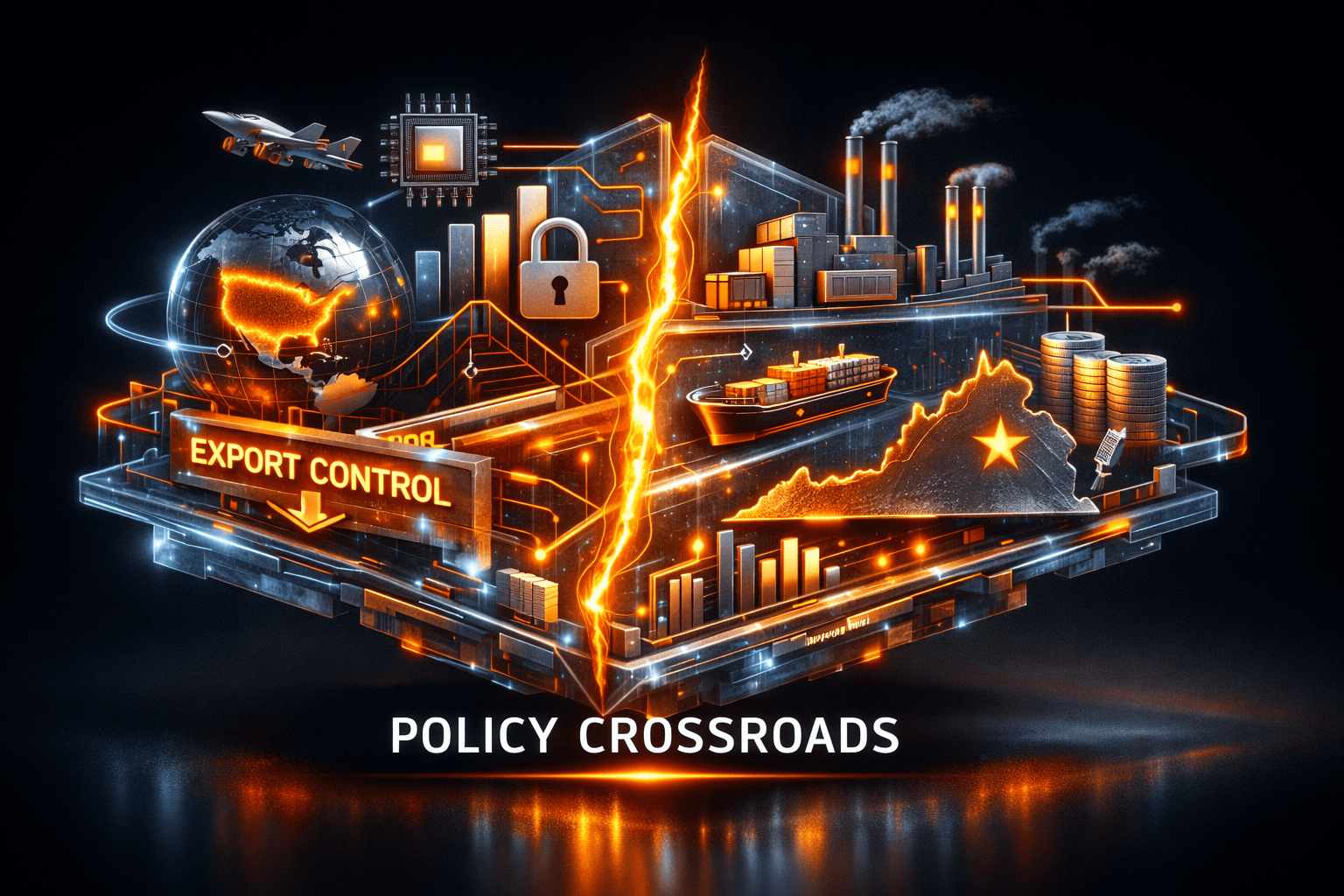
Today’s biggest development was a renewed push in Washington to tighten controls on chipmaking equipment exports to China, a move that could reshape global supply chains and affect equipment makers and semiconductor producers worldwide. That policy risk arrived alongside a contrasting story of state-level investment and operational expansion, leaving the sector with mixed signals that you should watch closely.
Why does this matter to you as an investor or observer of the industrial economy? Export restrictions, proposed federal budget cuts, and potential tariffs raise uncertainty for capital spending and overseas sales, while manufacturing grants, fleet growth and automation trends support demand for domestic plants and equipment.
Market Highlights
Trading reflected the split between policy concerns and operational wins. Equity reactions were mixed across subsectors, with chip-equipment and global-exposure names under pressure and logistics and life sciences-linked names holding up.
- Chip policy: Reports on the MATCH Act and tighter export rules pressured names with China exposure, weighing on chip-equipment sentiment.
- State wins: Virginia signed four laws creating grant programs to back roughly $7.1 billion in incoming facilities, a boost for local suppliers and contractors tied to projects from Avio USA, Hitachi Energy, $LLY and $AZN.
- Logistics capacity: Amazon said it increased its dry van trailer fleet by 10,000 to about 80,000, a move traders saw as bullish for capacity and for logistics service providers.
- Policy headlines: The White House budget again targets the Manufacturing Extension Partnership for elimination, and a presidential call for a 50% tariff on goods from nations arming Iran added further trade policy uncertainty.
Key Developments
Export controls and the MATCH Act
Lawmakers advanced the MATCH Act to close loopholes that let restricted chipmaking equipment reach China through front companies and allied jurisdictions. That effort aims to tighten oversight across subsidiaries and partner nations, which could limit revenue opportunities for vendors who serve Chinese fabs.
For you, that means greater scrutiny on companies with significant China exposure. Analysts note vendors and suppliers might see slower overseas sales and may need to pivot resources to nonrestricted markets or to domestic capacity.
State-level incentives: Virginia funds major facilities
Virginia’s governor signed four laws creating grant programs that will support upcoming facilities valued at about $7.1 billion from Avio USA, Hitachi Energy, $LLY and $AZN. The legislation is designed to attract suppliers, create local jobs and accelerate construction timelines.
This matters to regional supply chains and to you if you follow construction, materials and industrial services firms that stand to win contracts from these projects. State incentives can shorten payback timelines and help justify capital spending on new plants.
Logistics, capacity and operational signals
Amazon’s addition of 10,000 dry van trailers to reach roughly 80,000 total signals a focus on capacity and flexibility ahead of peak seasons. Separately, USPS is temporarily shifting package volume as it installs new sortation equipment to modernize its network.
Those moves show two themes you should note: companies are investing in resilience and throughput, and short term routing changes could create localized congestion or opportunities for third party carriers and equipment vendors. Safety and automation articles published today also reinforce the sector’s operational focus, emphasizing PPE compliance and faster changeovers to support mass customization.
What to Watch
Expect policy and funding to dominate near-term headlines. Will Congress advance stricter export rules, and how quickly will the MATCH Act move? That timing will determine when or whether revenues tied to China get disrupted.
Also watch for developments on the FY27 budget proposal that again targets the Manufacturing Extension Partnership. Lawmakers and industry groups argue MEP supports small and medium manufacturers. You should follow congressional responses and lobbying activity to gauge the program’s prospects.
Operational catalysts include upcoming corporate earnings and procurement schedules that could show whether firms are accelerating domestic capex. Keep an eye on equipment orders, factory construction milestones in Virginia, and logistics utilization data that will show whether increased trailer capacity improves service or simply raises fixed costs.
Finally, monitor trade policy moves like the proposed 50% tariff on imports from countries arming Iran. Implementation questions remain after recent court decisions, but the announcement alone can change supply chain planning and component sourcing. How will suppliers react and what contingency plans will you see from manufacturers?
Bottom Line
- Policy risk and domestic investment are both center stage, producing a mixed outlook for the sector today.
- Export restrictions, if enacted, could reduce near-term revenue for chip-equipment vendors with China exposure, analysts note.
- State grants in Virginia and logistics capacity growth signal continued investment in U.S. manufacturing and supply chain resilience.
- Operational themes of safety and automation suggest efficiency-driven demand for equipment and software over the long haul.
- Monitor congressional action on the MATCH Act and the MEP funding debate to assess directional risk for capex and small manufacturers.
FAQ Section
Q: How could export controls affect equipment makers? A: Stricter export rules would limit sales into China and could push vendors to shift capacity or seek customers in other regions, which may slow near-term revenue but also redirect investment domestically.
Q: Will Virginia’s grants directly help suppliers? A: Yes, grants that support $7.1 billion in facilities should create contract and procurement opportunities for local suppliers, construction firms and industrial services companies.
Q: What short-term disruptions should I expect from logistics and postal changes? A: Expect temporary routing shifts and localized congestion as USPS updates sortation equipment and as Amazon expands trailer capacity, but these moves aim to improve throughput and resilience over time.