The Big Picture
A Manufacturing Dive report released this morning warns that choosing between ultrasound and vibration as a condition-monitoring approach is costing manufacturers unplanned downtime and higher maintenance bills. That trade-off matters because equipment availability directly affects output, margins and service revenue for industrial firms.
For investors, the story is a reminder that operational execution, not just cyclical demand, is driving near-term profit and cash flow volatility in the sector. If plant managers are leaving gaps in detection, your holdings in industrials and maintenance-focused vendors could see margin pressure or an elevated need for capital spending.
Market Highlights
Overnight there were no major sector-moving earnings beats tied to this topic, but the report puts a spotlight on condition-monitoring vendors and equipment OEMs. You should be watching both manufacturers who rely on uptime and technology providers that sell monitoring hardware and services.
- Condition-monitoring vendors to watch include Emerson $EMR, Honeywell $HON and Fortive $FTV, which offer industrial sensing and predictive maintenance products.
- Large equipment OEMs such as Siemens $SIEGY supply rotating machinery and control systems that depend on accurate diagnostics; aftermarket service revenue is increasingly material for these firms.
- Manufacturing operators facing outages often report unplanned downtime costs ranging from thousands to millions of dollars per hour depending on plant scale, which can pressure operating margins and cash flows.
Key Developments
Ultrasound versus vibration, the practical gap
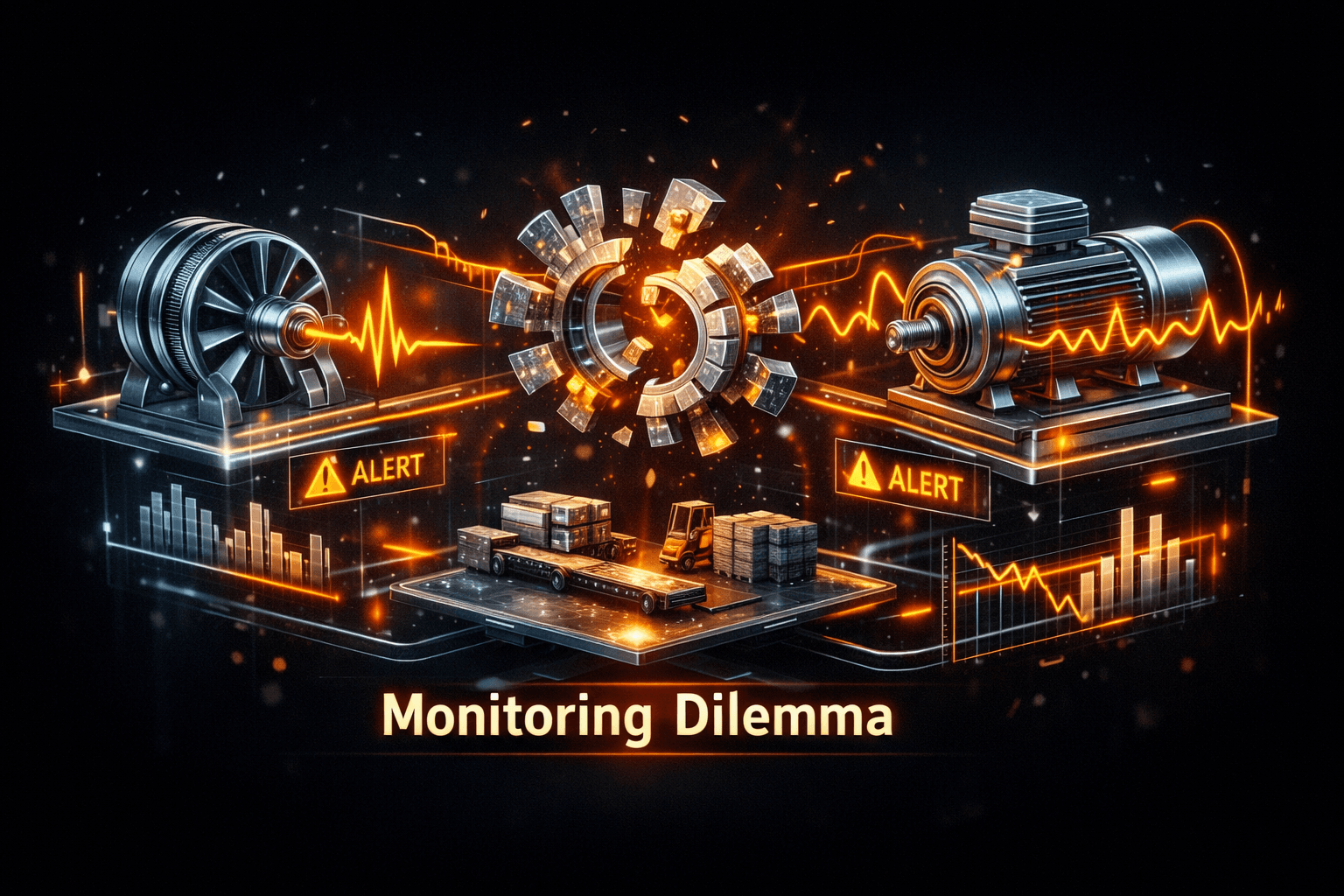
The Manufacturing Dive piece argues that ultrasound and vibration monitoring each detect different fault signatures, and choosing one over the other can leave failure modes undetected. Ultrasound can flag leaks and electrical discharges earlier while vibration excels at detecting imbalance and bearing wear on rotating equipment, so a single-method approach can create blind spots.
That blind spot is not academic. The report links such trade-offs to real-world unplanned outages, which are costly and disruptive. For you, this means operational risk can translate quickly into financial volatility.
Winners and losers among vendors
Vendors that offer integrated, multi-sensor platforms or bundled services stand to gain if plants move from single-sensor choices to layered monitoring. Companies that still sell only point solutions may face pressure to expand offerings or risk losing service revenues.
Aftermarket service providers and systems integrators could see demand for retrofits, sensor upgrades and analytics subscriptions. Analysts note that recurring service revenue is often higher margin than equipment sales, so a shift toward comprehensive monitoring could change near-term revenue mix for some firms.
Capital spending and operational budgets
Plant operators will need to weigh upfront sensor and software costs against the potential cost of outages. The article highlights gaps in deployment, training and integration, which often drive delayed ROI and make some maintenance budgets reprioritize labor or spare parts instead of technology.
For investors, that means capital expenditure lines and maintenance expense trends will be key indicators to monitor in quarterly reports.
What to Watch
Look for company commentary and line-item changes in upcoming earnings and investor presentations. Which suppliers are emphasizing integrated sensing, analytics and service bundles? Which manufacturers disclose rising unplanned downtime or higher maintenance capex?
Key catalysts and signals to track include quarterly results from Emerson $EMR, Honeywell $HON, Fortive $FTV and Siemens $SIEGY, any major aftermarket contract announcements, and industry conference presentations on predictive maintenance. You should also monitor capital expenditure guidance and aftermarket revenue growth as proxies for migration to layered monitoring.
Risks to monitor are implementation complexity, skilled labor availability to run new systems, cybersecurity of IoT-connected sensors, and the potential for delayed ROI that forces some plants to revert to reactive maintenance. What will separate winners from losers, and are you positioned to see that change through?
Bottom Line
- Choosing a single condition-monitoring method can create blind spots, and the resulting unplanned outages are an operational and financial risk for manufacturers.
- Vendors offering integrated, multi-sensor solutions plus analytics and services may capture aftermarket growth; this could shift revenue mix toward higher-margin recurring streams.
- Watch maintenance capex, aftermarket revenue and any disclosure of unplanned downtime in earnings calls to gauge whether plants are investing to close detection gaps.
- Analysts note this is a structural issue in many facilities, not a short-term blip, so operational improvements could take quarters to show up in margins.
- This report is informational only. It does not recommend buying, selling, or holding any security. Data suggests increased operational risk, but investors should consult their advisors and review company filings before making decisions.
FAQ
Q: How do ultrasound and vibration monitoring differ? A: Ultrasound picks up high-frequency sounds from leaks, electrical discharges and some early mechanical faults, while vibration monitoring detects imbalance, misalignment and bearing wear on rotating equipment.
Q: Will equipment vendors benefit from plants upgrading monitoring? A: Vendors that provide integrated sensors, edge analytics and service contracts are better positioned to capture retrofit and subscription demand, analysts note, though adoption depends on capex and operational readiness.
Q: What should I track to assess exposure to this trend? A: Monitor maintenance capex, aftermarket and services revenue, commentary on unplanned downtime in earnings calls, and any major retrofit contracts or platform launches that indicate migration to layered monitoring.