The Big Picture
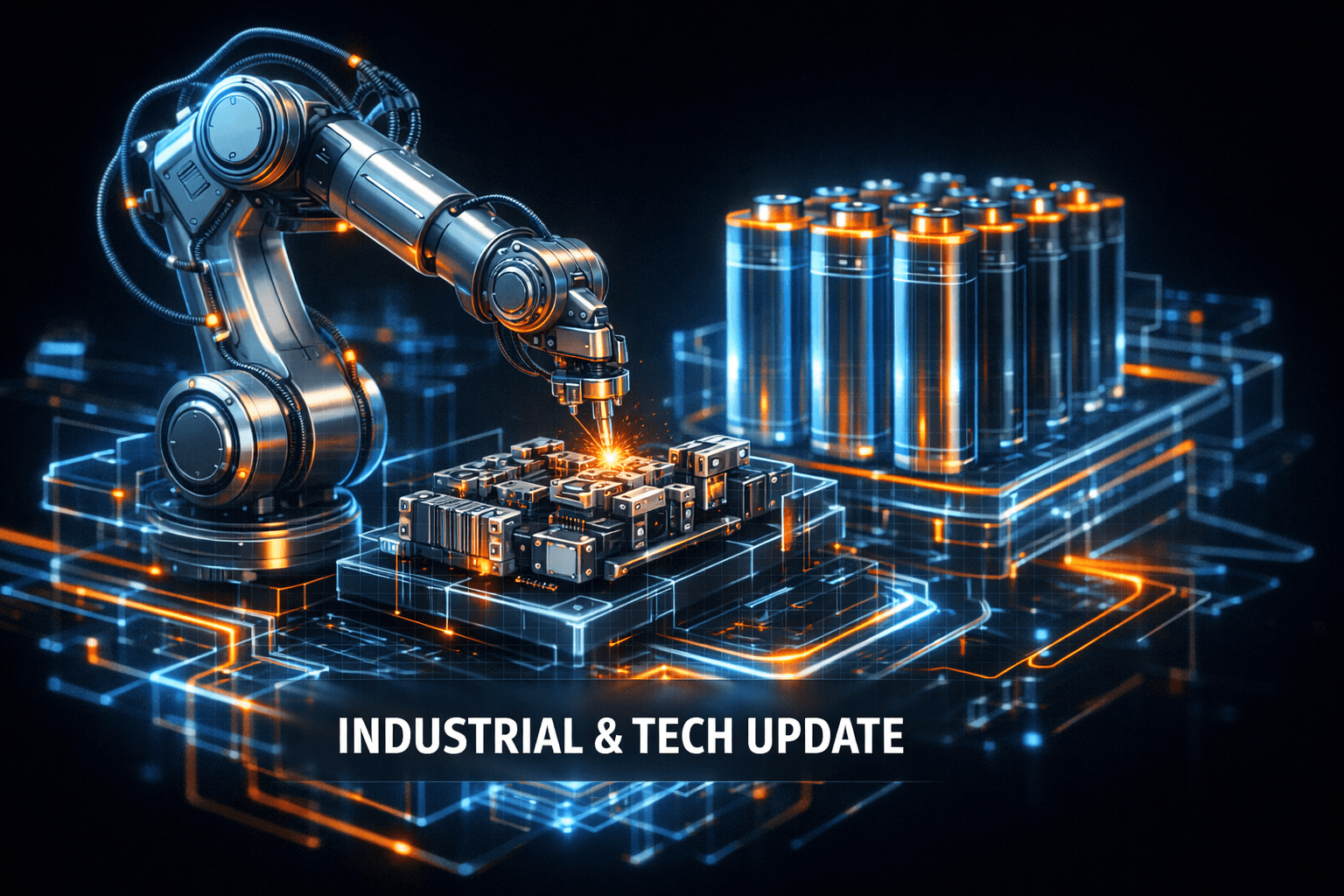
Robotics and heavy manufacturing investment dominated headlines today, as tech and industrial leaders signaled faster adoption of automation while energy and logistics pressures persisted. You’re seeing big-cap tech like $NVDA push partners into the factory floor, and major capex from the auto and energy-storage supply chain with a $4.3 billion battery plant for $TSLA.
That combination matters because it links long-term productivity gains with near-term demand for equipment, parts, and skilled labor. For you as a retail investor, it means pick-and-shovel beneficiaries of automation and battery supply chains are likely to stay in focus even as ports and energy prices inject volatility.
Market Highlights
Today's sector headlines mixed expansionary investment with logistical cost pressure, and several measurable data points stood out.
- Robotics push: Nvidia told attendees that "every industrial company will become a robotics company," and the firm is partnering with ABB and other robot makers to accelerate deployments, reinforcing the AI-to-factory narrative led by $NVDA.
- Big factory build: Tesla and LG announced a $4.3 billion battery plant in Michigan slated to open in 2027 to supply Megapack 3 systems, moving more energy storage production onshore and expanding the battery manufacturing footprint.
- Labor and demand: Manufacturing job openings rose to nearly 500,000 in January, according to BLS JOLTS, while December separations were revised down by 10,000, suggesting stickier demand for labor.
- Logistics headwind: Port of Los Angeles cargo flows remain steady despite Middle East conflict, but higher oil prices are being passed to ocean shippers, creating margin pressure for freight-dependent manufacturers.
Key Developments
AI and robotics accelerate factory automation
$NVDA's message at industry events today was blunt: industrial companies should plan to be robotics companies. The company is deepening partnerships with incumbent robotics firms, including ABB, Fanuc, and Yaskawa, to bring AI-enabled vision and controls to production floors.
For you, that means rising demand for industrial controls, sensors, and integrators. Analysts note that this trend favors automation vendors, industrial software providers, and systems integrators that bridge legacy machinery with AI-driven controls.
Tesla and LG invest $4.3B in Michigan battery plant
Tesla and LG will build a $4.3 billion facility to produce LFP cells for utility-scale Megapack 3 systems, with operations slated to begin in 2027. The plant is part of a supply agreement and reflects continued vertical integration in battery production.
The implication is twofold: it increases domestic battery capacity and supports local supply chains, and it signals more booking and construction work for equipment makers, contractors, and materials suppliers along the battery value chain.
Labor demand and logistics: steady but watchable
BLS data show manufacturing job openings near 500,000 in January and a downward revision of 10,000 separations in December, pointing to resilient labor demand. The National Association of Manufacturers survey also reports improved sentiment from Q4 2025, even as firms note trade uncertainty.
Meanwhile, port executives say transpacific trade flows remain steady despite geopolitical tensions, although rising oil is being passed through to ocean carriers. That raises input-cost risk for import-reliant manufacturers and could squeeze margins if carriers or retailers push costs downstream.
What to Watch
There are several near-term catalysts you should monitor that could shift sector momentum.
- Automation deployments and partnership rollouts, including more announcements from $NVDA and robotics partners, will provide signals about capex timing and vendor share gains.
- Progress on the $TSLA-LG Michigan plant, including permitting and construction milestones, will indicate how quickly battery capacity is coming online and which suppliers will benefit.
- Macro and logistic risks: oil price moves and any escalation in trade tensions could raise shipping costs and disrupt supply chains, so watch freight rates and port throughput reports closely.
- Labor market releases: upcoming BLS reports, including the next JOLTS and payrolls releases, will show whether the near-500,000 openings trend continues and how hiring costs evolve.
Bottom Line
- Robotics and AI deployment, led by $NVDA partnerships, are accelerating and are likely to boost demand for automation equipment and systems integration.
- The $4.3 billion $TSLA-LG battery plant underscores durable investment in domestic battery capacity and creates multi-year opportunities for suppliers and contractors.
- Manufacturing job openings near 500,000 and improved NAM sentiment suggest demand resilience, but you should keep an eye on wage and hiring trends as costs can pressure margins.
- Logistics and energy are the main near-term headwinds; higher oil prices being passed to shippers raise cost risks for import-reliant manufacturers.
- Take a selective approach, focusing on firms exposed to automation, battery supply chains, and domestic manufacturing services, while monitoring shipping and energy cost developments.
FAQ Section
Q: How will increased robotics adoption affect manufacturing employment? A: Automation often shifts jobs toward higher-skill roles in maintenance, programming, and integration; data suggests openings remain high even as capital investment rises.
Q: Does the $TSLA-LG plant change the battery supply picture? A: Yes, the $4.3 billion plant increases U.S. LFP capacity for utility storage and may shorten supply chains, supporting suppliers onshore and lowering some sourcing risks.
Q: Should you worry about port disruptions from geopolitical tensions? A: Ports reported steady transpacific flows today, but energy-driven freight-cost increases are real, so monitor oil prices and carrier rate announcements for potential impacts.