The Big Picture
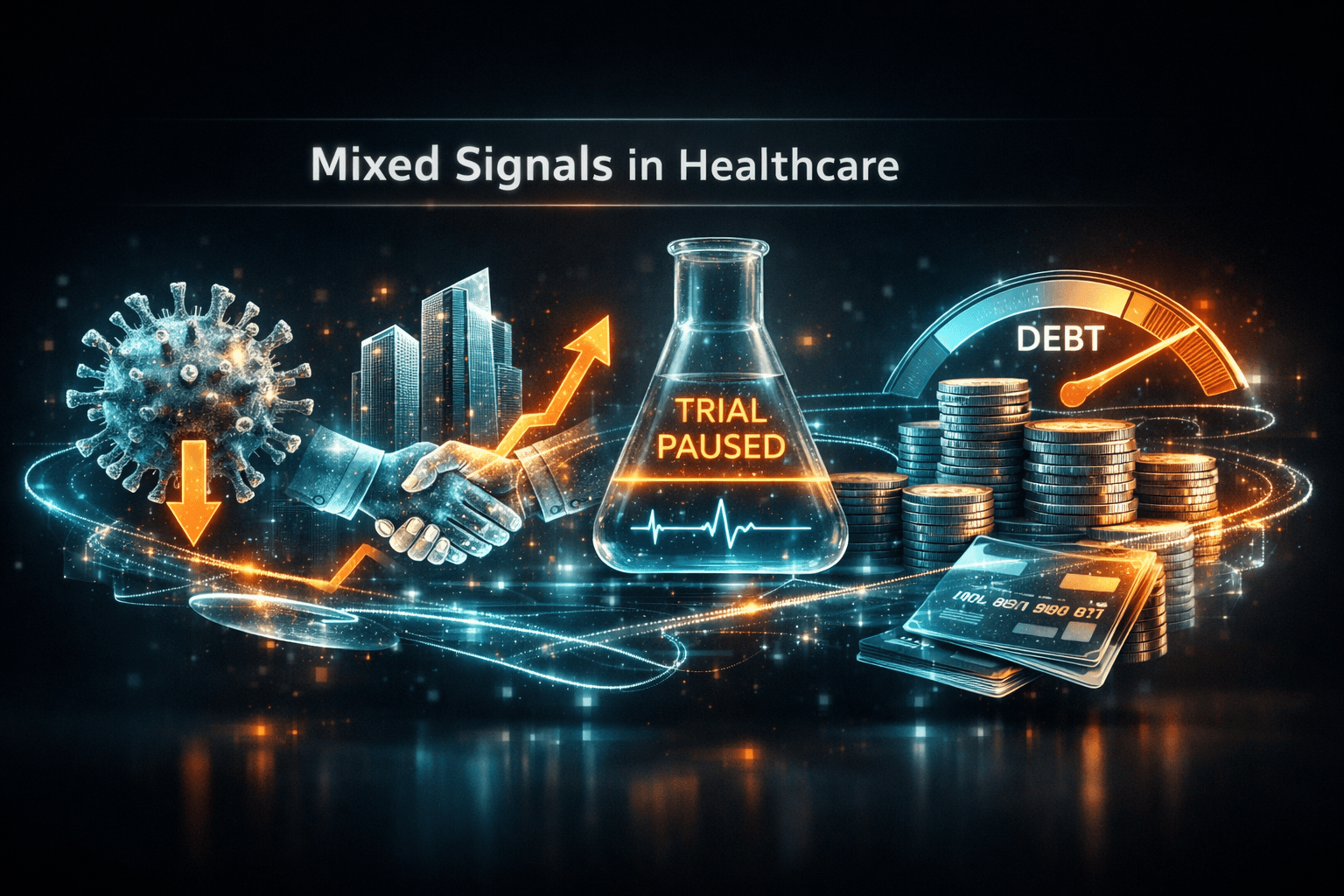
Heading into the long weekend, the healthcare sector is sending mixed signals, with renewed infectious-disease threats colliding with corporate reshuffling and regulatory noise. You should pay attention if you own healthcare names, because outbreak responses, trial safety issues, and policy shifts can all alter revenue trajectories and risk profiles.
Public-health stories from Ebola testing in the Democratic Republic of Congo to measles and West Nile alerts in the U.S. and Europe underscore demand for vaccines and diagnostics. At the same time, insurers and hospitals are adjusting risk exposure, and a biotech clinical pause highlights the persistent development risks in the industry.
Market Highlights
Key facts and moves that traders and long-term investors should note as markets reopen on Monday.
- Biotech clinical risk: Xenon Pharmaceuticals ($XENE) saw its shares fall after a depression study was paused due to neuropsychiatric adverse events, during a period when the company is already under FDA review for an epilepsy indication.
- Insurer stake shift: Ascension sold its ownership in an Arizona Medicaid plan to Aetna, a move that lets Ascension shed insurance risk while Aetna gains exposure to a profitable plan serving dual-eligible members. Aetna is the insurance arm of $CVS.
- Hospital-insurer friction: Several Texas hospitals operating under $HCA and other systems are litigating denied claims with an out-of-state Blue Cross plan, spotlighting variability in prior-authorization and medical necessity standards.
- Public health pressure: Health authorities reported Ebola vaccine testing in DR Congo, measles vaccination rates for Pittsburgh kindergartners fell below the 95% herd-immunity threshold, and Italy notes West Nile spread lasting longer as Europe warms.
- Systemic affordability issue: A Commonwealth Fund analysis found about one-third of privately insured adults carry unpaid medical debt, showing insurance often fails to protect consumers from balance-billing and out-of-pocket exposure.
Key Developments
Ebola vaccine testing begins in DR Congo
Health workers started a test vaccination program in areas hit by a deadly Ebola outbreak to evaluate whether vaccines developed for a different strain might provide protection. This is primarily a public-health story, but you should note that further confirmation of cross-strain efficacy would increase demand for flexible vaccine platforms and could accelerate funding and procurement decisions.
Ascension sells Arizona Medicaid plan stake to Aetna
Ascension's divestiture shifts insurance risk away from a faith-based health system and into Aetna's hands. For insurers you follow, this illustrates ongoing non-core asset shedding by some systems and continued appetite among large payers to scale profitable Medicaid and dual-eligible plans. How will this change margins and risk for payer portfolios going forward?
Xenon trial pause highlights clinical risk
Xenon Pharmaceuticals put a depression trial on hold after neuropsychiatric events surfaced, a setback that spooked investors while the company remains under FDA review for an epilepsy drug. Trial safety issues can quickly reset expectations for small-cap biotechs, affecting market capitalization and near-term investor sentiment.
Public-health trends: measles, West Nile, and blood-product policy changes
U.S. localities like Pittsburgh are seeing kindergarten vaccination rates slip below the 95% measles threshold, prompting exposure alerts. In Europe, Italy reports mosquitoes are spreading West Nile farther and for longer seasons as temperatures rise. Separately, Jehovah's Witnesses clarified they now allow some blood-derived products while maintaining a ban on whole-blood transfusions, a change hospitals will factor into consent and inventory planning.
What to Watch
Here are the catalysts and risks to track as markets reopen on Monday, and over the coming weeks. If you follow healthcare stocks, you'll want to monitor regulatory calendars and outbreak updates closely.
- Clinical and regulatory updates: Watch for company statements and FDA communications around $XENE's paused study and the ongoing epilepsy review. Trial safety news can change small-cap biotech valuations quickly.
- Policy and pricing details: Federal rollout details for the GENEROUS Medicaid drug discount program remain thin. Analysts note more clarity is needed to assess impacts on pharma pricing and payer margins.
- Hospital-insurer litigation: Follow filings and rulings in the HCA-related lawsuits for signals on reimbursement standards and prior-authorization disputes, which can influence hospital revenue stability.
- Outbreak trajectories and vaccine responses: Track case counts and vaccination efforts in DR Congo and U.S. hotspots. Could vaccine testing lead to broader procurement or emergency authorizations? That's a key question for vaccine-makers and supply chains.
- Consumer finance and demand: The Commonwealth Fund finding that one-third of privately insured adults hold medical debt bears watching, because rising out-of-pocket stress can affect elective care demand and revenue for hospitals and providers.
Bottom Line
- Near-term sector tone is mixed, with public-health risks and clinical setbacks balanced by corporate reassignments of insurance risk and ongoing policy focus on drug costs.
- Biotech names remain sensitive to trial safety news, so monitor clinical updates for material guidance changes and readouts.
- Insurer and hospital actions, including the Ascension-Aetna deal and litigation over denied claims, indicate continued pressure on reimbursement models and contract terms.
- Infectious-disease developments, from Ebola to measles and West Nile, could drive demand for vaccines, diagnostics, and hospital services in localized markets.
- Data suggests affordability and medical debt are persistent headwinds for healthcare utilization, a structural factor that may influence longer-term revenue patterns.
FAQ
Q: How should I interpret a biotech trial pause? A: Trial pauses mean a company and regulators are reviewing safety signals. It increases uncertainty until the cause and impact are clarified.
Q: Will Ascension's sale to Aetna change insurer margins? A: Analysts say the deal shifts risk away from the health system and gives Aetna exposure to profitable dual-eligible membership, but full margin impacts depend on integration and state Medicaid dynamics.
Q: Do local outbreaks affect national healthcare stocks? A: Localized outbreaks can boost demand for specific product categories and lift suppliers of vaccines and diagnostics, but national impacts vary by scale and duration.