The Big Picture
Headlines across the healthcare sector delivered mixed signals on Saturday, Sep 19, leaving investors with both concrete policy shifts and lingering operational risks to consider. States are moving aggressively to fund rural health startups while payer and provider disputes, clinical trial setbacks, broadband gaps and a federal drug discount program with many unknowns are keeping uncertainty high.
This matters because these stories cut across different subsectors you may hold exposure to, from insurers and hospitals to telehealth platforms and small-cap biotechs. With U.S. markets closed Saturday, use this briefing to frame what may drive trading when markets reopen Monday, Sep 21.
Market Highlights
The items below summarize the most market-relevant developments and the concrete figures reported over the last 24 hours. Where available, figures are cited from the original coverage.
- State investment in rural health: Louisiana earmarked $20 million a year for five years to back rural health startups, part of a broader trend of states using public capital to spur local health innovation.
- Telehealth access gap: Roughly 12 million Americans lack adequate broadband to use telehealth, with most affected people in rural areas, creating headwinds for virtual-care adoption.
- Medical debt persists: One-third of privately insured adults reported unpaid medical debt, underscoring persistent affordability issues even among the insured.
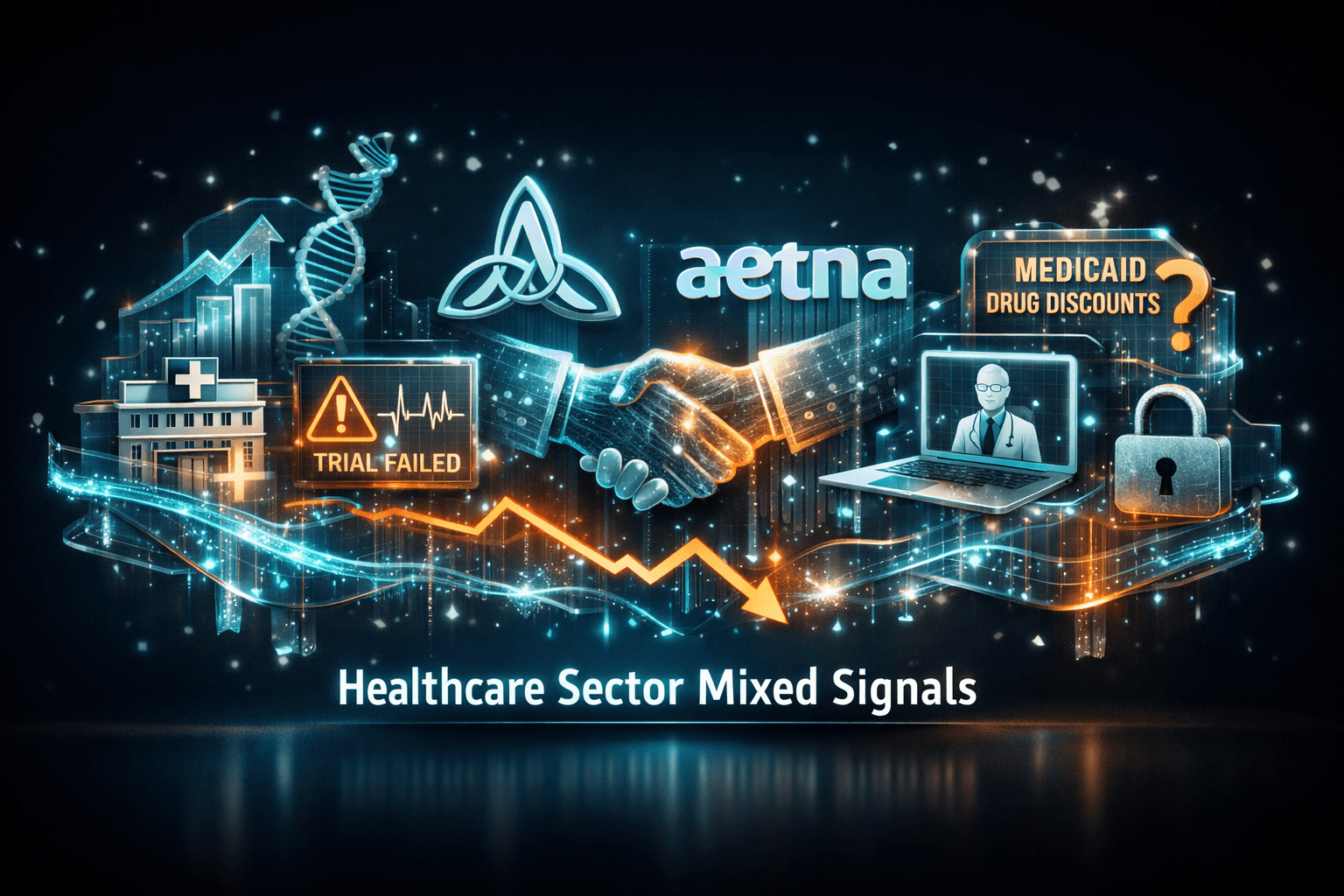
- Payer and provider shifts: Ascension sold its ownership in an Arizona Medicaid plan to Aetna, moving insurance risk off Ascension's balance sheet and increasing Aetna's exposure to dual-eligible, higher-margin members. Aetna operates under $CVS.
- Hospital litigation: Several Texas hospitals led by $HCA are suing an out-of-state Blue Cross plan over denied claims and differing medical necessity standards, signaling payment friction that could affect hospital cash flow.
- Biotech clinical setback: Xenon shares fell after a depression trial was paused due to neuropsychiatric adverse events while the company already faces an FDA review for an epilepsy indication. Coverage noted the share decline as of Friday, Sep 18.
Key Developments
Policy and Pharma: The GENEROUS Medicaid drug program
Former President Trump highlighted a new federal program, called GENEROUS, that aims to offer cheaper drugs to state Medicaid programs. STAT reports every state will participate, but many operational and pricing details remain unclear. Analysts note the program could pressure drug pricing and margins in parts of the pharmaceutical sector, but the specifics will determine the actual market impact.
M&A and Payer Shifts: Ascension sells Arizona Medicaid stake to Aetna
Ascension's divestiture transfers ownership in an Arizona Medicaid plan to Aetna, allowing Ascension to shed insurance risk while giving Aetna a larger stake in a profitable plan that serves dual-eligible members. For insurers and managed Medicaid plans, this is notable because it shows continued appetite for select Medicaid assets and for risk-bearing arrangements that target higher-margin populations.
Clinical and Access Risks: Xenon trial pause, telehealth gaps, and medical debt
Biotech risk stayed front and center after Xenon reported neuropsychiatric events that paused a depression study, a development that weighed on the stock as of Friday. At the same time, access issues persist for virtual care. Research shows about 12 million Americans still lack the broadband needed for telehealth, and a Commonwealth Fund analysis finds one-third of privately insured adults carry unpaid medical bills. Together these items highlight a tension between technological potential and structural barriers to care.
What to Watch
As you prepare for the next trading week, here are the catalysts and risks that could move healthcare names when markets reopen on Monday, Sep 21.
- Regulatory and policy updates on GENEROUS. Watch for guidance on pricing, reimbursement mechanics and state implementation timelines. How will pharma and PBM revenues be affected? Analysts will want details.
- Updates from insurers and providers. Expect commentary from $CVS and large insurers about their strategy around Medicaid assets and dual-eligible markets. Also monitor any court filings or settlement discussions in the $HCA-led suits.
- Biotech trial developments. Any new safety data or trial restart plans from $XENE or similar small-cap biotechs will be market sensitive. You should track company notices and FDA communications closely.
- State rollout of rural health funds. Which startups and sectors get funded could signal new investment themes. Can state-backed capital bridge the broadband and staffing gaps that limit telehealth's reach?
- Health access metrics and consumer stress. Look for follow-up datasets on medical debt and telehealth utilization rates, which could affect hospital volumes, elective procedures and consumer-facing health tech adoption.
Bottom Line
- Sentiment is mixed across the sector, with state funding and payer deals offset by clinical setbacks and access challenges.
- Watch the GENEROUS program closely, because policy details will shape pharma and PBM revenues and state Medicaid costs.
- Operational risks remain for hospitals and biotechs, illustrated by payment disputes and trial pauses that can hit cash flow and valuations.
- Rural health funding is a positive structural story, but broadband shortfalls and medical debt limit near-term upside for virtual care and consumer health players.
- Use the long weekend to review your exposure and to prepare for possible sector volatility when markets reopen Monday, Sep 21.
FAQ Section
Q: What is the GENEROUS program and why should you care? A: GENEROUS is a federal drug discount initiative for state Medicaid programs highlighted in recent reporting. You should watch implementation details because they could affect drug pricing, manufacturer revenues and PBM contracts.
Q: How material is the Xenon trial pause to the broader biotech market? A: The Xenon pause is company specific and highlights clinical risk common in biotech. While it can increase volatility for small-cap developers, broader sector impact depends on whether similar safety signals emerge elsewhere.
Q: Will state investments in rural health solve telehealth access issues? A: State backing can help startups build solutions and fund infrastructure, but significant broadband gaps remain. In short, funding helps but it is not a complete solution on its own.