The Big Picture
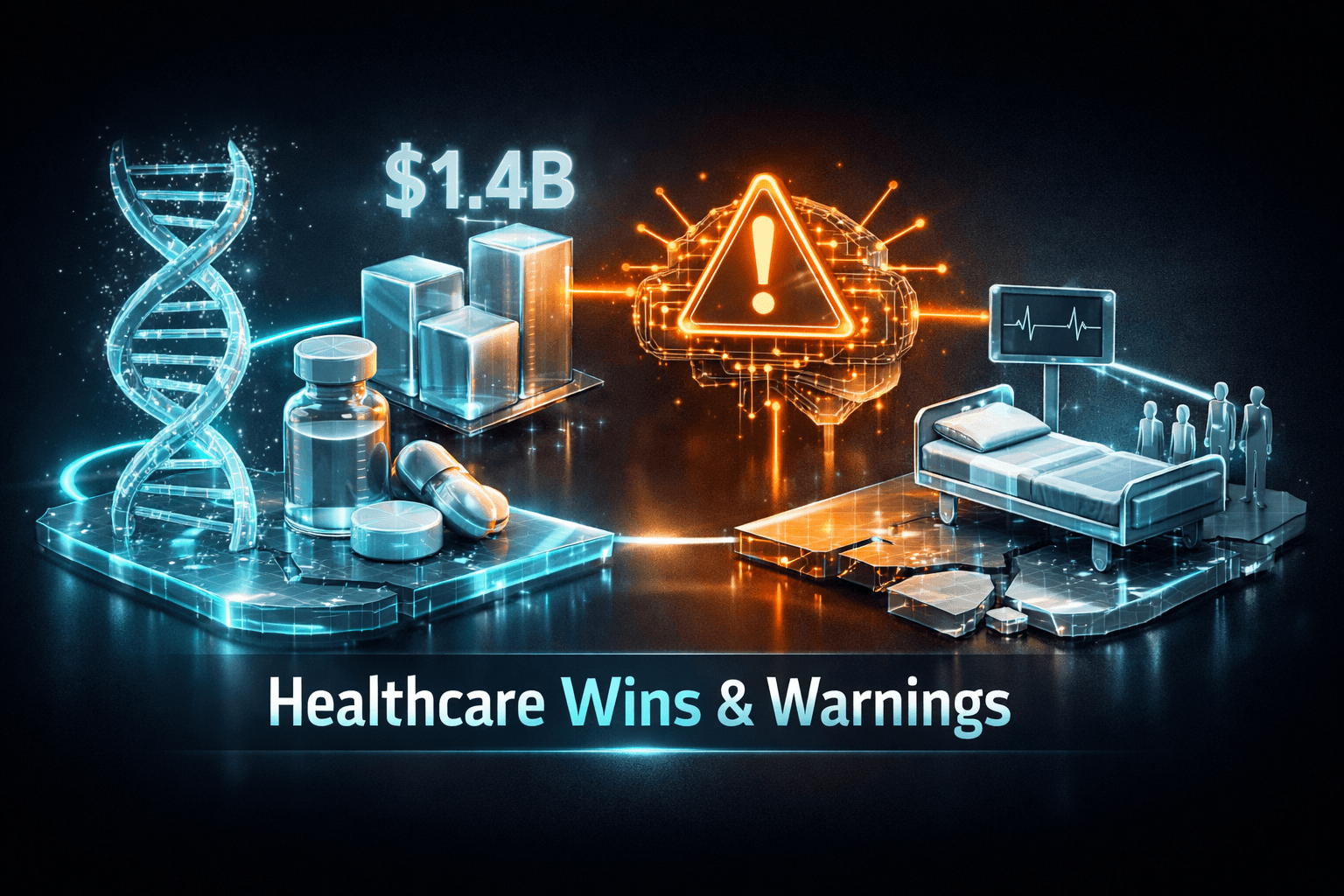
Today brought a mix of clinical milestones and broader system stresses that matter to healthcare investors and stakeholders alike. A new FDA approval for a Sanfilippo gene therapy and a large collaboration on oral peptides signaled ongoing innovation and dealmaking, while reports on AI governance, maternal mental health, and access gaps highlighted structural and regulatory risks.
If you follow the sector, you saw growth catalysts and headwinds in the same news cycle. What should you watch most closely as markets digest these developments today and into tomorrow?
Market Highlights
Trading in the healthcare complex reflected mixed sentiment as investors weighed near-term commercial potential against regulatory and operational risks.
- FDA greenlights a gene therapy for Sanfilippo syndrome type A, a win for the rare-disease space and the biotech involved, reported late in the day. Market response for related rare-disease names moved on the news.
- Big pharma partnership: Novo Nordisk, $NVO, announced a strategic collaboration on oral macrocyclic peptides with Orbis, a deal described as potentially worth up to $1.4 billion, underscoring continued interest in oral peptide platforms.
- Governance and safety stories pressured sentiment around digital health and AI, while public-health studies on postpartum depression and infant mortality added a sobering tone to broader healthcare discourse.
Key Developments
FDA approves gene therapy for Sanfilippo type A
The FDA approved a gene therapy to treat Sanfilippo syndrome type A, an ultra-rare, progressive neurodegenerative disorder that affects young children. The approval is a clear scientific and regulatory milestone for the company behind the therapy and for the rare disease field, since approvals in ultra-rare pediatric indications can set precedent for trial designs and accelerated pathways.
For investors, approvals like this often mean milestone revenue potential, licensing optionality, and pipeline de-risking. At the same time, commercial rollout for ultra-rare indications has unique supply, pricing, and reimbursement challenges you'll want to monitor.
Novo- Orbis collaboration targets oral peptide drugs
Novo Nordisk deepened its investment in oral peptides through a partnership focused on macrocycles, a class of molecules that may enable oral delivery of peptide therapeutics for cardiometabolic disease. The alliance carries up to $1.4 billion in potential value and signals continued big-pharma interest in alternatives to injectable biologics.
This deal highlights strategic M&A and partnership appetite in modalities that could reshape chronic-disease treatment. Consider how this could affect competitive positioning in obesity, diabetes, and cardiometabolic franchises over the medium term.
Agentic AI outpaces governance, patient safety worries grow
A report and industry commentary warned that agentic AI tools in healthcare are being developed and deployed faster than governance and security frameworks can keep up. Imprivata’s chief medical and growth officer flagged potential patient-safety risks if safeguards lag behind implementation.
Regulatory scrutiny and potential compliance costs are likely to increase. Will regulators move faster than vendors and health systems? That question matters for digital-health names and for hospitals investing in AI-driven tools.
Public-health and access stories underscore nonmarket risks
Several research and field reports highlighted rising public-health pressures: a Rutgers-led study linked maternal postpartum depressive symptoms with a much higher risk of infant mortality, and reporting from the Philippines showed local initiatives using small retail stores to help bridge medicine access gaps in remote communities.
Those stories emphasize social determinants of health and access-related risks that can influence payer policy, reimbursement priorities, and long-term demand patterns for services you follow.
What to Watch
Expect heightened focus on three categories of catalysts and risks over the next several weeks.
- Regulatory follow-through and commercialization plans for the newly approved Sanfilippo gene therapy. Look for launch timelines, manufacturing scale updates, and payer engagement details.
- Progress updates and preclinical/clinical readouts from peptide-focused programs tied to the Novo collaboration. Data milestones could move sentiment for companies pursuing oral peptide platforms.
- AI governance developments, including any regulatory guidance, hospital procurement decisions, or safety incidents tied to agentic tools. Those items can shift valuation multiples for digital-health and clinical-software names.
Also keep an eye on labor and clinician-wellness headlines. A new survey showed employed physicians report worse well-being than independent peers, and that administrative burdens are a core driver. That dynamic can feed staffing costs, patient throughput, and service-line capacity questions.
Bottom Line
- Neutral tone across the sector today: scientific and commercial wins are balanced by governance, access, and public-health concerns.
- An FDA approval and a sizable pharma partnership show dealmaking and innovation remain alive, particularly in rare disease and oral peptide modalities.
- AI safety and governance are emerging as tangible regulatory risks that could affect valuations in digital health and clinical software.
- Public-health findings on postpartum depression and access gaps underline longer-term demand and policy risks that investors should monitor.
- Watch upcoming commercialization details, data readouts, and any regulatory guidance on healthcare AI for near-term market-moving catalysts.
FAQ Section
Q: What does the Sanfilippo gene therapy approval mean for the market? A: The approval validates the therapeutic approach and can unlock milestone payments and licensing opportunities, but commercial scale and reimbursement remain key near-term questions.
Q: How could the Novo-Orbis deal affect competition in cardiometabolic drugs? A: It signals sustained big-pharma interest in oral peptide platforms, which could intensify competition in obesity and metabolic disease if programs show clinical success.
Q: Should I be worried about AI safety issues in healthcare? A: Reports suggest governance is trailing deployment, so you should watch regulatory guidance, hospital adoption patterns, and any safety incidents that may prompt tighter oversight.