The Big Picture
The healthcare beat this morning is a study in contrasts. New trial data that buoyed sentiment for some cancer developers arrived alongside a high-profile first-line failure and policy stories that underscore rising access and cost pressures.
Why it matters to you: clinical readouts, regulatory moves, and health-policy shifts can quickly re-rate companies and influence volume in healthcare ETFs and biopharma names. Keep an eye on clinical data flow and near-term policy developments, they often move stocks more than you might expect.
Market Highlights
Quick facts and what moved markets overnight and in pre-market trade.
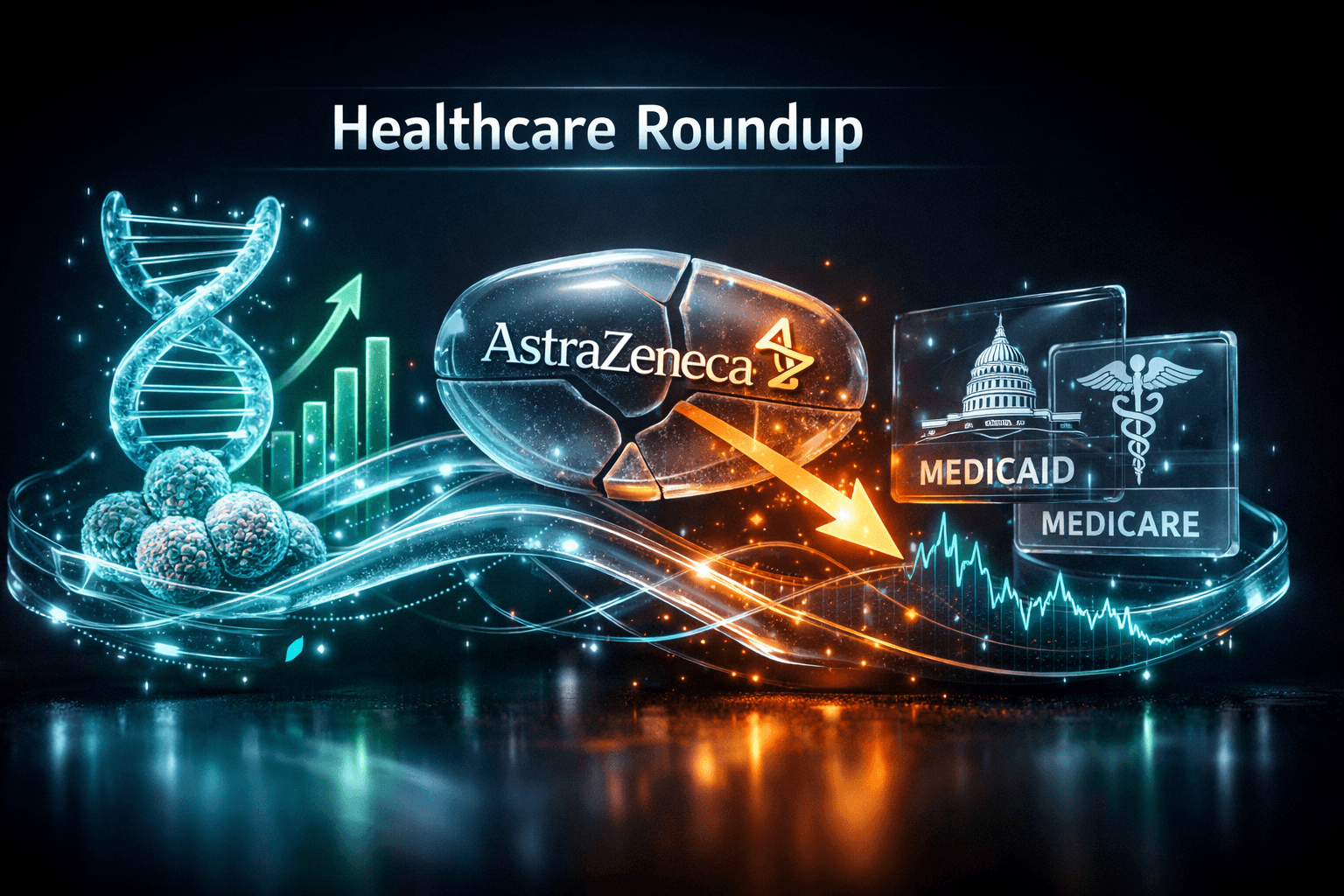
- Summit and Akeso unveiled additional data on their PD-1/VEGF candidate ivonescimab that drew positive attention from analysts and traders, helping their programs regain some investor confidence.
- AstraZeneca reported etcamah failed a frontline breast cancer study, adding to recent setbacks for oral SERDs and pressuring sentiment around similar assets, including peers such as Roche and $AZN.
- Policy and access headlines were prominent: expiration of enhanced ACA subsidies in some states is raising premiums and uninsured rates, while a Medicare AI prior authorization pilot is under scrutiny for implementation issues and delayed care.
- Public health and research stories showed consumer and mission-driven angles, from a sleep app linking air pollution to poor sleep to brief animal-interaction therapy improving teen mood, which all highlight growing interest in digital and nonpharmacologic health interventions.
Key Developments
Oncology data: winners and losers
Late results from Summit and Akeso on ivonescimab gave investors a reason to look again at PD-1/VEGF strategies, with Wall Street saying the new figures helped alleviate earlier doubts. Those updates suggest there is still appetite for differentiated combination approaches in lung cancer, though the path to broad adoption remains data dependent.
At the same time, AstraZeneca disclosed that etcamah missed its primary endpoint in a frontline breast cancer study. This is the second recent failure for oral SERDs in first-line settings and it raises questions about class viability and commercial timelines. For you that means volatility is likely for oncology small caps tied to SERD narratives, and larger names may see reassessments of near-term growth assumptions.
Policy, access, and operational risk
KFF reporting highlighted higher costs and coverage losses after enhanced ACA subsidies lapsed, with particularly acute pain in some Georgia districts. Separately a cancer survivor lost Medicaid disability coverage as states tighten work and disability rules. These stories show affordability and eligibility remain front-burner issues for payers and providers.
Operationally, STAT revealed the Medicare AI prior authorization pilot was rushed and created delays in care in some cases. Providers and health systems may push back on rapid AI adoption if it disrupts workflows and patient access. Regulators and legislators could respond, creating regulatory risk you should watch.
Research and consumer health signals
Several research pieces landed this morning that speak more to demand-side healthcare trends than to market-moving drug news. A UC Davis study found just three minutes with miniature horses and donkeys improved teens' mood. Another paper linked low-level air pollution to worse sleep using a popular sleep app, tying environmental factors to everyday health outcomes.
Additional neuroscience and space medicine studies, including work on decision-making brain regions and how exercise plus echocardiograms protected astronauts' hearts, emphasize ongoing innovation across preventative, diagnostic, and niche clinical areas. These items underscore longer-term thematic investment ideas in digital health, diagnostics, and preventive care, though they are not immediate stock drivers.
What to Watch
Here are the near-term catalysts and risks that could move the sector today and in coming days.
- Clinical readouts and conference presentations. Look for follow-up data or analyst notes on ivonescimab and any company commentary addressing the etcamah failure. New data releases often produce sharp short-term moves.
- Regulatory and policy developments. Watch for state-level Medicaid decisions and any federal response to documented delays in the Medicare AI prior authorization pilot. Policy shifts could affect payer reimbursement and coverage decisions.
- Investor focus on digital and nonpharmacologic care. Papers linking pollution to sleep and animal-assisted interventions to mood may fuel interest in sleep tech, remote monitoring, and behavioral health platforms. Do you see a place for these themes in your research process?
- Market positioning around oncology. Will investors separate winners and losers within the SERD category, or will sentiment stay cautious across the group? Watch trading volumes and analyst revisions for clues.
Bottom Line
- Clinical data is driving selective upside, but a major late-stage failure has increased caution around certain oncology classes.
- Policy and operational issues, including subsidy expirations and problems with an AI prior authorization pilot, are near-term headwinds for access and could influence payer behavior.
- Consumer health and research stories point to growing investor interest in digital health and prevention, though these are longer-term themes.
- Expect volatility around biopharma readouts and policy headlines, and be selective when assessing exposure to SERDs and similar classes.
- Analysts note momentum in some oncology programs, but data consistency and regulatory clarity will determine which names sustain gains.
FAQ Section
Q: How should I interpret a successful trial update versus a class failure? A: A positive readout can lift an individual program or company, but a class-wide failure often prompts broader revaluation until additional data clarifies the science.
Q: Will policy stories about Medicaid and ACA subsidies affect stocks immediately? A: They can, especially for insurers, managed care firms, and hospitals in affected states, but the timing depends on administrative actions and legislative responses.
Q: Should operational issues in Medicare AI pilots change my view on healthtech investments? A: Problems with implementation highlight execution risk. They do not negate AI potential, but they mean you should watch vendor performance and regulatory reaction closely.